
BRIN to Sample Gas Triggering Mysterious Fires in Seyegan House
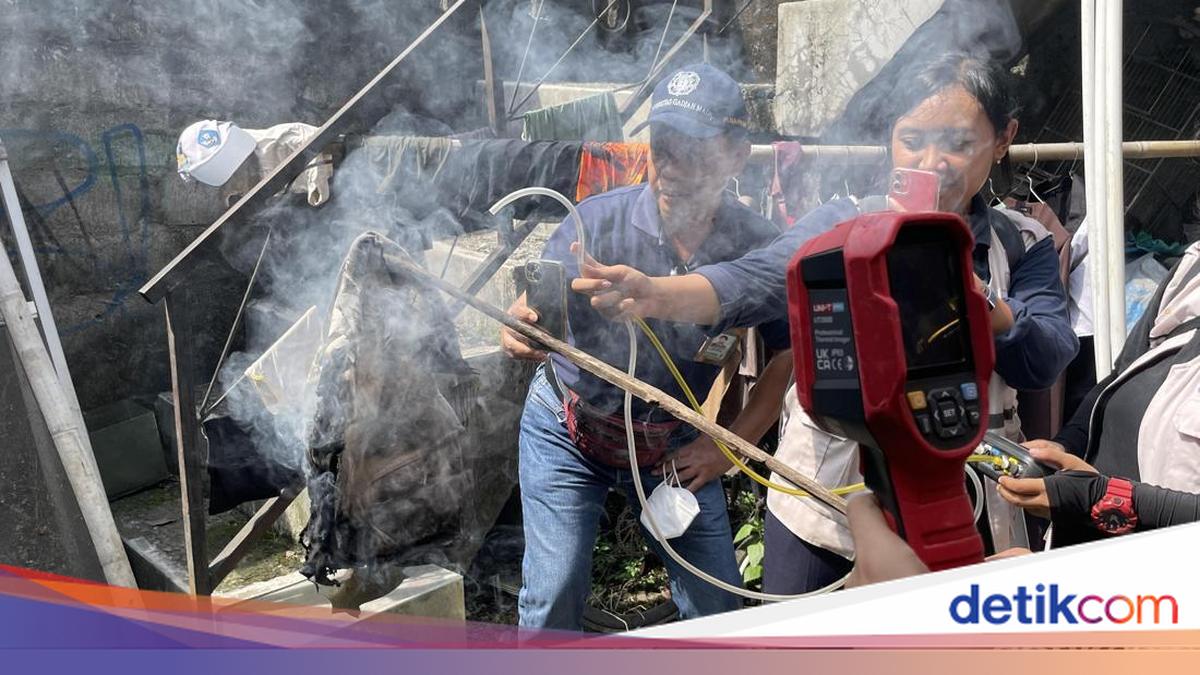
The National Research and Innovation Agency (BRIN) has intervened to uncover the phenomenon of mysterious fires occurring repeatedly at the home of Mutfiana in Seyegan, Sleman. BRIN will collect gas samples to identify the potential ignition source.
Hari Soekarno, a researcher from BRIN’s Limnology and Water Resources Research Centre, conducted initial observations in coordination with researchers from UGM and UPN. Following previous findings from UGM suggesting that phosphine gas from poultry slaughtering waste might be the cause, Hari expressed doubt regarding the phosphine theory. He noted that if phosphine were being produced by the waste installation, it would likely have escaped into the atmosphere.
Consequently, BRIN will sample gas from the rooms where the fires occurred to analyse the specific type of gas. The agency intends to use gas chromatography to determine if the trigger is hydrogen, methane, or another substance, despite the challenge of detecting extremely low concentrations.
Previously, a research team from UGM’s Entropy Propagation Study Centre (PKPE) concluded that the fires were likely associated with the presence of hydrogen gas. Professor Alva Edy Tontowi, head of the UGM team, explained that the hydrogen is suspected to originate from the fermentation of organic waste from the resident’s poultry business. The team also suspected the presence of phosphine (PH3), which could ignite hydrogen, though this requires further investigation.
Initial observations by UGM researchers, supported by data from the DIY Regional Police Special Force (Gegana), detected methane (CH4) at the fire sites. Subsequent measurements using thermal cameras showed no significant temperature anomalies, suggesting the gas levels were within ambient ranges. However, later measurements led by Professor Agung Harijoko detected high levels of hydrogen (H2) near the fire points.
The UGM team is currently investigating two potential sources: liquid waste or soil gas. To address the immediate danger, the team has recommended maximizing ventilation, using blowers to disperse gas, and removing flammable items from the house. They also plan to apply a lime solution to the soil and floors to suppress the bacteria responsible for hydrogen production.