
BRIN Studies the Effectiveness of Dry Ice in Tackling Forest and Land Fires
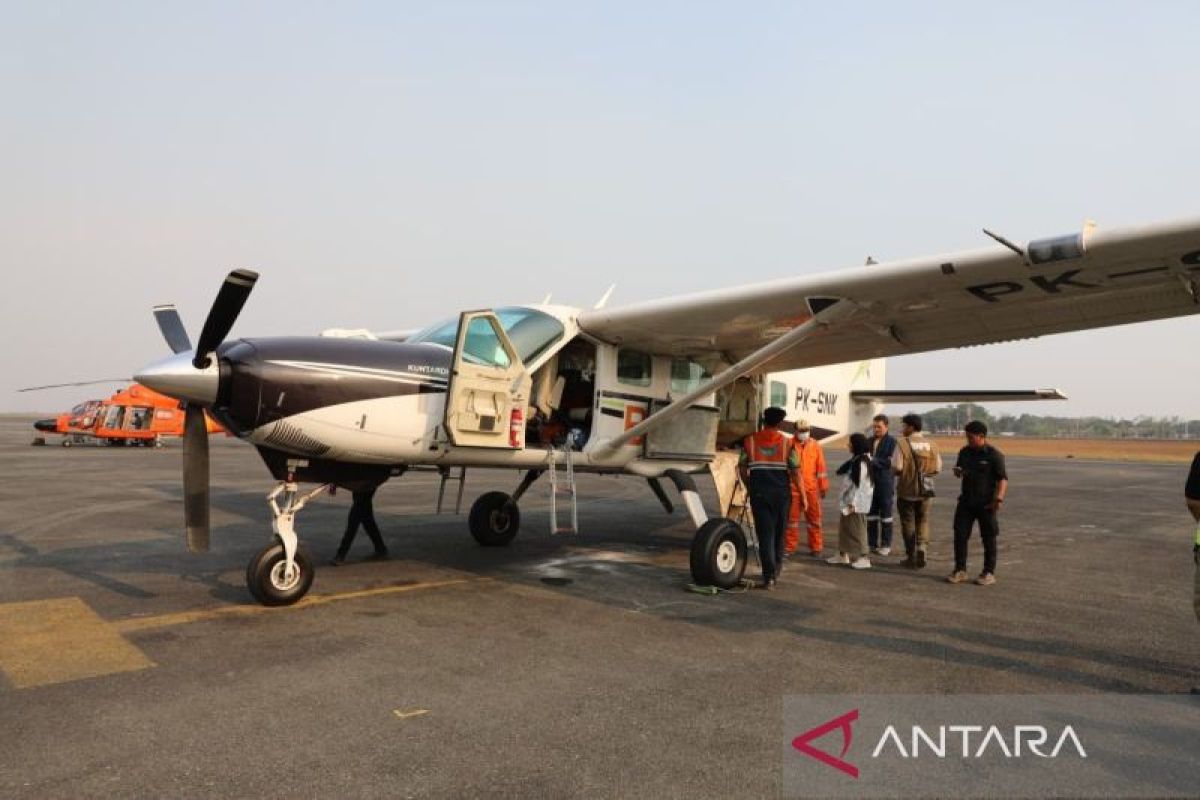
Jakarta (ANTARA) – The National Research and Innovation Agency (BRIN) is supporting a scientific evaluation of efforts to tackle smoke haze through weather modification operations using dry ice.
Florentinus Heru Widodo, principal engineer at BRIN’s Centre for Limnology and Water Resources Research, said in a statement in Jakarta on Monday that one approach being tested by the integrated team in weather modification operations is seeding with dry ice, or solid carbon dioxide.
Unlike cloud seeding, which aims to increase the likelihood of rain from clouds that meet certain criteria, dry ice is being used in this context to test whether it can alter thermal conditions in an inversion layer.
“Dry ice has a temperature of around minus 78.5 degrees Celsius. When released into the atmosphere, it sublimates—changing from a solid into a gas—while absorbing heat from its surroundings,” he said.
Conceptually, Heru said, the local cooling is expected to affect differences in air temperature and density, trigger local air movement and increase the likelihood of vertical air mixing.
“The use of dry ice is expected to cause local cooling and affect atmospheric stability in the inversion layer. However, this mechanism remains a scientific hypothesis. We need to test whether the resulting changes are sufficient to weaken the inversion and support cloud development,” he said.
Heru cautioned that inversion layers can cover wide areas and vary in stability. A temperature disturbance at one location may therefore not be enough to change atmospheric conditions as a whole.
He said the method’s success could not be inferred solely from the proposed cooling mechanism, but had to be demonstrated through atmospheric observations and data analysis.
To support the operation, Heru said BRIN could analyse atmospheric observation data collected by the agencies conducting the operation and the Meteorology, Climatology and Geophysics Agency (BMKG).
The analysis could use radiosonde data, which provides information on temperature, humidity and other meteorological parameters at different altitudes.
Temperature readings taken during flights could also be used to identify the layer in which an inversion occurs and estimate its thickness.
Observations before, during and after seeding need to be conducted systematically so that any changes in air conditions can be documented and compared.
Heru said this approach was important because the effectiveness of any weather modification technology depended heavily on atmospheric conditions at the time of the operation.
“We want to ensure that every technology used in disaster management has a strong scientific basis. Observational data are key to determining whether the treatment actually affects the inversion layer, or whether changes in conditions are also influenced by other weather dynamics,” Florentinus Heru Widodo said.
Source: jawawa.id (https://jawawa.id/newsitem/brin-studies-the-effectiveness-of-dry-ice-in-tackling-forest-and-land-fires-1792385523)
Originally published by Antara (Indonesian) (https://www.antaranews.com/berita/5795861/brin-kaji-efektivitas-penanganan-karhutla-dengan-metode-es-kering), translated from Indonesian