
BRIN stresses post-disaster disease control cannot be uniform
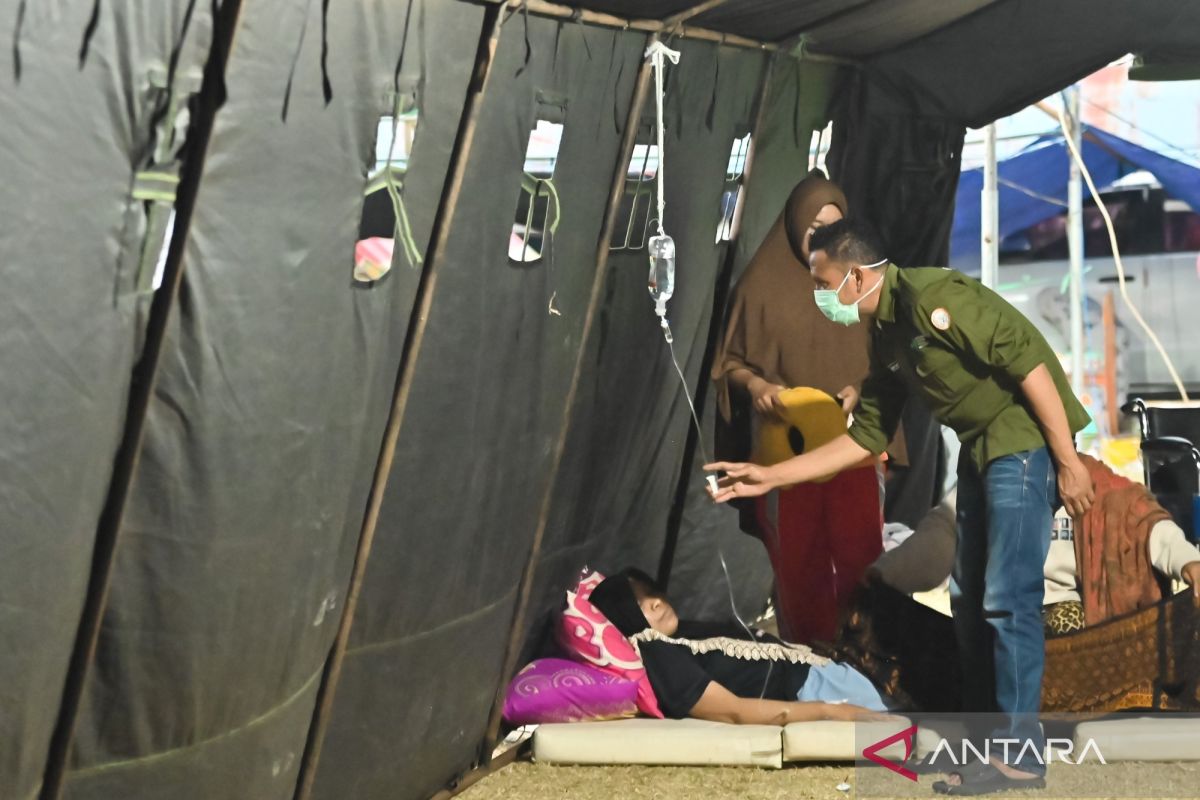
Jakarta (ANTARA) - National Research and Innovation Agency (BRIN) researcher Ristiyanto has stressed that post-disaster disease intervention and control patterns cannot be applied uniformly because each type of natural disaster carries highly specific inherent risk characteristics.
“So intervention for a disaster is not one package for all. We have to look at the main risk factors and what the disaster event is,” he said during an online discussion on post-disaster infectious diseases held in Jakarta on Thursday.
Ristiyanto gave a concrete example of how post-volcanic eruption handling differs greatly from disasters caused by hydrometeorological events.
“For eruptions in areas endemic to plague, particularly in West Java, East Java and Central Java, a strict early warning system for plague is needed. Because if an outbreak occurs, it is very dangerous for the community,” he continued.
“For eruptions, it is different again. During the Merapi eruption and the recent Bromo eruption, intensive rat surveillance and control were carried out. At that time it was even done every two weeks,” he said, recounting his experience at the sites.
Conversely, in flood disasters, the main handling must be directed at basic sanitation, the distribution of larvicide to kill mosquito larvae in standing water, and the elimination of mosquito breeding sites, especially in densely populated evacuation areas.
“Floods, because we know that floods will definitely create standing water. That means larvicide is also likely needed. What I once did in Aceh was larvicide application. Almost all standing water had to be treated with larvicide,” Ristiyanto said.
Meanwhile, for massive disasters such as tsunamis, Ristiyanto recounted his experience that indoor residual spraying (IRS) of insecticide into homes must be carried out comprehensively and not limited only to the core affected zone.
Given the differing approaches for each type of disaster, Ristiyanto expressed hope that policymakers can promptly conduct rapid and accurate transmission dynamics studies, without waiting for a visible surge in cases.
“Detect risks earlier, implement interventions more quickly and with precise targeting to prevent an increase in vector-borne disease cases and post-disaster disease reservoirs,” Ristiyanto said.