
BRIN says research must be the foundation of downstreaming to boost added value
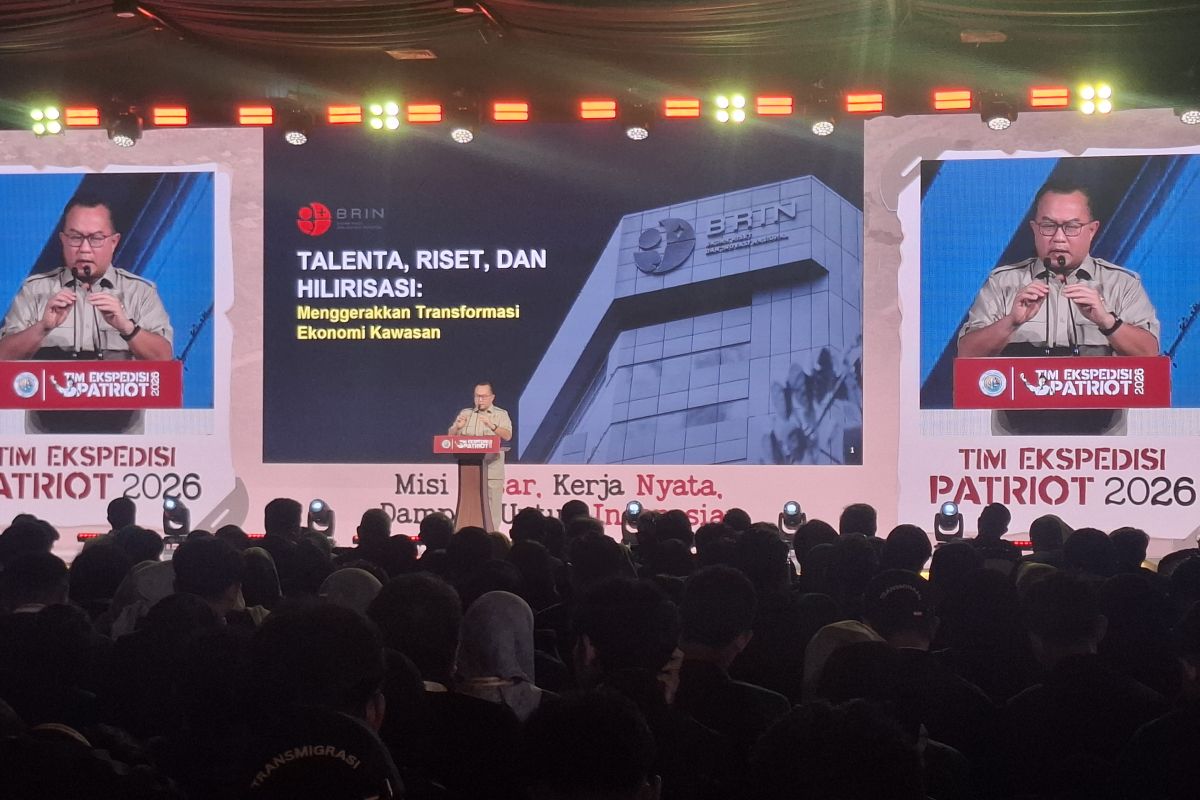
Jakarta (ANTARA) - Head of the National Research and Innovation Agency (BRIN) Arif Satria said research must be the foundation of downstreaming so that it yields value-adding innovations capable of strengthening national industry, improving competitiveness and driving economic growth.
He said research must not stop at scientific publication, but must develop into technology, be applied as innovation and be commercialised into industrial products.
“Research must be directed towards accelerating downstreaming so it can generate added value,” Arif said while briefing the 2026 Patriot Expedition Team in Jakarta on Wednesday.
According to him, strengthening research and innovation is an important prerequisite for building a strong real economy capable of supporting the national economic growth target.
“If we want to become the world’s fourth-largest economy by 2050, one of the prerequisites is stable economic growth in the range of 6 to 7 per cent. And that can only happen if there is a strong quality real economy,” he said.
He explained that the innovation process begins with scientific discovery, continues into technology, is applied as innovation, then commercialised until it gives rise to industrial activities that deliver economic benefits.
Arif said research must also start from society’s needs so that the resulting technology genuinely solves problems on the ground.
“Research should not be based solely on researchers’ imagination. Research should also look at the aspirations and needs of our users,” he said.
He said researchers need to understand the needs of farmers, fishers, business operators and communities before designing research, so that findings can be widely applied and replicated across regions.
According to Arif, Indonesia has great capital to strengthen its research ecosystem through its natural resource wealth combined with science, technology and innovation.
He cited research that has driven the diversification of palm oil derivative products, no longer limited to cooking oil but also including biodiesel, third-generation sugar, biomaterials and various other industrial products.
In addition, seaweed can be a raw material for carrageenan used in the aerospace industry and various biomaterial-based products.
He assessed that collaboration between BRIN, universities, regional governments, industry, micro, small and medium enterprises (MSMEs) and communities is key so that research results do not remain as documents but deliver real economic benefits.
“The technologies you create must answer needs and then be disseminated. Involve the Ministry of Transmigration, involve BRIN, involve universities to show that you bring benefits,” Arif said.
In his presentation, Arif noted that Indonesia currently ranks 55th in the Global Innovation Index. He also said the number of patent applications filed in Indonesia in 2024 was around 15,000, far below China’s roughly 1.8 million patents.
According to him, this situation is a challenge for strengthening the national innovation ecosystem.
Based on BRIN data, Indonesia has more than 4,400 higher education institutions with around 303,000 lecturers and nearly 10 million students, which is considered great capital for strengthening the research, technology development and innovation ecosystem to support national development.
Arif added that the Patriot Expedition Team is expected to act as a bridge between research results and community needs in transmigration areas through collaborative development, innovation mentoring and ecosystem development capable of improving community welfare.
Source: jawawa.id (https://jawawa.id/newsitem/brin-says-research-must-be-the-foundation-of-downstreaming-to-boost-added-value-1785304499)
Originally published by Antara (Indonesian) (https://www.antaranews.com/berita/5670624/brin-sebut-riset-harus-jadi-dasar-hilirisasi-tingkatkan-nilai-tambah), translated from Indonesian