
BRIN Says Eternal Ice on Puncak Jaya Will Never Return, Reveals Trigger
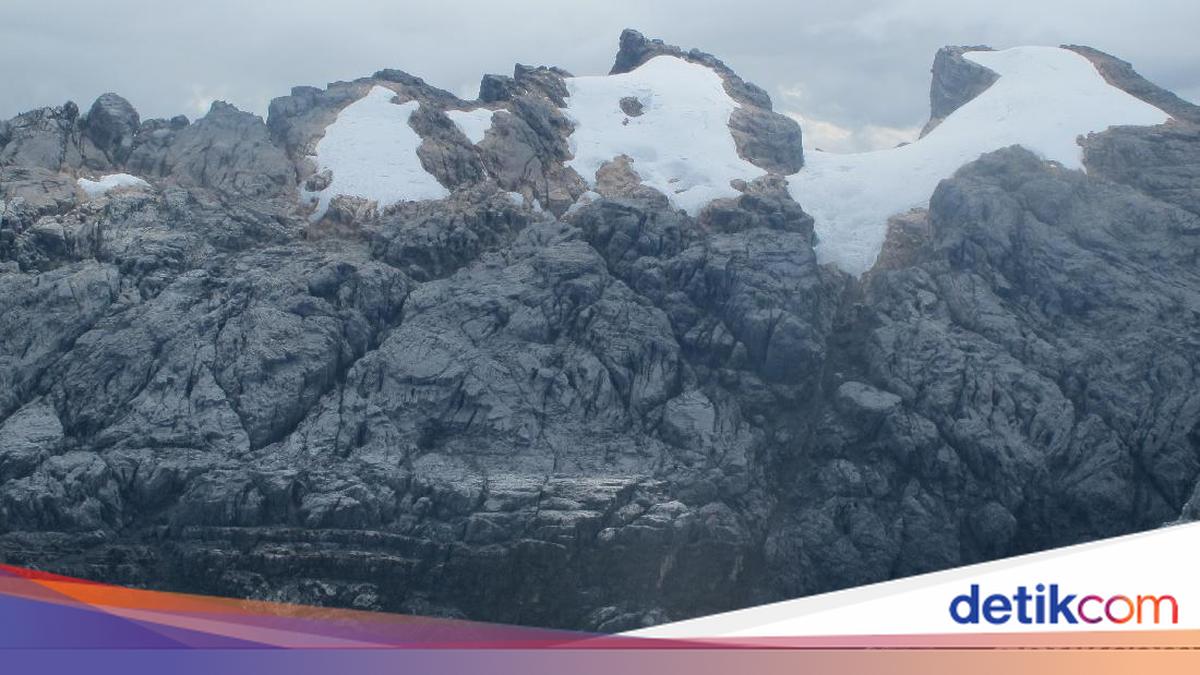
The Meteorology, Climatology and Geophysics Agency (BMKG) has stated that the eternal ice on Puncak Jaya, Papua, continues to melt year after year and is expected to disappear by the end of 2026 or early 2027. The National Research and Innovation Agency (BRIN) has confirmed that the ice, once melted, will never return. “If the ice disappears on Puncak Jaya, it is impossible for it to return because global temperatures continue to rise, so it is getting hotter,” said BRIN Astronomy Researcher Professor Thomas Djamaluddin on Saturday (4/7/2026). Thomas noted that the melting of mountain glaciers is now occurring everywhere, driven by global warming. “The eternal ice on Puncak Jaya in Papua is also affected by global warming, causing the ice layer to continue melting and decreasing in area and thickness,” he added. However, Thomas stated that the melting ice on Puncak Jaya will not have a significant impact. “Globally, the melting of mountain glaciers adds to the rise in sea levels. Locally, the melting of a mountain glacier does not appear significant because it occurs gradually,” he explained. As previously reported, BMKG stated that the eternal ice on Puncak Jaya, Papua, continues to melt year after year. BMKG estimates the eternal ice will be completely gone by the end of 2026 or early 2027. “Soon, Indonesia may lose its eternal ice forever. The ice on Puncak Jaya, Papua, continues to shrink from year to year. According to BMKG climatology experts, the eternal ice that has survived for thousands of years is expected to disappear completely by the end of 2026 or early 2027,” BMKG wrote on its official Instagram account on Friday (3/7). In 1988, BMKG noted, the tropical glacier in Jayawijaya stretched over 4.3 square kilometres. By September 2025, its area had shrunk to just 0.09 square kilometres. BMKG stated that the ice thickness is also continuously decreasing. In 2010, the ice thickness reached 32 metres. By 2016, the thinning rate had reached 2.5 metres per year. “In 2023, stakes indicated the remaining ice thickness was only 4 metres,” according to BMKG. The latest monitoring reportedly shows the ice has melted completely. BMKG stated that the disappearance of the eternal ice on Puncak Jaya was triggered by a combination of global climate change and El Niño, which caused hotter temperatures and drier weather in Indonesia. “Many researchers estimate that the eternal ice in Papua has only a matter of months before it completely disappears,” BMKG wrote.