
BRIN Reveals Wave and Sea Current Conditions When Virgo Transport 8 Lost Contact in the Java Sea
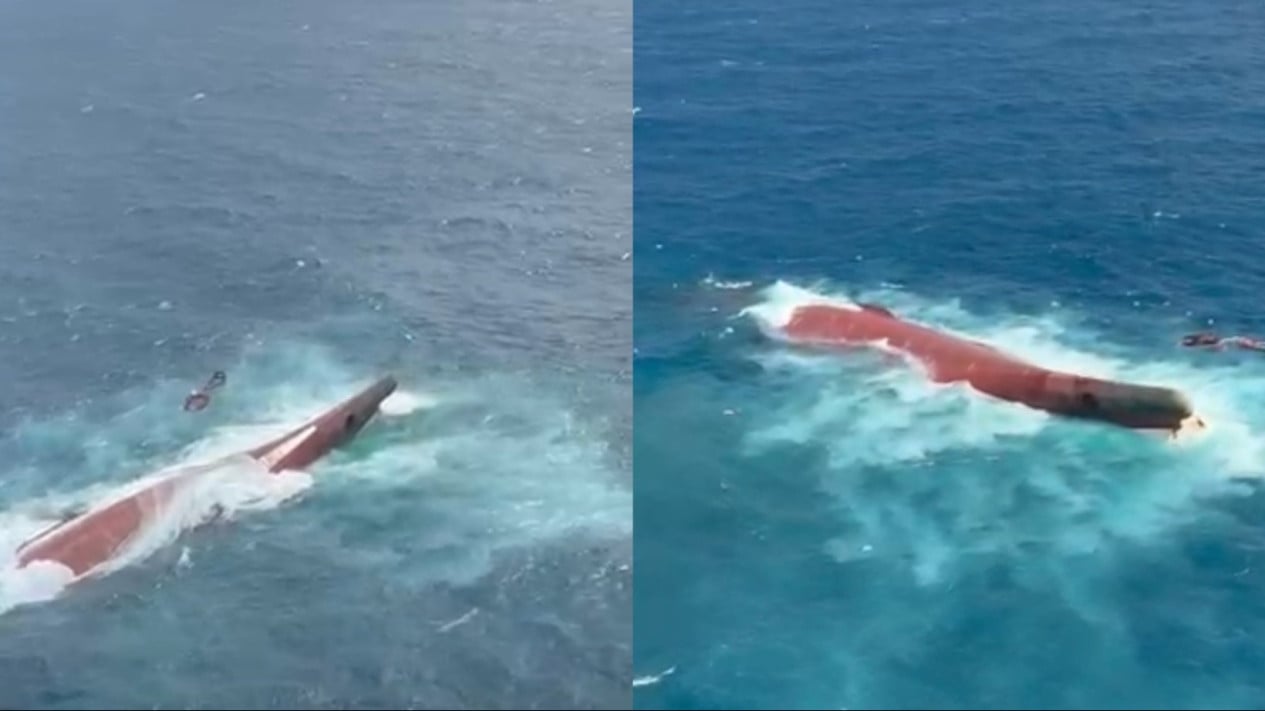
Jakarta, VIVA – The National Research and Innovation Agency (BRIN) has released an analysis of wave, tidal and sea current conditions at the time KM Virgo Transport 8 lost contact in the Java Sea on Sunday, 13 September, at around 01.00 WIB.
Widodo Setiyo Pranowo, a researcher at BRIN’s Centre for Climate and Atmosphere Research, said the analysis showed that sea conditions at the location of the incident were choppy.
However, he noted that wave heights at the time of the incident fell into the moderate category and were not extreme.
“The significant wave height was recorded at around 1.56 metres, with a period of about six seconds. Under the maritime safety classification used in the study, this figure falls into the moderate category (1.25–2.50 metres). The high category begins at 2.50 metres, while the very high category begins at 4 metres,” he said.
He explained that the wave conditions on the night of the incident were dominated by locally wind-generated waves, around 96 per cent of the total height, rather than swells propagating from distant regions.
“Based on the wave characteristics and their period, surface wind speeds were estimated at around 6.4–8.3 metres per second, or 12–16 knots, which falls within Beaufort scale 4–5,” he said.
He said the waves came from the south-east to east, at around 122 degrees, meaning that geometrically they struck the vessel from the side, or beam seas. This condition could cause the ship to experience repeated rolling motions.
Ship dynamics analysis estimated the wave period at around 5.66–6.47 seconds, while the natural rolling period of a vessel measuring approximately 119 metres in length and 21 metres in breadth would be in the range of 11–18 seconds, based on the range of stability parameters used in the study.
This difference in periods indicates that no roll amplification through resonance was formed in the scenario analysed.
With the study parameters available, the ship’s inclination due to waves was estimated at 5.9 degrees under general conditions, and 11.2–11.9 degrees under the highest wave loading. The contribution of wind to the inclination was estimated at less than half a degree.
“These figures are below the inclination threshold of around 25 degrees, which in the study was used as an early indication of water entering through deck openings, and far below the range of 50–60 degrees associated with the loss of the ship’s ability to right itself,” he said.
In addition to the analysis of wave conditions, Widodo said the study produced findings that could serve as input for the search operation.
Source: jawawa.id (https://jawawa.id/newsitem/brin-reveals-wave-and-sea-current-conditions-when-virgo-transport-8-lost-contact-in-the-java-sea-1789494682)
Originally published by VIVA.co.id (https://www.viva.co.id/berita/nasional/1928867-brin-beberkan-kondisi-gelombang-hingga-arus-laut-saat-kapal-virgo-transport-8-hilang-kontak-di-laut-jawa), translated from Indonesian