
BRIN reveals Indonesia's potential to become world palm oil biogas producer
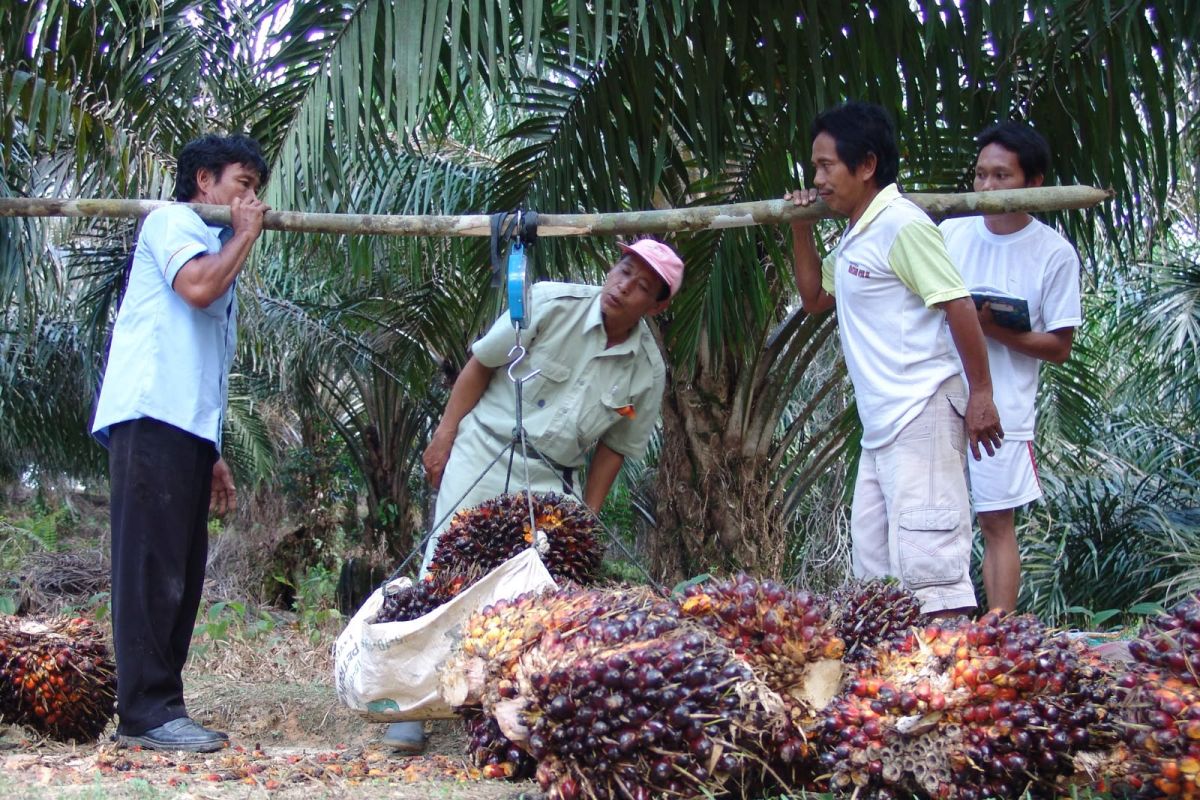
The National Research and Innovation Agency (BRIN) has revealed that Indonesia possesses significant capital to become one of the main players in the development of biogas based on palm oil waste.
According to BRIN researcher Prof Dr Erma Yulihastin, this is supported by the availability of palm oil waste in large quantities as well as the opportunity to utilise it as a renewable energy source with added value for the economy and the environment.
“Indonesia has great potential to develop biogas from palm oil mill effluent (POME) or liquid palm oil waste. POME is a strategically valuable energy source because it can be processed into electricity, heat and fuel,” she said in a statement in Jakarta on Tuesday.
The potential for developing biogas based on palm oil waste is supported by the national palm oil plantation area, which reaches around 16.8 million hectares with fresh fruit bunch (FFB) production of around 250 million tonnes per year.
From every tonne of FFB, around 0.5 tonnes of POME can be produced. Thus, Indonesia has the potential to produce around 125 million tonnes of POME each year as raw material for biogas production.
“This POME contains high organic material and is available continuously as long as the palm oil mill operates,” she added.
Prof Erma explained that the development of biogas based on palm oil waste will provide positive benefits for the environment, economy and society. From an environmental perspective, utilising POME to produce biogas can reduce the release of methane gas from open waste ponds.
In addition, processing POME into biogas can lower the organic material content in the waste, reduce odour, and mitigate the risk of pollution to water sources and soil.
She emphasised that the utilisation of POME can support renewable energy development targets while reducing emissions because it is able to replace the use of fossil-based fuels. Based on research, a biogas facility is capable of reducing emissions by around 1,131 tonnes of CO₂ equivalent per month.
From an economic and social perspective, she added, the utilisation of POME can create jobs related to the construction, operation and maintenance of biogas facilities.
She said biogas can also reduce the energy costs incurred by palm oil mills and serve as fuel for vehicles or local industry after undergoing a purification process into bio-compressed natural gas (bio-CNG).
“So, the economic benefits can be felt by companies, local workers and surrounding communities as long as management directly involves the regions,” she added.
The government, through the Plantation Fund Management Agency (BPDP), has continued to encourage innovation and development of palm-based bioenergy to reduce dependence on fossil energy imports, improve the oil and gas trade balance, reduce greenhouse gas emissions, and mitigate global warming and climate change.
One of BPDP’s efforts to support innovation in improving POME biogas technology and products is through the Palm Oil Research Grant (GRS) programme. BPDP’s funding support is provided comprehensively, from design, installation and production to testing on vehicles.
Executive Director of the Palm Oil Agribusiness Strategic Policy Institute (PASPI) Tungkot Sipayung added that the energy potential from developing biogas based on palm oil waste is very large.
He detailed that every tonne of POME can produce around 28.8 cubic metres of biogas through the application of methane capture technology.
With a POME potential of around 125 million tonnes per year, Indonesia as a whole has the potential to produce around 3.6 billion cubic metres of biogas annually.
Tungkot Sipayung stated that a national policy is needed to optimise the utilisation of POME-based biogas in Indonesia, especially since the current utilisation of POME for biogas in Indonesia is only around 15 percent of the total available potential.
He proposed three main policies to optimise the utilisation of POME-based biogas, namely the implementation of palm-based carbon trading, particularly for POME.
The implementation of mandatory methane capture at every palm oil mill in Indonesia with investment incentive support, as well as the implementation of a mandatory blending of biogas with fossil gas for energy in Indonesia.
“If these three policies can be implemented in Indonesia, I am confident that all palm oil mills will build methane capture facilities and the result will increase gas availability, increase the availability of bioelectricity, reduce emissions, and add new income for palm oil mills,” he said.
Source: jawawa.id (https://jawawa.id/newsitem/brin-reveals-indonesias-potential-to-become-world-palm-oil-biogas-producer-1787039835)
Originally published by Antara (Indonesian) (https://www.antaranews.com/berita/5699601/brin-ungkap-indonesia-berpeluang-jadi-produsen-biogas-sawit-dunia), translated from Indonesian