
BRIN Researcher Raises Concerns About Siomai Made from Catfish, Should the Public Be Worried?
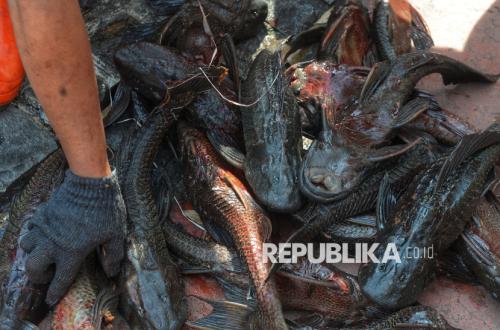
REPUBLIKA.CO.ID, JAKARTA – A researcher from the Centre for Limnology and Water Resources at the National Research and Innovation Agency (BRIN), Triyanto, stated that catfish living in Indonesia’s freshwater ecosystems contain dangerous heavy metals if consumed in excessive amounts. Speaking at the BRIN office in Jakarta on Thursday (30/4/2026), Triyanto explained that the negative effects of these heavy metals on the human body only become apparent if a person consumes up to eight kilograms of catfish meat per week over a long period.
“So, people who have already consumed it or unknowingly eaten siomai containing catfish meat should not worry or be anxious,” he said.
Nevertheless, Triyanto emphasised that he is not downplaying the issue of consuming catfish meat. As a researcher, he urged the public to be cautious about catfish meat in processed fish products, which is often used by unscrupulous traders engaging in deceitful practices.
“The important thing is that we are more careful. We should ask the seller, ‘Excuse me, is this meat healthy or not?’, something like that,” he said.
Triyanto also noted that catfish, like other fish, contains protein, carbohydrates, and fats that are indeed needed by humans. However, he pointed out that almost no catfish is guaranteed to be clean, due to its natural behaviour of eating anything, including absorbing heavy metals.
Triyanto explained that these heavy metals do not exit through excretion in the form of faeces, but instead enter the liver via the digestive tract and then become part of the flesh because proteins bind to the heavy metals.
“Heavy metals have bioaccumulative properties; they do not decrease. But since they have been moved to clean water, the content will not increase. As long as they are controlled in clean water, the absorbed heavy metals remain there,” Triyanto elaborated.