
BRIN Researcher Highlights Technology Approach to Prevent Landfill Fires
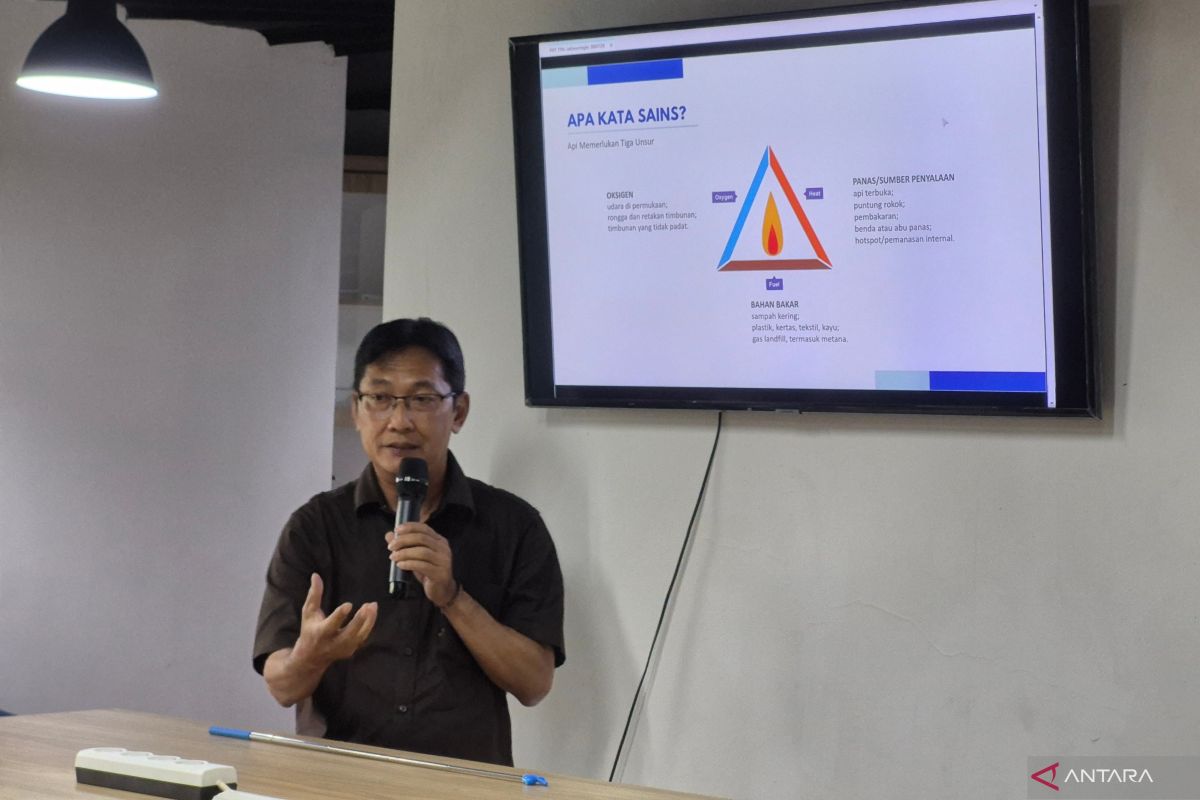
A researcher from the National Research and Innovation Agency (BRIN) has underscored that no single technology is suitable for all types of waste and all regions. Wahyu Purwanta, a Principal Researcher at the Centre for Environmental Technology and Clean Technology, stated that a more appropriate approach involves selecting technology based on waste characteristics, the scale of generation, regional conditions, infrastructure readiness, market for products, and long-term financing and operational capabilities to avoid the risk of landfill fires.
Speaking during a discussion in Jakarta on Thursday, he said, ‘It must be emphasised that technology is not merely about purchasing equipment. Success heavily depends on the suitability of the technology to the waste characteristics, the quality of operation and maintenance, operator competence, monitoring systems, and certainty in managing the resulting products and residues.’
Wahyu noted that organic waste can be reduced through composting, biodigesters or anaerobic digestion, and certain bioconversion technologies. Valuable materials should be sorted and returned to the recycling chain. To prevent fire risks, he mentioned that combustible waste fractions with sufficient calorific value could be considered for processing into refuse-derived fuel (RDF) or utilised through thermal and waste-to-energy technologies that meet technical and environmental requirements.
‘Technologies to prevent fires at final disposal facilities also need to be developed, including temperature monitoring, thermal cameras and drones, gas sensors, landfill gas management, and early warning systems based on combined data of waste accumulation and weather,’ he explained.
Wahyu further stressed that landfills have inherent fire risks that must be recognised early through improved operations, monitoring of waste pile conditions, gas management, hotspot detection, fire source surveillance, and heightened preparedness during the dry season. He simultaneously urged local governments to establish clear plans to reduce the amount of waste ending up in final disposal facilities.
According to Wahyu, fire prevention must begin with active and controlled landfill management. At operational facilities, risks can be reduced by limiting the active working face area, regularly compacting and covering waste, managing landfill gas, supervising potential fire sources, and maintaining special preparedness during the dry season. ‘In the long term, the policy direction must ensure that less mixed waste enters final disposal facilities. Reduction, sorting, recycling, organic waste processing, and the utilisation of valuable fractions must be strengthened, so that ultimately final disposal facilities receive mostly residues and are operated in a more controlled manner,’ he concluded.