
BRIN Research Keeps Bakpia Fresh for Almost Two Months
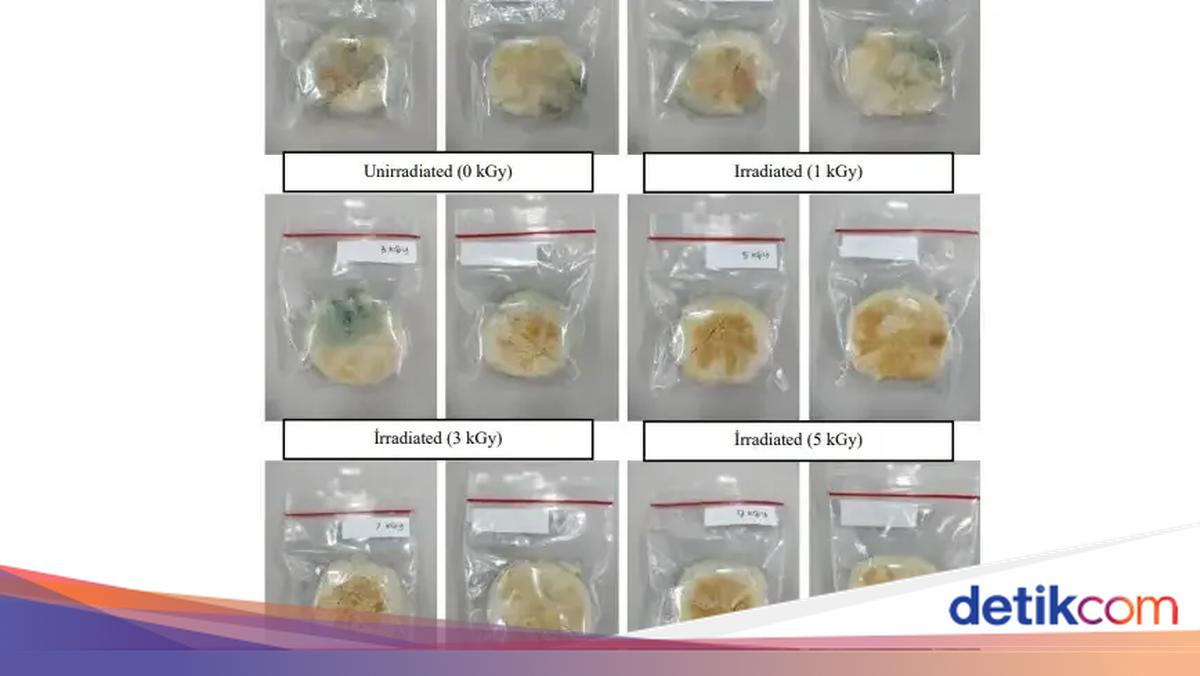
Gamma irradiation technology has the potential to extend the shelf life of wet mung-bean bakpia. Research by lecturers at the Indonesian Nuclear Technology Polytechnic (Poltek Nuklir) of the National Research and Innovation Agency (BRIN) found that the technology can inhibit the growth of several bacteria and delay the appearance of mould.
Notably, gamma irradiation did not cause significant changes to the protein and carbohydrate content of the wet bakpia.
The study, entitled “Mung Bean Bakpia Basah Preservation Using Gamma Irradiation Under Codex Alimentarius Commission (CAC) Standard: Effect on Vegetative Bacteria, Protein, Carbohydrate Content, and Shelf Life”, was written by Dhita Ariyanti, Alira Hasna and Auriela Samara. The article was published in the Journal of Tekirdag Agricultural Faculty, Volume 23, Issue 5, October 2026.
Dhita explained that wet bakpia has a relatively short shelf life because of its high water content, particularly in the mung-bean filling.
“This condition can support the growth of microorganisms that reduce product quality and increase the risk of food contamination. Therefore, preservation technology is needed that can extend shelf life while maintaining product quality,” Dhita said, as quoted on BRIN’s website on Saturday (7 November 2026).
The team used a Cobalt-60 gamma radiation source at six different doses: 0, 1, 3, 5, 7 and 9 kGy. Tests examined the effects of irradiation on bacterial growth, moisture, protein and carbohydrate content, and physical changes in the bakpia during storage for up to 50 days.
The results showed that gamma irradiation at doses of 1–9 kGy could suppress Staphylococcus aureus and Escherichia coli bacteria to below the test’s detection limit.
Dhita said gamma irradiation works through ionising radiation, which can damage the genetic material and cell structures of microorganisms, thereby inhibiting their ability to reproduce.
“However, the study also found that Bacillus cereus could still be detected under certain treatments, including at the highest irradiation dose tested,” Dhita said.
She said this was related to Bacillus cereus’s ability to form spores that are more resistant to radiation. Gamma irradiation therefore still needs to be combined with other control methods, such as low-temperature storage, to ensure food safety.
“Regarding shelf life, observations over 50 days showed that mould began to appear on samples without irradiation on day 11. In samples treated with a 9 kGy dose, mould was not detected until between days 32 and 50,” she added.
Dhita said doses of 5 kGy and 7 kGy also extended the shelf life of wet bakpia to more than 30 days by significantly slowing mould growth. Based on these findings, she said, both doses merit further study in the development of preservation technology for wet bakpia.
Dhita also said the study assessed changes to the nutritional composition of wet bakpia after gamma irradiation.
“The analysis showed that the treatment significantly reduced moisture levels. The moisture content of untreated samples was 31.32%, while irradiated samples ranged from 18.55% to 19.66%,” she said.
By contrast, protein and carbohydrate levels showed no statistically significant differences among the treatments analysed.
Dhita said the findings indicate that gamma irradiation could extend shelf life without significantly changing these two nutritional components under the conditions of the study.
The research also demonstrates the potential use of nuclear technology in the food sector, particularly to improve the shelf life of traditional Indonesian products. The technology could offer an alternative preservation method, allowing local food products to be distributed more widely.
“Even so, its application requires further study, particularly to ensure control of Bacillus cereus, the suitability of doses for the product’s characteristics, and compliance with applicable food safety requirements,” she concluded.
Source: jawawa.id (https://jawawa.id/newsitem/brin-research-keeps-bakpia-fresh-for-almost-two-months-1794012681)
Originally published by detikcom (https://news.detik.com/berita/d-8742124/penelitian-brin-bikin-bakpia-tak-basi-sampai-hampir-2-bulan), translated from Indonesian