
BRIN promotes spirulina as sustainable aquaculture feed solution
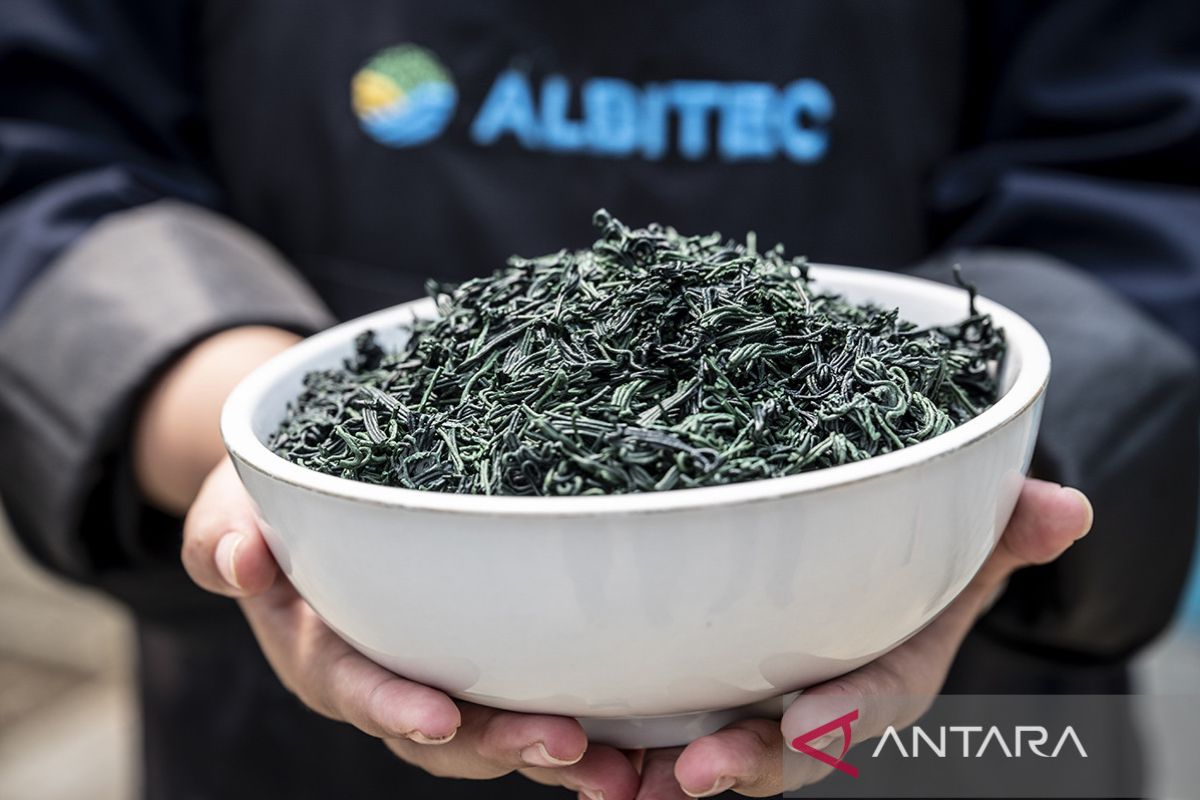
Jakarta (ANTARA) — The National Research and Innovation Agency (BRIN) is promoting the use of spirulina microalgae (Spirulina platensis) as an innovative solution to support sustainable fish farming (aquaculture) and the fisheries industry in Indonesia.
Siti Faridah, a researcher at BRIN’s Marine Cultivation Research Centre, said during a discussion in Jakarta on Tuesday that spirulina has extraordinary potential as a raw material for functional feed, both in the hatchery and grow-out phases of fisheries commodities.
“Beyond serving as an industrial commodity in its own right, spirulina output strongly supports fisheries industry activities. Spirulina can serve as a nutritional enrichment in feed for hatchery and grow-out operations,” said Siti.
Spirulina was chosen over other types of microalgae because of its rapid growth rate, ease of harvesting, and its superior, highly digestible nutritional content.
Siti revealed that spirulina has an exceptionally dense protein content of up to 65 per cent, surpassing other conventional protein sources — its protein level is recorded as six times higher than eggs and three times higher than beef, as well as exceeding chicken, milk, and cheese.
Regarding its development, Siti explained that spirulina cultivation passes through three main stages: laboratory-scale culture, intermediate culture, and mass-scale culture. At the mass production stage, the systems used have become increasingly advanced, ranging from conventional ponds to photobioreactor technology.
“Photobioreactors are better than conventional systems because we can use very little land whilst producing more maximally, and contamination is minimised — although this requires greater cost and technological mastery,” she explained.
She added that the key to the microalga’s successful growth is influenced by temperature, salinity, light intensity, and water pH.
Siti cited data from Unleaded Market Research projecting that the global spirulina market will surge from US$393.6 million in 2019 to US$897.61 million by 2027.
Although the global production chain is still dominated by China, a domestic spirulina industry is slowly taking shape in Indonesia.
Siti noted the existence of two large-scale pioneering companies in Semarang, Central Java, whose combined production capacity is claimed to have reached 108 tonnes per year.
“The business prospects of spirulina cultivation are highly worth developing further, so that it can help bring about an advanced and modern fisheries industry in Indonesia,” said Siti.