
BRIN promotes research sovereignty for indigenous communities through PRIS expedition
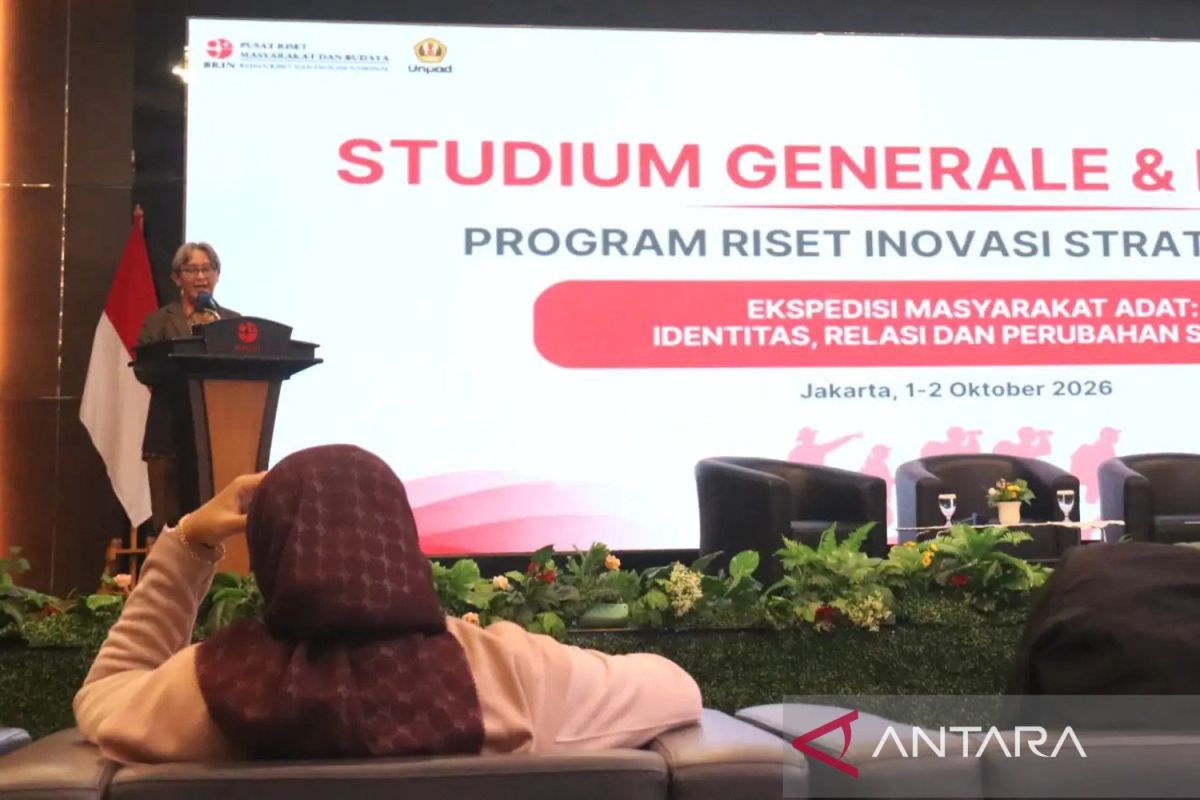
Jakarta (ANTARA) - The National Research and Innovation Agency (BRIN) is promoting research sovereignty for indigenous communities, aiming to position them as subjects in the production of knowledge rather than merely objects of research through the Strategic Innovation Research Program (PRIS) Indigenous Community Expedition.
The Acting Head of the Social Sciences and Humanities Research Organisation (OR IPSH) at BRIN, Muhammad Najib Azca, emphasised that research concerning indigenous peoples must strengthen community agency while ensuring that studies are conducted with high ethical integrity.
“Research on indigenous communities tests our ethical integrity as a state research institution. Are we strengthening community agency, or are we, without realising it, becoming part of an extractive chain?” he stated in a briefing in Jakarta on Friday.
Through the research expedition, which was initiated alongside the Ministry of Higher Education, Science, and Technology and the Faculty of Social and Political Sciences at Padjadjaran University (FISIP Unpad), Najib asserted that strengthening indigenous agency is a vital part of how research institutions position communities within the research process.
Consequently, the expedition conducted under this programme is not intended to treat indigenous communities as research objects, but rather as a process of mutual learning to understand identity, social relations, and the changes faced by these communities.
“This is not merely a research programme. It is also a human resource strengthening programme that connects research activities with the development of researcher talent. Programmes like this need to be continuously developed and expanded,” said Najib.
Meanwhile, the Head of the Centre for Society and Culture Research (PRMB) at BRIN, Aulia Hadi, explained that the PRIS Indigenous Community Expedition has been designed since 2025 as a collaborative platform bringing together BRIN researchers, universities, and research assistants pursuing education through the DbR scheme.
According to Aulia, research on indigenous communities stems from Indonesia’s vast cultural diversity, as well as the gap between general narratives regarding indigenous peoples and the realities faced by communities at the local level.
“We do not want indigenous communities to be merely objects of study. They must also be involved in shaping and producing knowledge,” said Aulia.
It is noted that the research employs an ethnographic approach, placing research teams in the field for three to four months.
The research expedition covers seven main themes: culture and social cohesion; culture and governance practices; cultural ethos and local economy; adaptation to socio-ecological changes; responses to globalisation; local cultural models and soft power; and the production of knowledge and public policy.
In addition to producing scientific publications and developing socio-cultural theories, the programme is directed towards strengthening local knowledge networks and generating policy recommendations relevant to indigenous communities.
A total of 29 DbR participants from various universities across Indonesia are involved in the programme, consisting of 13 doctoral students and 16 master’s students who will conduct research in various indigenous community locations.
Source: jawawa.id (https://jawawa.id/newsitem/brin-promotes-research-sovereignty-for-indigenous-communities-through-pris-expedition-1790945851)
Originally published by Antara (Indonesian) (https://www.antaranews.com/berita/5768872/brin-dorong-kedaulatan-riset-masyarakat-adat-lewat-ekspedisi-pris), translated from Indonesian