
BRIN Partners with UGM to Develop Healthy Garlic Seed Technology
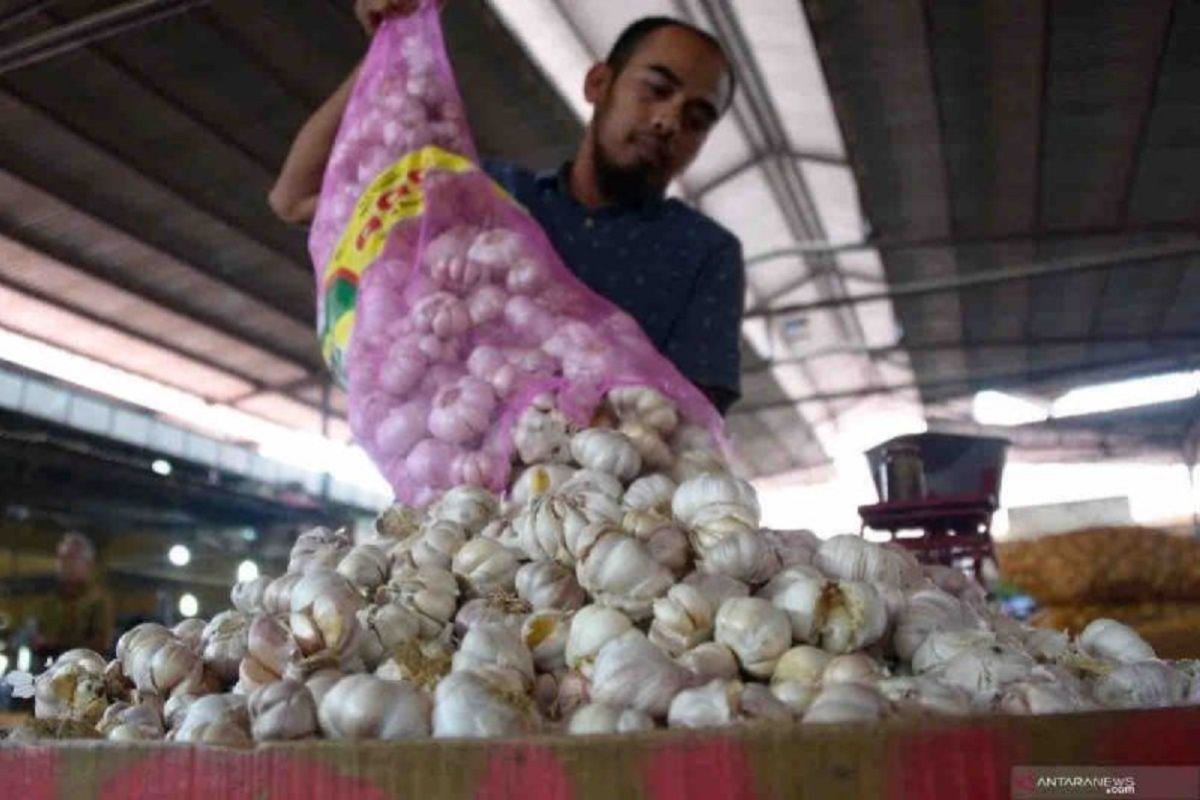
The Horticulture Research Centre of the National Research and Innovation Agency (BRIN), together with the Faculty of Agriculture at Universitas Gadjah Mada (UGM), is developing technology for the production of healthy and high-quality garlic seeds under the Strategic Research and Innovation Programme (PRIS).
Dwinita Wikan Utami, Head of BRIN’s Horticulture Research Centre and the person responsible for the garlic PRIS, explained that healthy seed production technology is necessary to ensure the superiority of bred varieties can be maintained in the long term. "We need virus elimination technology that is effective, easy to apply, and affordable so it can be widely utilised by seed producers and farmers to maintain the quality of planting material," she said in a statement in Jakarta on Monday.
Dwinita stated that this research focuses on eliminating viruses carried in garlic planting material. To this end, BRIN is developing virus elimination methods, designing a prototype virus elimination device, and testing the effect of these treatments on plant growth and productivity. In this study, the research team also identified the presence of viruses in garlic planting material.
Sedyo Hartono, a plant virology expert from UGM’s Faculty of Agriculture, explained that UGM’s testing detected a dual infection of Onion yellow dwarf virus (OYDV) and Shallot latent virus (SLV) in approximately 80 per cent of samples from Enrekang, Magelang, Temanggung, Tawangmangu, and Yogyakarta, including seed bulbs, consumption bulbs, and leaves both symptomatic and asymptomatic. "Symptoms of viral infection are not always clearly visible on plants. In the field, the impact can be masked by other diseases, especially those caused by fungi. Further research will measure the treatment’s ability to reduce the virus titre while assessing its effect on growth, productivity, and plant susceptibility to other diseases," Sedyo explained.
The virus elimination research is planned to last for two years. In the initial stage, the research is focused on method validation and the development of a laboratory-scale virus elimination device prototype. The next stage will test the response of the eliminated plants in the field while encouraging the development of the device with industrial partners so it can be utilised on a seed producer scale.
In addition to developing virus elimination technology, the garlic PRIS also targets the development of large-bulb garlic varieties from softneck and hardneck types, varieties adaptive to medium altitudes, dormancy-breaking technology, a germplasm database based on phenotype and genotype, and operational standards for the production of healthy and high-quality seeds. All these outputs will be tested to support the development of garlic production areas, including in the Food, Water, and Energy Self-Sufficiency Area (KSPAE) in Humbang Hasundutan, North Sumatra.