
BRIN: Innovative villages are the foundation for a competitive Lumajang
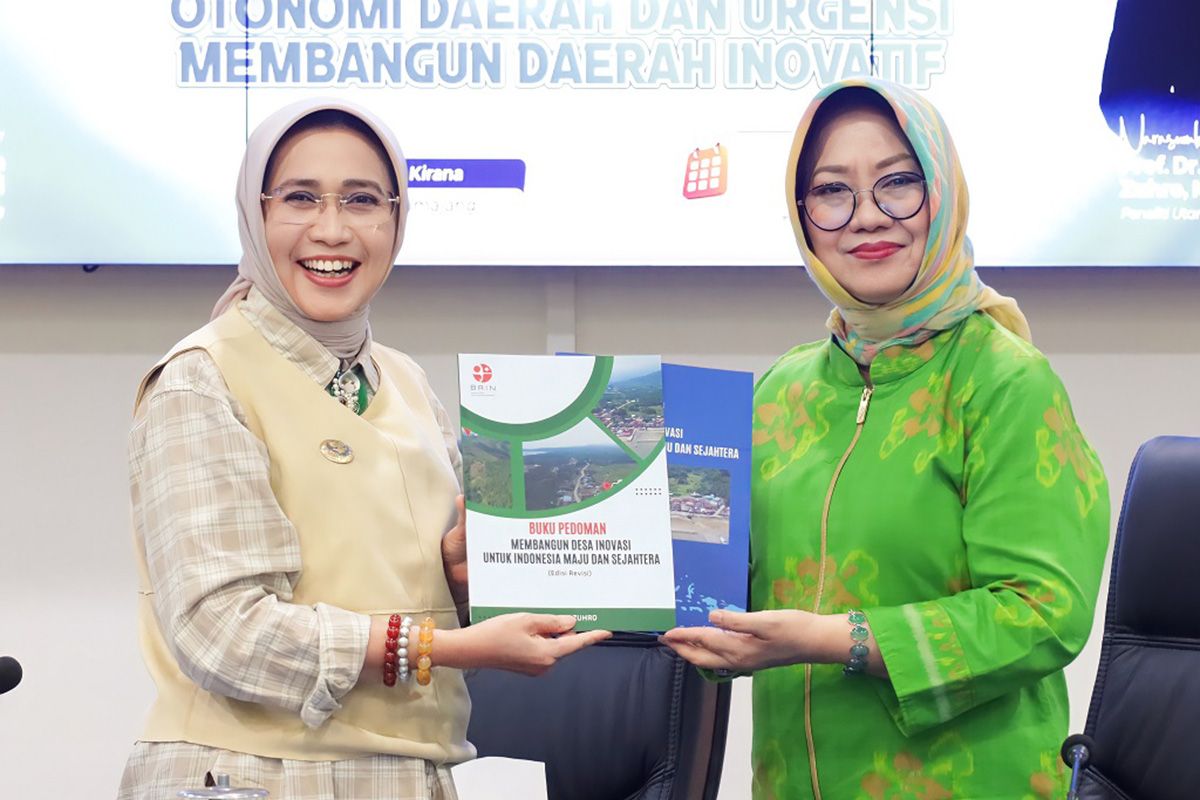
A senior researcher from the National Research and Innovation Agency’s (BRIN) Centre for Political Research, Prof Siti Zuhro, has stated that innovative villages are the foundation for realising a competitive Lumajang Regency. “Villages that are able to develop local potential through various innovations will become an important foundation for the creation of a more advanced, adaptive, and competitive regency,” she said during the Semeru Corpu Lumajang Series 6 event at the Regent’s Office on Friday. She explained that if Lumajang is to become an innovative regency, its villages must also be innovative, as village development will be more optimal if supported by leadership capable of driving change. She added that a region’s success is not measured by the number of programmes implemented, but by its ability to manage regional potential into tangible benefits for the community. “Innovation needs to become a culture in governance by prioritising collaboration, adaptive governance, and the utilisation of local potential as a driver of development,” she said. Through this approach, regions are expected to enhance competitiveness, strengthen the local economy, and deliver increasingly high-quality public services. Meanwhile, the Lumajang Regency Government is continuing to strengthen the culture of innovation within the state civil apparatus (ASN) to improve the quality of public services, making them faster, easier, more transparent, and impactful for the community. Lumajang Regent Indah Amperawati stated that innovation is no longer a choice but a necessity in regional governance. “The increasing expectations of the public must be met with a bureaucracy that is adaptive, collaborative, and solution-oriented,” she said. She explained that innovation is not always synonymous with creating something entirely new. Simplifying work processes, accelerating services, strengthening transparency, and enhancing accountability are forms of innovation whose benefits can be directly felt by the public.