
BRIN Implements Biosaline Rice Research Results in Jepara
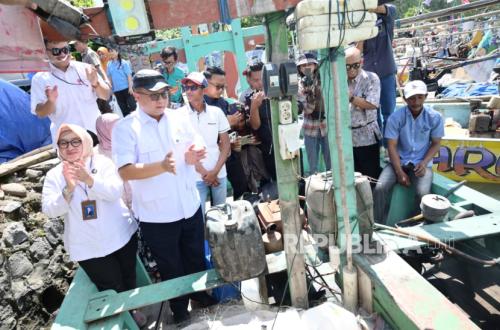
Indonesia’s National Research and Innovation Agency (BRIN) has begun implementing the results of research on the superior biosaline rice varieties in the field. This implementation is marked by the harvest of Biosalin 1 and Biosalin 2 rice in Bandungharjo Village, Jepara Regency.
BRIN Head Arif Satria stated that this harvest serves as proof that research does not end in the laboratory but is now being utilised by farmers. Biosalin is a superior variety resulting from collaboration between the Ministry of Agriculture and BRIN, which is now beginning to be disseminated in the Jepara region.
“Alhamdulillah, we have conducted the harvest for Biosalin 1 and Biosalin 2. This is a superior variety provided by the Ministry of Agriculture together with BRIN, and it is now being disseminated and implemented in the Jepara region,” he said on Friday (24/4/2026).
He expressed appreciation to the Jepara Regency Government for becoming a partner in the development of this variety. According to him, Biosalin has several advantages, including high productivity of up to 9 tonnes per hectare, resistance to high salinity, and suitability for marginal lands.
“This variety can produce up to 9 tonnes per hectare, is resistant in saline lands with high salinity, and is suitable for marginal lands. Its planting period is around 85 to 107 days, making it relatively short and better compared to other varieties,” he explained.
Arif emphasised that the development of superior varieties will continue to be carried out to boost national food production, particularly rice. He stressed the importance of maintaining food security sustainably.
“Although we are currently in surplus, we must still maintain that security, because the sustainability of the nation greatly depends on food and energy. Both of these must truly be strengthened,” he said.
He hopes that farmers in Jepara can utilise Biosalin more widely. Support from various parties, including PGN, is considered important to expand the implementation area of this variety.
As an initial step, Arif said that the development of Biosalin in the northern coastal region is prioritised on land covering about 1,100 hectares. In the future, the potential for expansion will continue to be widened to various regions with similar conditions at the national level.
“In the future, not only in Jepara, but also in various northern coastal regions and other areas with high salinity levels can use this variety,” he said.