
BRIN identifies new spiny eggplant species from Kalimantan
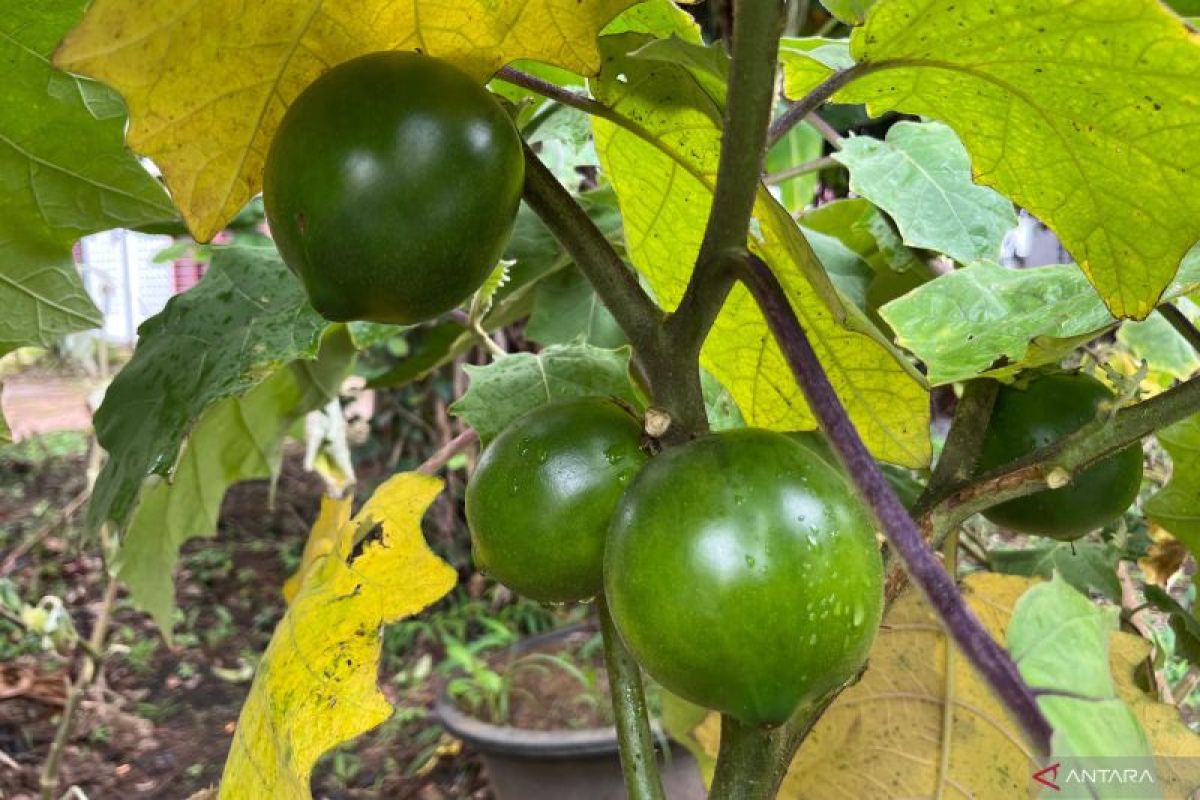
A research team from the National Research and Innovation Agency (BRIN) has identified a new spiny eggplant species from the Solanum genus native to Kalimantan, Indonesia. The species has been named Solanum kalimantanense T.Djarwaningsih, E.L.Agustiani & M.R.Hariri, after members of the research team, including Esthi L. Agustiani, Tutie Djarwaningsih, and Muhammad Rifqi Hariri from BRIN’s Centre for Biosystematics and Evolution Research, and Siti Susiarti from BRIN’s Centre for Ecology Research. BRIN researcher Muhammad Rifqi Hariri, in a statement in Jakarta on Sunday, highlighted the species’ distinctive morphological traits, including leaves of nearly equal length and width, very shallow leaf notches, a smooth and sparse surface on ripe fruit, and larger fruit size compared to Solanum lasiocarpum. He noted that DNA analysis using ITS markers revealed significant genetic differences from its closest relatives. BRIN researcher Tutie Djarwaningsih added that the plant is locally known as ‘terong asam’ or ‘terong dayak’ and has long been used as a food source. Its fruits are commonly found at Banjarmasin’s floating market and are typically cooked as vegetables. Additionally, communities in Kenohan District, East Kalimantan, use the plant’s leaves and flower buds as traditional medicine known as ‘wikat’ for cancer treatment. BRIN researcher Esthi L. Agustiani stated that Solanum kalimantanense grows in various soil types, from sandy clay to acidic black soil, at elevations between 9 and 1,700 metres above sea level, and is found in parts of East and South Kalimantan. Preliminary assessments suggest the species has a limited population, potentially qualifying it as ‘vulnerable’ under International Union for Conservation of Nature (IUCN) criteria. ‘An integrated approach using morphological observation and DNA barcoding has helped us accurately distinguish this species from its close relatives,’ said Esthi. The findings have been published in the international journal Taprobanica, Volume 15, Issue 1, 2026, and are accessible via: https://www.taprobanica.org/Archives/volume-15-20-2026-31/volume-15-number-1-2026/v15i1-401.html