
BRIN Highlights Indonesia's Nickel Governance Amid Global Regulatory and Investment Pressures
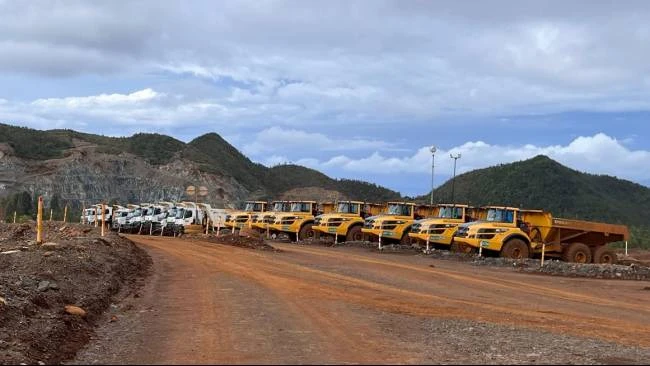
JAKARTA, KOMPAS.TV — Amid a surge in global demand for battery raw materials and electric vehicles, Indonesia is instead confronting new challenges: how to manage nickel without becoming ensnared by international regulatory pressures.
BRIN assesses that nickel governance is no longer merely a domestic issue, but rather caught in a complex vortex of global interests, ranging from investments to cross-border sustainability standards.
This issue is the focus of a discussion titled “Nickel Governance in Indonesia: The Interaction of Multiple Levels of Administration, Investment, and Regulation,” to be held by BRIN’s Political Research Centre in Jakarta this Tuesday (21/4/2026).
As the world’s leading nickel producer, Indonesia holds a strategic position in the global supply chain, particularly for the battery and electric vehicle industries.
This position opens up significant opportunities to increase value added through downstream policies, while simultaneously placing Indonesia under increasingly stringent global regulatory pressures.
Indonesia’s nickel downstream policy has undergone a long journey.
Introduced through the 2009 Mineral and Coal Mining Law, this policy was strengthened with a ban on nickel ore exports in 2014.
However, those regulations were temporarily relaxed in 2017 before being tightened again in 2020.
Currently, the policy direction is further emphasised with a focus on developing the national battery industry.
In the field, the implementation of this policy does not always run smoothly.