
BRIN Highlights Importance of Religious Institutions in Post-Disaster Trauma Recovery
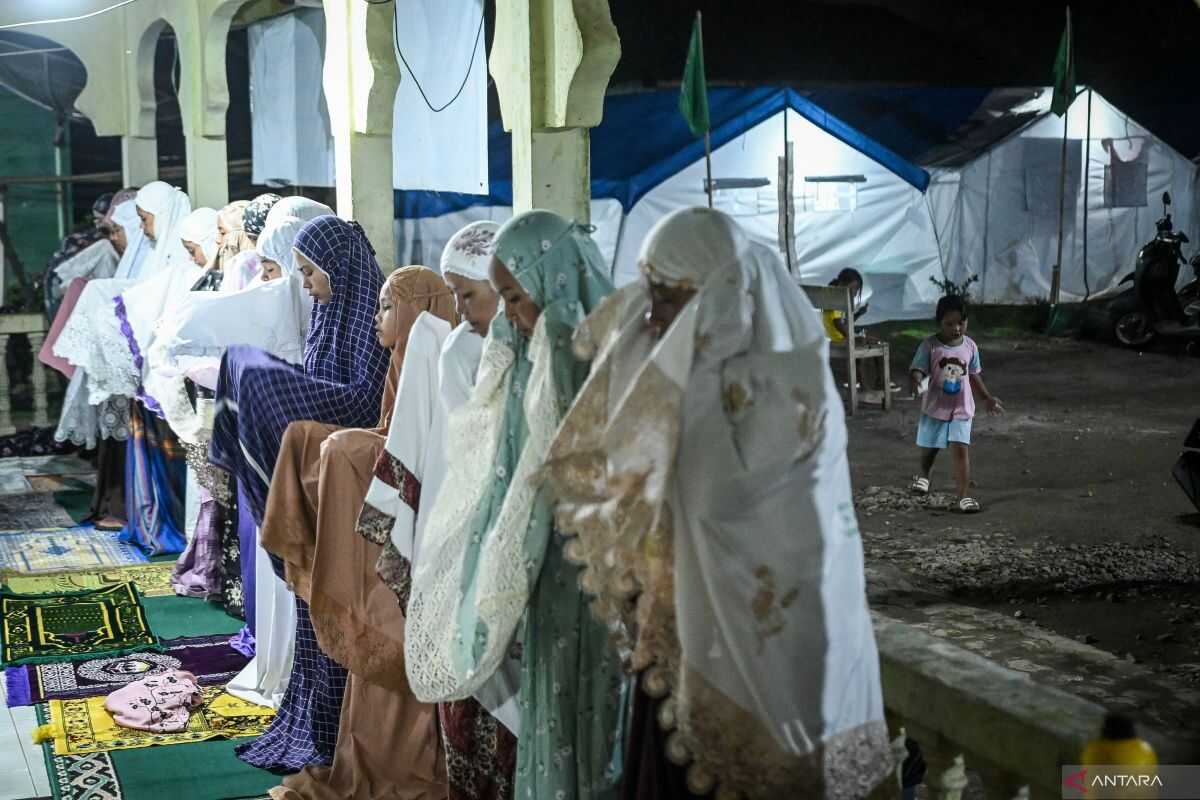
Jakarta (ANTARA) - Yumasdaleni, a researcher at the Centre for Religious and Belief Studies under the National Research and Innovation Agency (BRIN), has emphasised the importance of religious institutions in the process of post-disaster trauma recovery and ecosystem restoration.
Speaking at an online discussion entitled “Eco-Theology Resilience and Post-Disaster Citizen Science” held in Jakarta on Friday, she stated that spirituality holds a central position in helping individuals and communities recover from traumatic experiences.
“In post-trauma contexts, there is what we call spirituality and post-traumatic growth. Spirituality serves as a central force in the recovery process for individuals and disaster-affected communities,” Yumasdaleni said.
She noted that religious practices such as communal prayer, spiritual reflection, and nature-based activities can help survivors reinterpret disaster events in a constructive manner.
Through this approach, communities are not only encouraged to accept reality but also to undertake collective ethical transformation to avoid repeating patterns of environmental exploitation.
“Religious rituals as community unifiers are widely practised alongside psychological interventions,” she said.
She added that places of worship serve a strategic function as spaces for solidarity and social recovery. Therefore, during the emergency response phase, the re-establishment of places of worship becomes a vital component in building hope and togetherness.
Nevertheless, she cautioned that a spiritual approach alone is insufficient without the backing of firm policy measures.
“This strategy cannot rely solely on spiritual activities. Strict environmental regulations are also required,” she affirmed.
Yumasdaleni also highlighted the importance of religious institutions as agents of education and faith-based ecological advocacy, including promoting environmental conservation practices through community activities.
According to her, integrating religious values with environmental recovery efforts can strengthen the social, spiritual, and ecological resilience of disaster-affected communities.
“In eco-theology, humans, God, and nature are positioned as an interconnected whole,” she said.