
BRIN Focuses on Developing Strategic Technologies from AI to Nuclear for Indonesia's Future
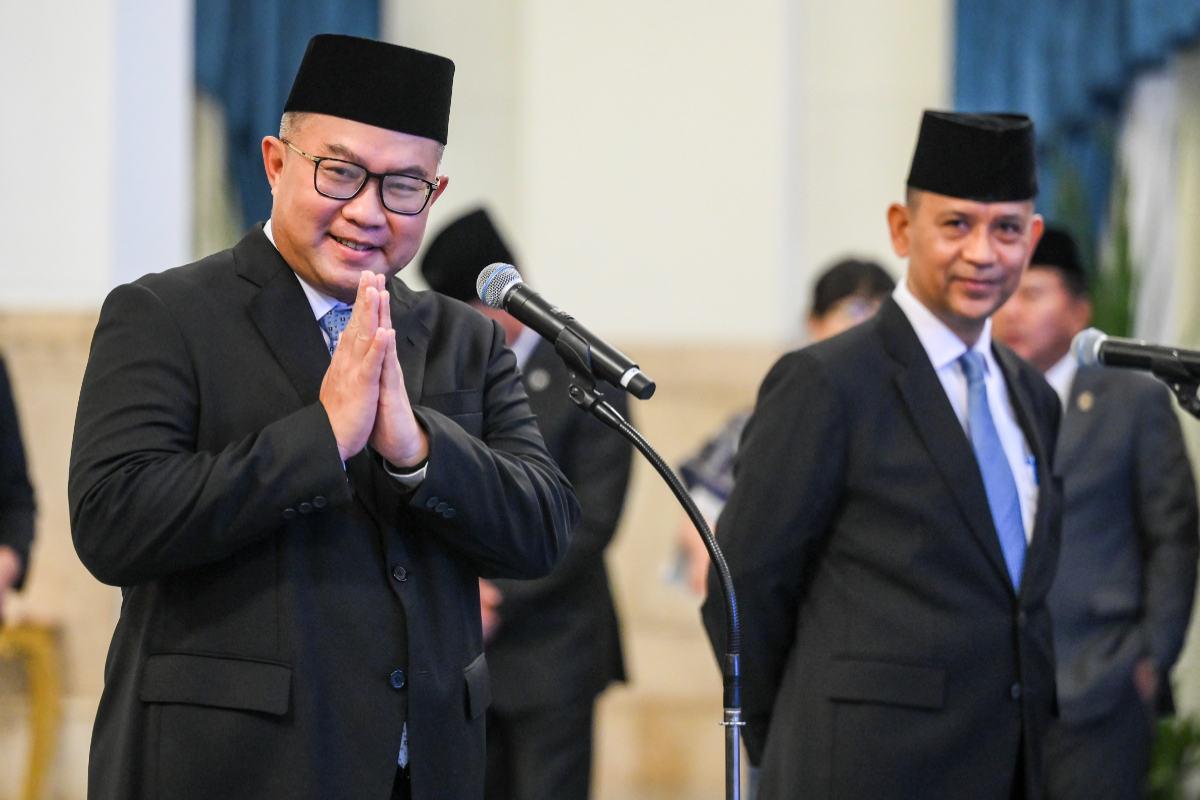
The National Research and Innovation Agency (BRIN) is targeting the mastery of several strategic technologies believed to determine Indonesia’s competitiveness in the next two to three decades. Semiconductors, artificial intelligence (AI), genomics, quantum technology, nuclear, and space are the main focuses of national research development.
This was conveyed by Head of BRIN Arif Satria while delivering a report at the President’s Meeting with 150 BRIN Researchers at the Presidential Palace on Thursday (6/8). According to him, mastery of these technologies will determine whether Indonesia remains merely a user or becomes an owner of technology.
“BRIN will focus on advanced technologies that will determine the nation’s competitiveness in the next two to three decades. First is semiconductors, so that Indonesia does not depend on foreign chips. AI, to multiply national productivity. Genomics, so we can produce our own seeds, medicines, and bio-industry. Quantum technology, for future security and computation,” Arif stated.
Beyond these four fields, BRIN is also continuing to develop nuclear and space technology as pillars for energy, health, food sovereignty, and territorial surveillance. According to Arif, mastering these technologies is the foundation for Indonesia’s future self-reliance.
To realise these targets, BRIN has prepared the National Strategic Research Roadmap and Agenda 2026-2045 together with the Ministry of Higher Education, Science, and Technology. The document is designed to align the direction of national research with the National Medium-Term Development Plan (RPJMN), support the implementation of the Asta Cita vision, and end the sectoral working patterns that have previously operated in silos.
Arif explained that BRIN has also built various strategic research facilities spread across different regions, including a nuclear reactor, the largest observatory in Southeast Asia, a satellite earth station, an international-standard genomics laboratory, a high-performance computing centre ranked among the world’s top 500, and testing facilities for aircraft, trains, rockets, and maritime technology.
On the human resources development side, BRIN runs programmes such as BRIN Goes to Nobel Prize, BRIN Goes to School, and BRIN Goes to Campus to strengthen research culture, scientific collaboration, and talent regeneration. Meanwhile, through BRIN Goes to Industry and BRIN Goes to Society, the agency seeks to accelerate the downstreaming of research results and expand their utilisation by the public.
In his report, Arif detailed various innovations developed by BRIN across strategic sectors. In the energy field, for instance, BRIN is developing Adsorbed Natural Gas (ANG) technology based on Metal Organic Framework (MOF), which allows natural gas to be stored at lower pressure than conventional CNG. BRIN has even built a sister laboratory with 2021 Nobel Prize in Chemistry laureate Susumu Kitagawa to develop this technology, with initial calculations suggesting the innovation could save LPG subsidies by approximately Rp26 trillion per year.
In the aerospace sector, BRIN has licensed the N219 aircraft to PT Dirgantara Indonesia for mass production. Additionally, the Neo-1 remote sensing satellite is scheduled for launch in early 2027 to support data needs for agriculture, forestry, marine, disaster mitigation, and maritime surveillance, with a cost efficiency of around 71.9 per cent compared to similar missions.
Innovations have also been developed in the defence sector through the Buna MALE Alap-Alap unmanned aerial vehicle, which can fly for up to six hours with a range of 100 kilometres to support territorial surveillance. In the transportation sector, BRIN is developing electric vehicles, ship designs already used by government agencies, and flex-fuel engines capable of using petrol or ethanol blends from E20 to E40.
Support for the Free Nutritious Meal Programme (MBG) is also a focus for BRIN. One innovation is the Food Guard, a multi-sensor and AI-based device installed on meal containers to detect food spoilage gases during distribution.
In the marine sector, BRIN has introduced an electric fishing boat estimated to cut energy costs by up to 70 per cent compared to using fuel oil. The agency is also developing cultivation, storage, drying, and processing technologies for fishery products to ensure added value is captured up to market-ready goods.
In the health sector, BRIN is developing various technologies ranging from tuberculosis and dengue vaccines, radiopharmaceuticals, and stem cells, to a non-invasive, fast, portable, and real-time laser-based haemoglobin measuring device. Arif also introduced school shoes made from local rubber raw materials using one-piece injection moulding technology, produced for under Rp70,000. For high-value needs, BRIN developed a Smart Insole capable of reading foot pressure distribution for medical rehabilitation, sports, and occupational safety purposes.
Furthermore, BRIN is strengthening research into critical minerals, nuclear technology, drinking water treatment, modular housing, the Giant Sea Wall, and pyrolysis-based waste management, which has been implemented in dozens of locations across Indonesia.
Concluding his report, Arif emphasised that all these innovations are not merely about producing research outputs but about building national technological capabilities across various strategic sectors. “The message is that Indonesia is building national technological capabilities for food, energy, health, water, defence and security, the environment, industry, and human resource quality,” Arif said. He added that the next challenge is ensuring all these capabilities can be utilised by the government, the business world, and the public.