
BRIN finds "kelekak" forests speed tin mine ecosystem recovery
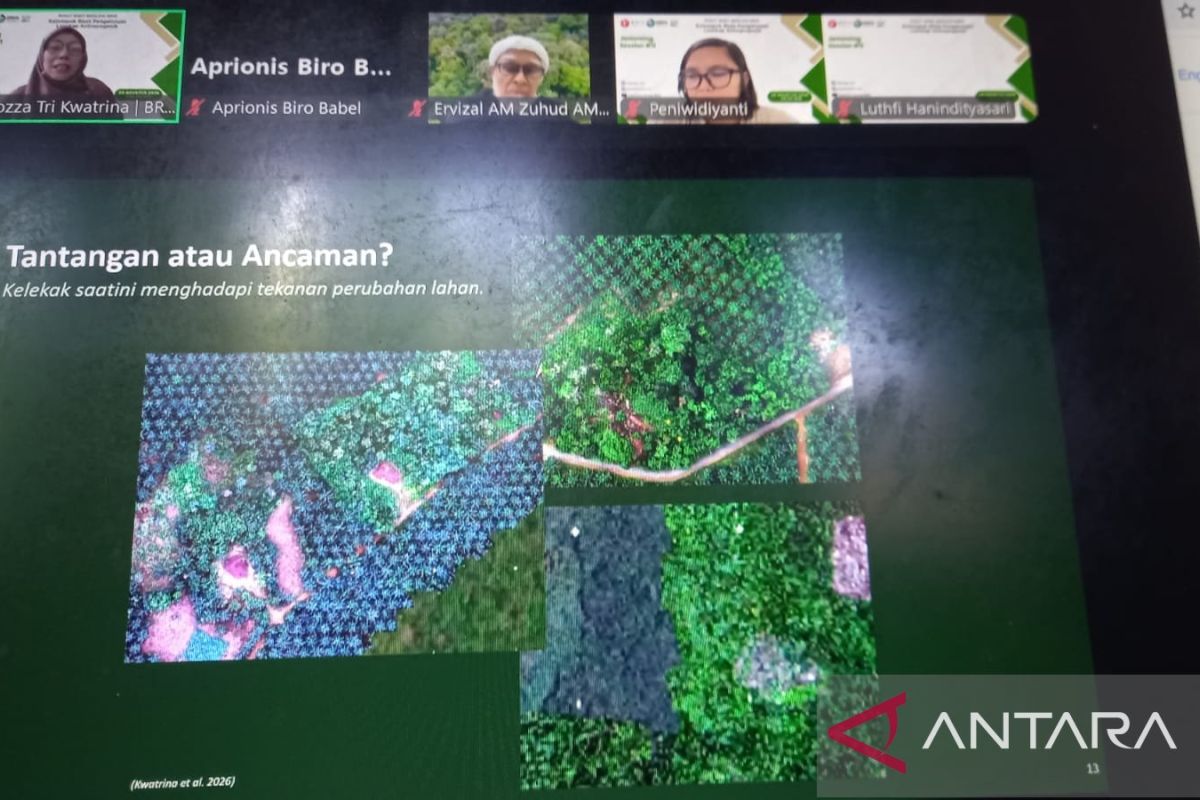
“Kelekak forests near unconventional tin mines benefit ecosystem recovery in the area,” Rozza Tri Kwatrina, a BRIN landscape ecology researcher, told participants of an online discussion entitled “Reshaping the Future of Kelekak in Bangka Belitung” on Thursday (August 20).
Recovery of former mining pits, known locally as kolong, is linked to improving water quality and changes in plankton communities, she said.
The communities shift from predominantly acidophilic organisms, such as Chlorella, she added, to more diverse groups, including Fragilaria, Amphora, and rotifers.
“Organic matter from kelekak forests provides a major food source for functional microorganisms, including sulfate-reducing plankton and local bioremediators, such as Amphora,” Kwatrina said.
Related news: BRIN quake-resistant homes stand after 7.7-magnitude quake
Phytoplankton actively cleans the former mining pits by converting toxic heavy metals into solid sulfide compounds that settle harmlessly in the sediment.
“The proximity of kelekak forests ensures a constant supply of organic matter, scientifically accelerating natural pit recovery from hundreds of years to just several decades,” she said.
BRIN studies found soil temperatures in kelekak forests ranged from 28 to 29 degrees Celsius, indicating a healthy microclimate.
“Dense kelekak trees, including durian, pelawan, cempedak, and mangosteen, effectively filter sunlight, keeping the soil moist and warm to support roots and soil microbes,” Kwatrina noted.
Related news: BRIN developing N219 aircraft ecosystem for flying ambulance vision
Translator: Aprionis, Rahmad Nasution