
BRIN Empowers Regional Government Human Resources Across South Kalimantan to Tackle Hoaxes and Disinformation
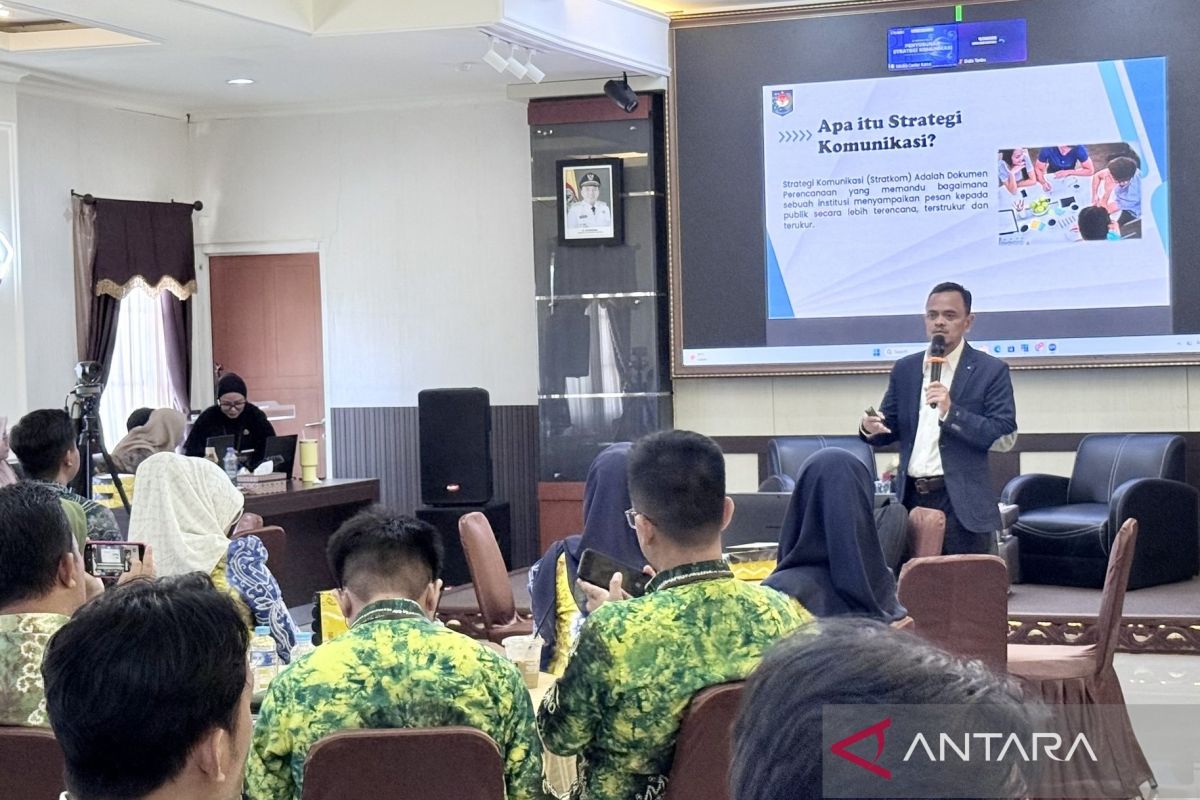
Banjarbaru (ANTARA) - The National Research and Innovation Agency (BRIN) is strengthening the capacity of the human resources of local governments across South Kalimantan (Kalsel) to confront hoaxes, political disinformation, polarisation of public opinion, and the spread of AI-based negative content. BRIN is strengthening the capacity of the regional government apparatus across Kalsel through a Technical Guidance on Communication Strategy for 13 local governments in South Kalimantan in Banjarbaru, on Thursday. Dodi Rosadi, a Senior Public Relations Officer at BRIN’s Bureau of Public Communications, General Affairs and Secretariat, said the briefing is data-based, uses media monitoring and social listening, maps digital issues, drafts a single narrative, and applies a crisis-communication response strategy to speed up hoax handling and maintain public trust. “Public communication challenges are becoming more complex as national internet penetration reaches 80.5 per cent, with around 230 million internet users and 180 million active social media users in Indonesia,” he said. He noted that the growth of disinformation and opinion polarisation based on social media algorithms poses a serious threat that local governments must anticipate as it could erode public trust in institutions or government policies. In addition, BRIN warned of new challenges from synthetic content based on generative artificial intelligence that could accelerate the spread of false information and distort information in the digital space. Dodi explained that local governments need to strengthen data-based situation analysis through media monitoring and social listening to obtain accurate issue mapping while detecting developments in hoaxes and negative issues from early stages. He added that issue monitoring is conducted based on three main indicators: the volume of conversations or the number of posts related to a given issue, public sentiment including positive, neutral, and negative, and the engagement rate or level of audience engagement with the content shared. Beyond these indicators, every issue is mapped using a three-dimensional approach comprising the time dimension, magnitude of impact, and the level of uncertainty to determine the priority level of handling and the appropriate communication steps. Dodi said that local governments can also use the Situational Crisis Communication Theory (SCCT) by Timothy Coombs as a guide in shaping reactive response strategies to confront information crises and threats to the institution’s reputation. The reactive response strategy is implemented at the action and response stages of the communication strategy to determine the form of handling hoaxes, disinformation, and negative issues developing in the digital space. In addition to strengthening issue monitoring, BRIN also urges South Kalimantan’s regional governments to develop an integrated single narrative to eliminate inconsistencies in messaging and prevent public misinterpretation of government policies.