
BRIN empowers Gunungkidul residents to process seaweed washwater waste
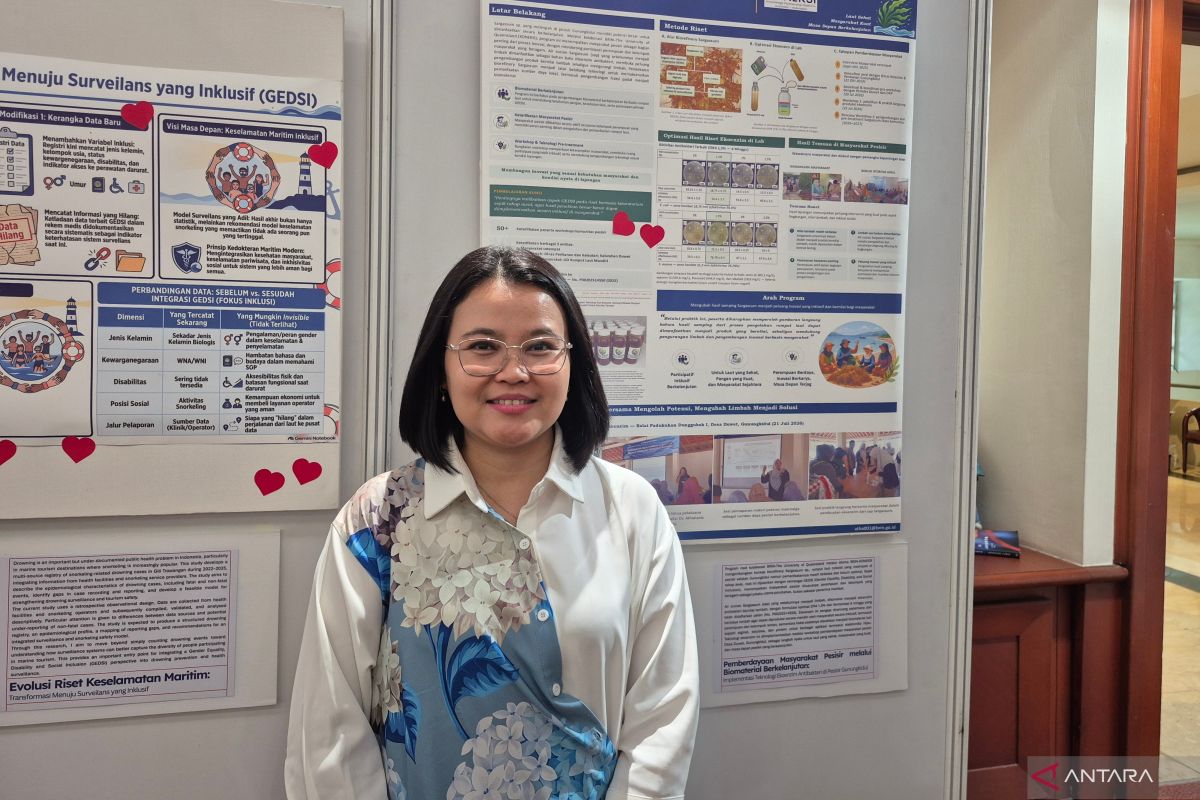
Researchers from the Electronics Research Centre of the National Research and Innovation Agency (BRIN), Athanasia Amanda Septevani, are empowering the coastal community of Gunungkidul, Special Region of Yogyakarta (DIY), to process sargassum seaweed washwater waste into highly useful eco-enzyme liquids.
“Why was sargassum chosen? Because it is one of the seaweed sources that is not optimally managed in Indonesia,” Amanda stated during the Gender Equality Learning Program (GELP) Symposium in Jakarta on Tuesday.
Amanda explained that, traditionally, farming groups and coastal residents typically harvest sargassum only to sell it directly as raw material or use it as basic fertiliser.
Through a collaborative funding programme between BRIN and KONEKSI, the research team has successfully uncovered the hidden potential of this marine commodity.
Laboratory test results have proven that this derivative liquid from brown seaweed possesses potent antibacterial properties, capable of inhibiting the growth of E. coli and S. aureus bacteria.
To ensure this technology can be adopted by grassroots communities, BRIN has deployed teams to train coastal residents directly.
“We have also conducted workshops; since our partner is from Gunungkidul, we held a workshop there to teach them how to produce eco-enzymes,” she said.
In addition to being taught how to produce eco-enzyme liquid independently, residents are also trained to formulate the enzyme into daily derivative products, such as homemade antibacterial laundry soap.
Through this simple innovation, Amanda hopes that the economic independence of coastal communities can be established, while simultaneously maintaining a healthier and pollution-free marine ecosystem for the future.