
BRIN develops rubber material for railway crossings, aiming to reduce incidents
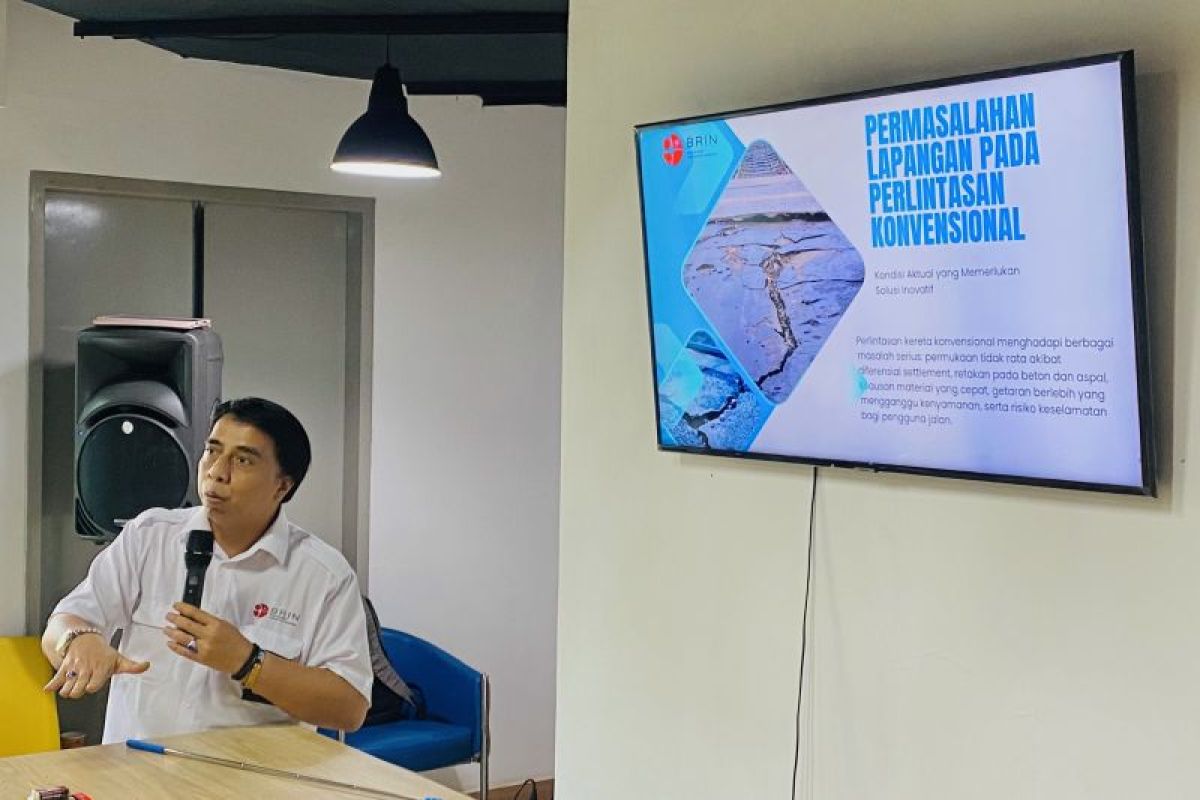
Accidents at level crossings are not only caused by human error but also by suboptimal technical conditions, such as uneven surfaces, slipperiness in wet weather, and high vibrations that cause vehicles to get stuck or lose control.
BRIN offers an innovative rubber plate material, the Rubber Crossing Plate (RCP), to improve the safety of level crossings, designed to replace conventional materials such as concrete and asphalt.
Ade Sholeh Hidayat, a researcher at BRIN’s Centre for Composite and Biomaterial Research, highlighted that accidents at level crossings are not only caused by human error but also by suboptimal technical conditions, such as uneven surfaces, slipperiness in wet weather, and high vibrations that cause vehicles to get stuck or lose control.
“RCP offers a new approach that is more adaptive to dynamic loads and extreme environmental conditions, while also improving the safety of road users,” he said.
Ade explained that they have developed RCP technology, which is now at the implementation readiness level. The material is developed using natural rubber combined with compatible additives and special fillers.
The combination of materials produces a flexible crossing plate that can dampen high vibrations, withstand static and dynamic loads, and has high resistance to extreme weather, corrosion, and wear.
Ade added that the precise and anti-slip surface of the RCP creates a smoother and more stable track, reducing the risk of vehicles skidding or getting stuck on the rails.
The material’s ability to dampen vibrations also improves vehicle control when crossing and reduces noise levels in the surrounding environment.
“The development of RCP is carried out through the engineering of elastomer and mineral composites with optimization of the mixing ratio between rubber and additives. This product has also undergone various tests, including static, fatigue, vibration, noise, and environmental resistance tests to UV rays, water, and extreme temperatures,” he said.
Furthermore, the technology is considered to have strategic dimensions because it encourages the downstream processing of domestic natural rubber and reduces dependence on imported materials. In the future, the use of mineral waste as a filler will also support the principles of a circular economy and the target of decarbonising the transport sector.
According to Ade, if widely implemented by operators such as PT Kereta Api Indonesia (Persero), RCP has the potential to become a new standard for level crossing infrastructure in Indonesia.
“This more elastic, durable, and safe infrastructure can significantly reduce the risk of accidents while also improving user comfort,” said Ade Sholeh Hidayat.