
BRIN develops palm oil-based BioPAS to replace imported paraffin in batik industry
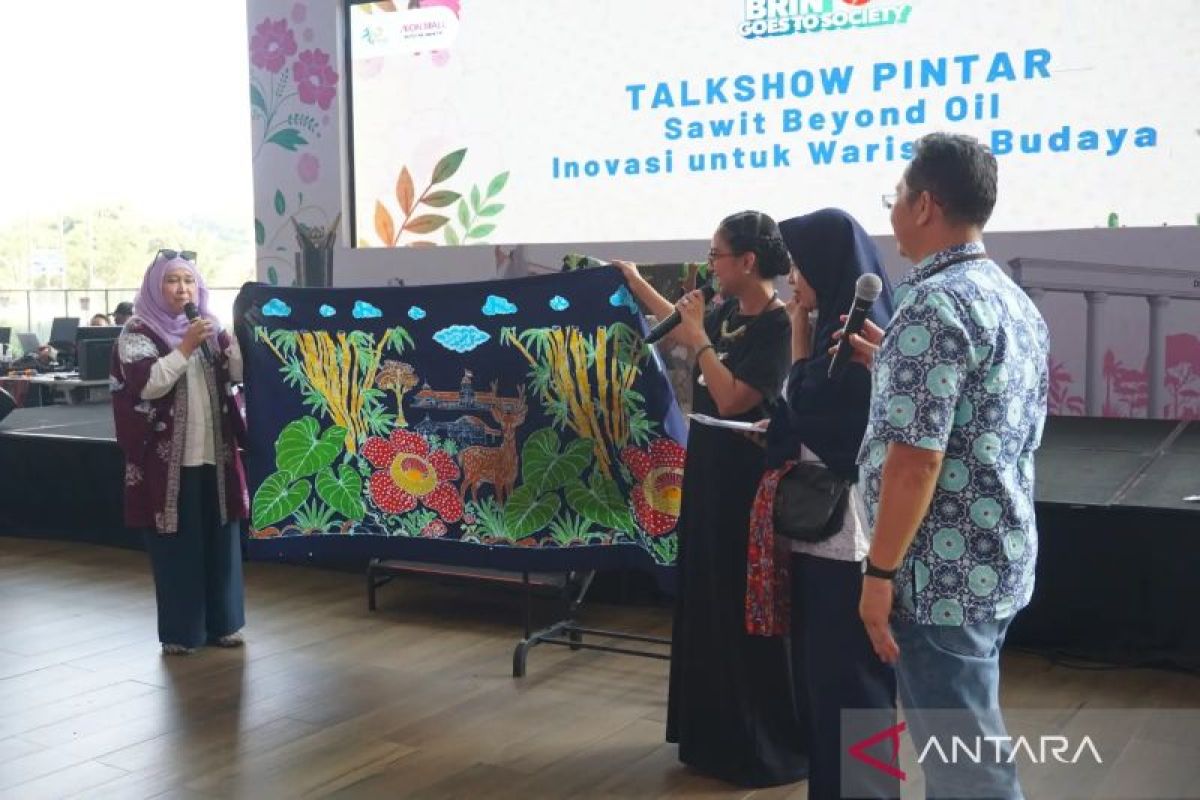
Jakarta (ANTARA) - The National Research and Innovation Agency (BRIN) has introduced Bio Paraffin Substitute (BioPAS), an innovation in batik wax based on palm oil designed to replace petroleum-based paraffin, which has long been a primary component in the national batik industry.
Agus Triputranto, a researcher at BRIN’s Centre for Manufacturing Equipment Technology Research, stated in Jakarta on Tuesday that he successfully developed BioPAS through the modification of the triglyceride structure of domestic palm oil. The technology has been granted a patent since 2024, marking its readiness for wider industrial application.
“BioPAS was developed as a substitute for petroleum-based paraffin so that the batik industry has an alternative raw material sourced from renewable national resources,” he said.
Agus explained that this innovation holds strategic value as it brings together two of Indonesia’s important assets: palm oil as a leading economic commodity and batik as a world cultural heritage.
From a technological perspective, he continued, BioPAS offers several advantages that distinguish it from conventional batik wax. A single formula can be used across various batik methods, ranging from hand-drawn batik (batik tulis) and stamped batik (batint cap) to cold wax techniques.
The resulting characteristics include excellent penetration into the fabric, ease of use in the batik process, the ability to form sharp or precise motif lines, flexibility that prevents cracking, and ease of removal during the stripping (lorod) stage.
“The main advantage of BioPAS is its ability to be applied to various batik methods at a more competitive price, while offering the technical characteristics required by artisans,” said Agus.
He noted that BioPAS produces a lower environmental impact compared to fossil-based paraffin wax. As a category of biowax, this product generates production waste with a much lower carbon footprint that is safe for the environment.
Agus explained that initial research was conducted between 2015 and 2016, followed by standard testing in 2016, application testing in 2017, and various socialisation and workshop activities in 2019 and 2021.
He revealed that the demand for wax in the batik production process is estimated to reach at least 84,000 tonnes per year. For hand-drawn batik alone, the wax requirement reaches approximately 165,476 kilograms per month, while stamped batik requires more than 13.6 million kilograms per month.
“With the very large national demand for batik wax, the use of BioPAS has the potential to save foreign exchange reserves while increasing the domestic absorption of palm oil derivative products,” said Agus Triputranto.