
BRIN Develops Malapari as Feedstock for Biodiesel and SAF from Critical Land
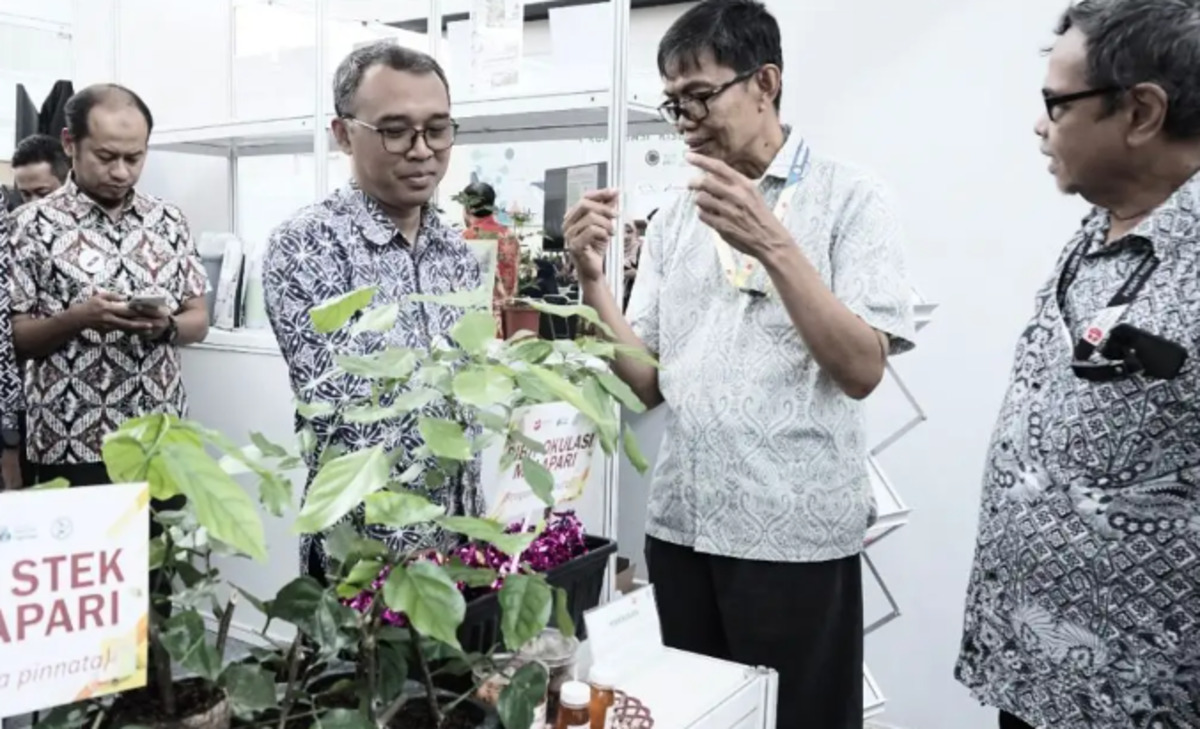
The National Research and Innovation Agency (BRIN) is developing the malapari plant (Pongamia pinnata) as a renewable energy source with the potential to become a feedstock for biodiesel and sustainable aviation fuel (SAF). The plant is considered advantageous because it can grow on critical land and simultaneously help rehabilitate degraded areas.
Danu, a researcher at BRIN’s Applied Botany Research Centre, stated that malapari is an oil-producing plant that can be used as a raw material for biodiesel. According to him, the oil also has the potential to be developed into sustainable aviation fuel. “Malapari is a plant that produces vegetable oil which can be utilised as a biodiesel feedstock. In fact, its oil also has the potential to be developed into sustainable aviation fuel or SAF,” Danu said on Tuesday (14/7).
He explained that one of malapari’s advantages is its ability to grow on critical and marginal lands that are unproductive for food crops. Its root system has nodules that can fix nitrogen, thereby helping to improve soil quality.
Beyond producing oil for bioenergy, almost all parts of the malapari plant have economic value. The seed cake left after oil extraction can potentially be used as animal feed, while the leaves are being developed as an ingredient for skincare products through research collaboration with industry.
To accelerate commercialisation, BRIN is collaborating with several companies and agencies. The collaboration focuses on building a sustainable malapari supply chain. “We are developing malapari plantations in several locations as a source of feedstock. The development is carried out in parallel with the construction of processing facilities so that when the raw material supply is ready, the processing industry is also prepared to operate,” Danu said.
According to him, BRIN is also focusing on producing high-productivity malapari seedlings as the foundation for developing production areas. The initial phase involves building a core plantation area before expanding through partnerships with local communities.
Danu said the BRIN research team has successfully produced biodiesel from malapari. The high level of interest from companies, including those from Japan, indicates a significant opportunity for this native Indonesian plant to develop as a bioenergy commodity in the global market. “We have successfully produced biodiesel from malapari. Our hope is that the public will become more familiar with this plant and be interested in participating in its development. In fact, interest from foreign companies, including Japan, in malapari is already quite high. This shows that this plant, which grows in Indonesia, has great potential to become a competitive bioenergy commodity at the global level,” he concluded.