
BRIN Develops Innovative Material for Clean Hydrogen Production
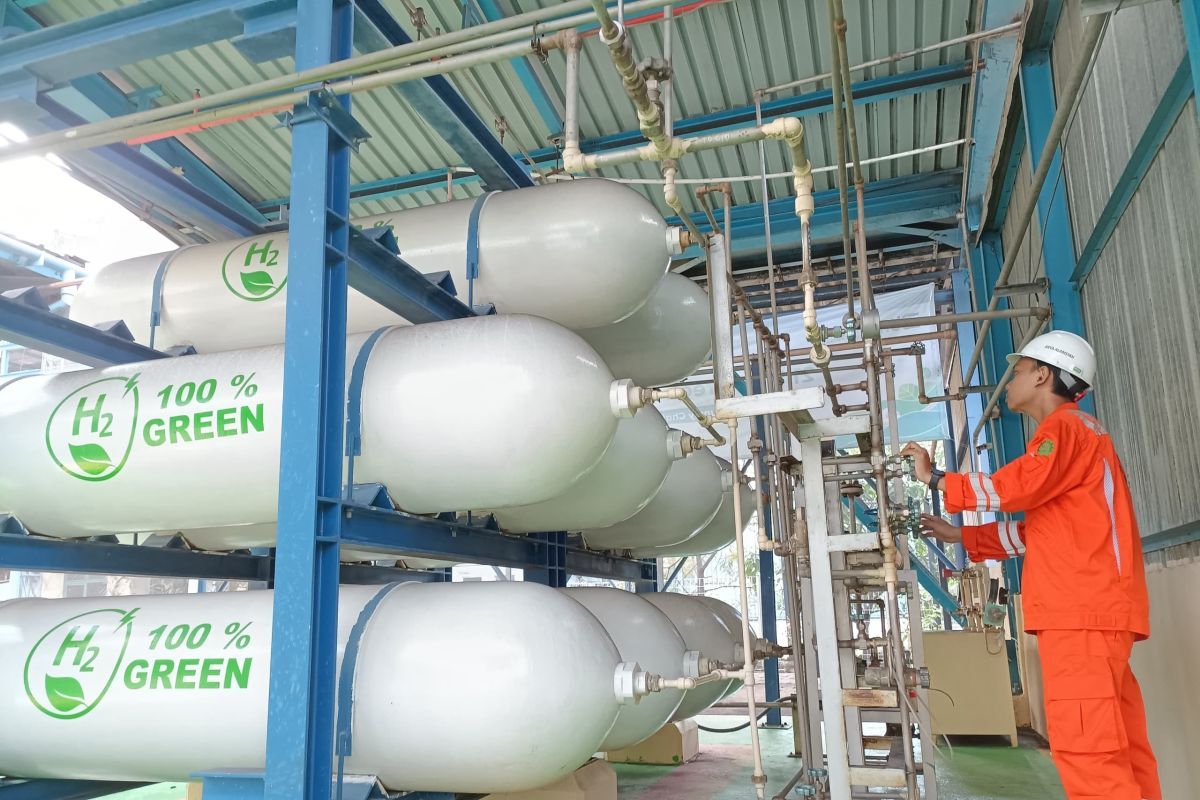
The National Research and Innovation Agency (BRIN) is developing a NiFe-LDH/Ag₃PO₄ composite as an innovative material to increase the production of clean hydrogen and oxygen through the water splitting process. Researcher at BRIN’s Catalysis Research Centre, Yusuf Mathiinul Hakim, explained in a statement in Jakarta on Sunday that hydrogen is a clean energy source that plays a crucial role in supporting the transition towards sustainable energy. “NiFe-LDH material has been widely developed as a transition metal-based catalyst because it has relatively low production costs and good electrochemical activity,” he said. However, Yusuf noted that conductivity limitations remain a challenge in improving the material’s performance in the hydrogen evolution reaction. To overcome this problem, he and his team developed a heterostructure-based composite by combining NiFe-LDH and Ag₃PO₄, which is used as a supporting semiconductor. In terms of electrochemical performance, Yusuf stated that the NiFe-LDH/Ag₃PO₄ composite has a much higher electrochemical surface area (ECSA) value compared to its constituent materials. In Linear Sweep Voltammetry (LSV) testing, the NiFe/AP composite exhibited the lowest overpotential of 156.6 mV, lower than both pure NiFe and single Ag₃PO₄. Overall, this research proves that the heterostructure engineering of NiFe-LDH/Ag₃PO₄ is effective in enhancing electrocatalytic activity for water splitting. This finding opens up significant opportunities for the composite as a material candidate for more efficient and sustainable hydrogen production. “This increase in ECSA indicates that the formation of the heterostructure is able to provide more active sites for the reaction,” said Yusuf Mathiinul Hakim.