
BRIN Develops BRINlock, Breakwater Technology for Coastal Infrastructure
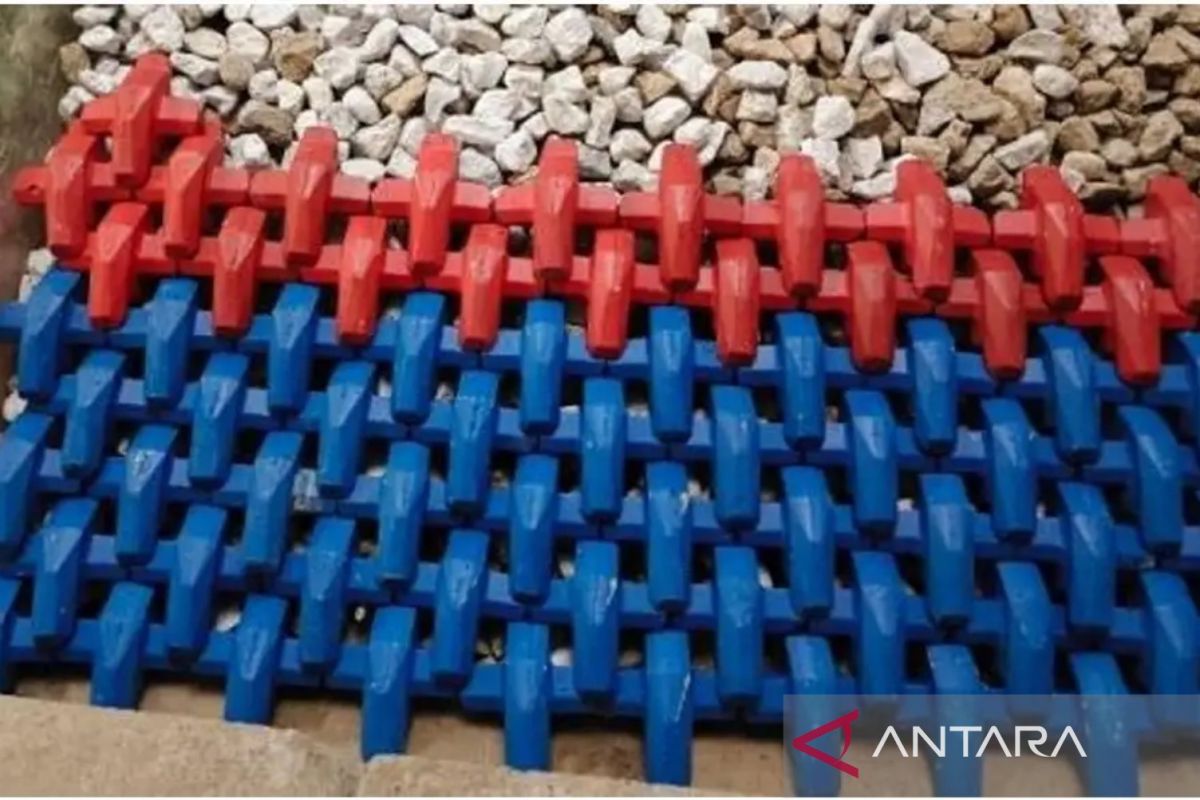
Jakarta (ANTARA) - The Energy and Manufacturing Research Organisation (OREM) of the National Research and Innovation Agency (BRIN) has introduced its latest innovation in breakwaters for port and coastal structures, named BRINlock.
This innovation is a next-generation armour unit designed to strengthen future breakwater constructions amid challenges from climate change and rising sea levels, addressing limitations in the availability of large natural stones and the need for material efficiency in coastal infrastructure development.
“BRINlock has been developed as a single-layer armour unit with regular placement and strong interlocking characteristics, thereby enhancing hydraulic stability while reducing concrete usage,” said Researcher from BRIN’s Centre for Hydrodynamics Technology Research (PRTH), M. Zuhdan Jauzi, in a statement in Jakarta on Tuesday.
Zuhdan explained that this technology offers advantages, including ease of field application with a special design aimed at reducing the volume of concrete used, making it a more economical and environmentally friendly option with a lower carbon footprint.
Furthermore, Zuhdan stated, hydraulic stability tests show promising performance. BRINlock achieved a stability coefficient (Kd) of 20.54 under certain conditions, indicating superior performance compared to some previous designs.
“With safety factors considered, the stability value remains high at a reduced 13, making the design safer,” he said.
The document has undergone initial stages at BRIN’s Directorate of Intellectual Property Management (DMKI) in September 2024 and is currently in the finalisation process to obtain Granted Patent status.
The development of BRINlock is expected to provide an innovative solution for more efficient, robust, and environmentally friendly coastal infrastructure construction.
In the future, this technology has the potential for broad application in coastal protection projects across Indonesia.