
BRIN Develops AI-Based Control System for Sea Wave Simulator
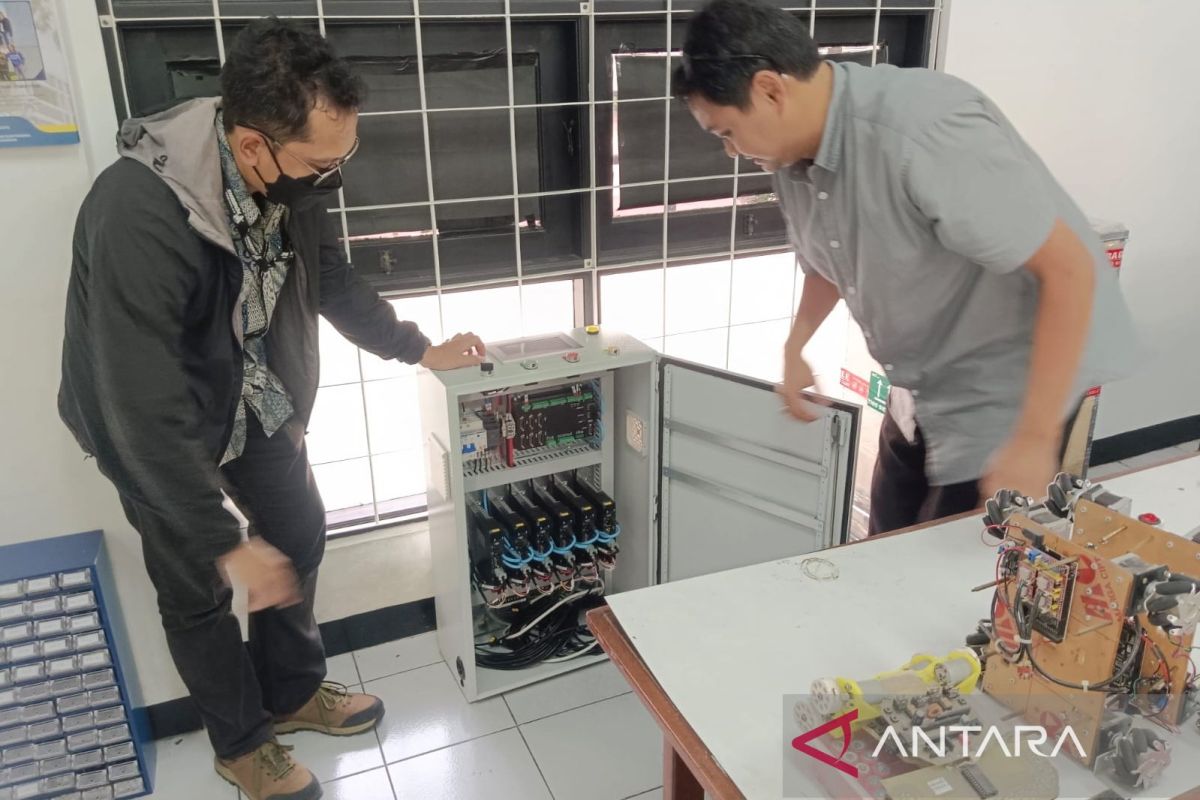
Jakarta (ANTARA) - The National Research and Innovation Agency (BRIN), through the Satellite Technology Research Centre (PRTS) and the Hydrodynamics Technology Research Centre (PRTH), is developing an artificial intelligence (AI)-based control system for a sea wave simulator. Wibowo Harso Nugroho, Head of the Marine and Offshore Structures Technology Research Group at PRTH BRIN, explained that the development of this simulator provides a solution to the limitations of testing maritime technology directly at sea. In the developed system, Wibowo stated, the sea wave model is converted into a motion trajectory through a trajectory generation process, then transformed into platform leg movements using the inverse kinematics method. The Proportional-Integral-Derivative (PID) control system, optimised with the Salp Swarm Algorithm (SSA), subsequently ensures that the platform’s movement can follow the wave pattern with minimal error. He assessed that incorporating AI-based algorithms provides significant advantages in the control system optimisation process. Research results show that the SSA method produces the best performance with a lower error value (fitness value), namely 16.8 percent compared to the Genetic Algorithm and 8.7 percent compared to Particle Swarm Optimization. “The SSA approach allows us to obtain optimal control parameters with a lower error rate compared to other methods such as the Genetic Algorithm and Particle Swarm Optimization,” he said. Wibowo mentioned that the development of this sea wave simulator has broad application potential, including for ship design, offshore technology, and wave compensation systems on marine platforms. In the future, research will be directed towards developing nonlinear control methods to enhance system performance under more complex dynamic conditions.