
BRIN Claims ANG Technology Could Save LPG Subsidies Up to Rp26 Trillion
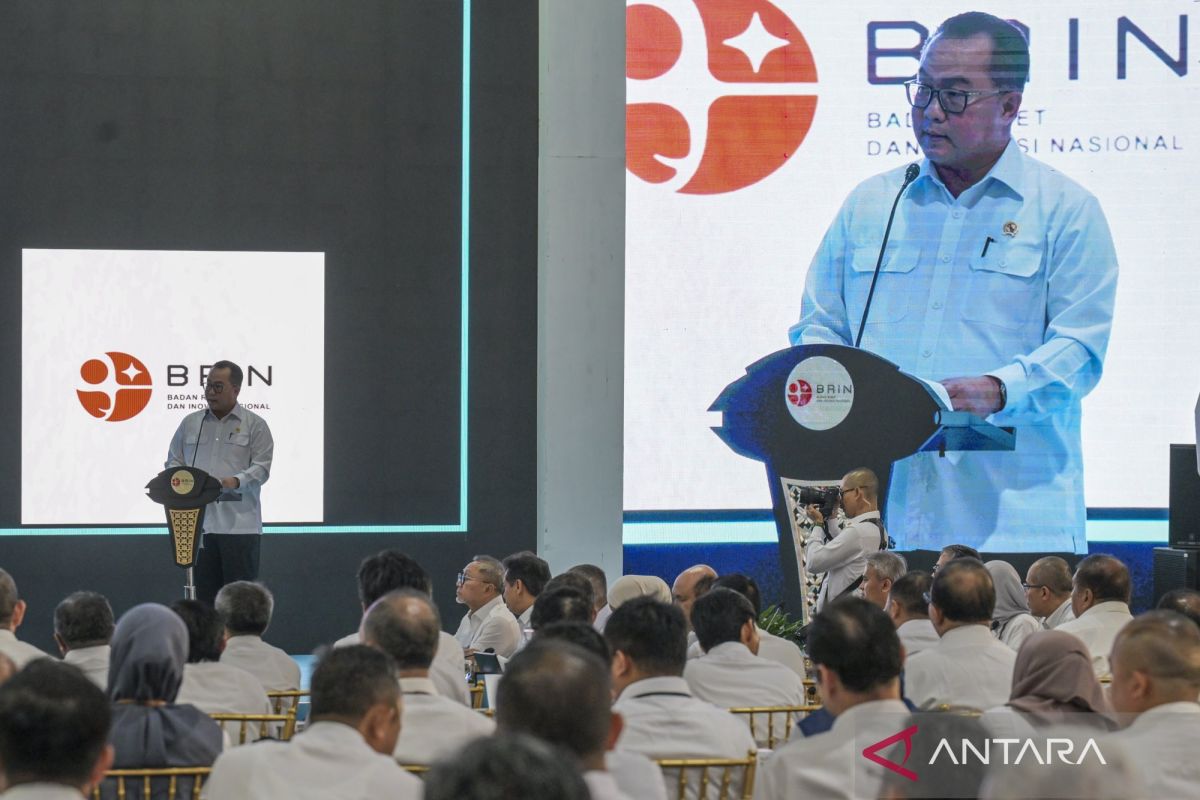
Jakarta - Head of the National Research and Innovation Agency (BRIN) Arief Satria stated that the Adsorbed Natural Gas (ANG) technology developed by the agency has the potential to save up to Rp26 trillion annually in LPG subsidies. “Based on initial calculations, this technology could potentially save up to around Rp26 trillion against the LPG subsidy burden,” he said during a meeting with President Prabowo Subianto and 150 BRIN researchers at the Presidential Palace complex in Jakarta on Thursday. Following the meeting, Arif explained that ANG technology is one of BRIN’s strategic energy innovations, developed through a sister lab collaboration with Susumu Kitagawa, the 2025 Nobel Prize winner in Chemistry. The innovation allows compressed natural gas (CNG) to have a greater storage capacity compared to conventional technologies. “So, CNG, as Indonesia’s natural gas, is very abundant, but at the same time we depend on LPG. All this time, LPG imports have been very large,” Arif said. According to him, with ANG technology, a gas cylinder equivalent in size to a 3-kilogram LPG canister can be used for a longer period because it has a larger storage capacity. “With the metal organic framework, we can now produce a significant breakthrough, namely how to produce ANG, adsorbed natural gas, from CNG at a pressure of 30 bar, which then has a larger volume storage capacity,” Arif said. He continued, “If people currently use 3 kilograms of LPG for 10 days, now with the new technology it could last 15 days, one and a half times longer. Now, research is ongoing to make it last twice as long. If this is implemented, it could save Rp26 trillion per year related to this energy.” Arif said President Prabowo has requested that the implementation of ANG technology be accelerated. According to him, the technology not only has the potential to save foreign exchange due to LPG imports but also to enhance national energy resilience by utilising abundant domestic natural gas reserves. “The President strongly advised that the utilisation of this new ANG technology be accelerated. Because this saves foreign exchange, but more importantly, it provides a larger gas reserve for the same size,” he said. Currently, the development is still in the trial phase. Arif is targeting the trials to be completed by 2026 so that the technology can begin to be introduced in 2027 as an alternative to replace imported LPG usage. “What is clear is that we are currently conducting trials, with trials in 2026, and hopefully we can release it in 2027,” Arif concluded.