
BRIN champions AI, digital tech to curb emissions from agriculture
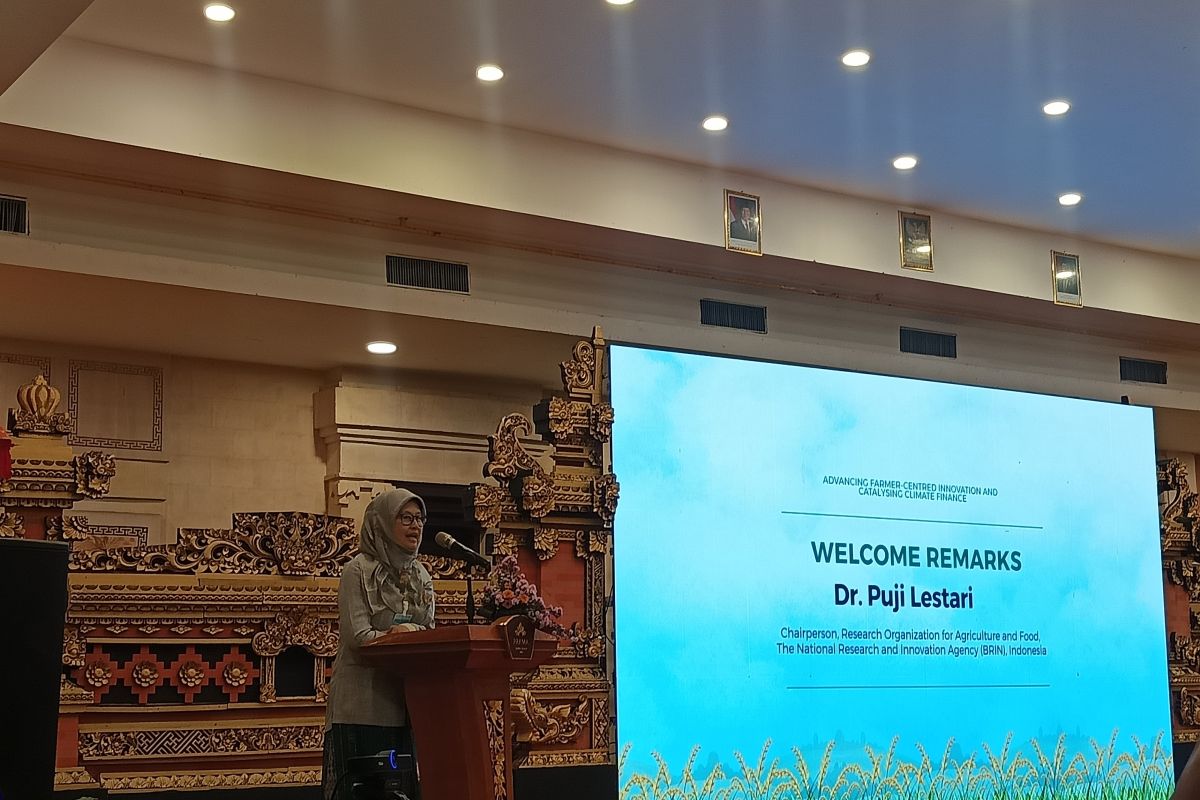
Head of BRIN’s Agriculture and Food Research Organization, Puji Lestari, stated in Denpasar, Bali, on Wednesday that digital technology is a key solution for transforming agriculture into a more efficient and low-emission food production system.
“A variety of innovations are now available to help farmers cut emissions while increasing agricultural productivity,” she remarked during the Knowledge Exchange on Advanced Technologies for Low-Emission Rice and Livestock Systems FSIP-FOLUR - Second Global Dialogue on Sustainable Rice Transformation.
Some of the emerging technologies include alternate wetting and drying irrigation methods for rice fields, optimized fertilizer efficiency, the use of high-yield crop varieties, remote sensing technology, and AI-based emissions monitoring systems.
Puji noted that digital technology can also drive a more accurate and applicable Monitoring, Reporting, and Verification (MRV) system, including among smallholder farmers.
Nevertheless, she stressed that successful adoption of technology depends not only on the availability of innovation, but also on investment support, adaptation to local conditions, and policies capable of scaling up these technologies from pilot projects to a broader level.
According to her, the limited knowledge and capacity of farmers to access and utilize available technologies remain one of the challenges for the push.
Furthermore, emission reporting systems that still vary across countries present an obstacle to measuring the impact of emission reductions in a more standardized manner.
Through the Bali forum, BRIN is calling for collaboration among Asian and African countries to share experiences in implementing low-emission agricultural technologies, including the development of digital systems that support global climate goals.
She stressed that technological innovation must directly reach farmers to ensure agricultural transformation toward low-emission practices can run more quickly and provide tangible benefits to food security and public welfare.
Related news: BRIN promotes Bali’s subak as example of sustainable agriculture
Related news: Indonesia no longer imports rice: Deputy Minister
Related news: Indonesia prepares low-emission farming transition
Translator: Rolandus Nampu, Raka Adji