
BRIN Backs Next-Generation Solar Panel Research for Energy Independence
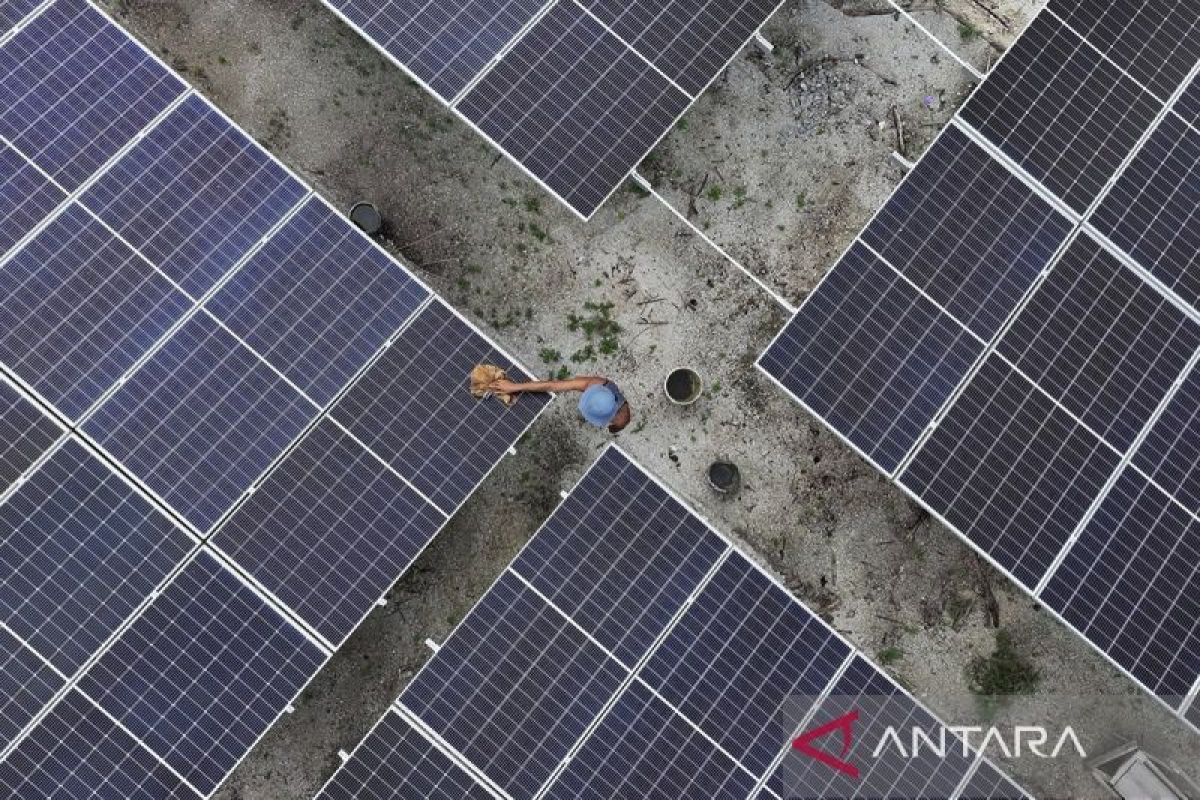
The National Research and Innovation Agency (BRIN) is examining opportunities for the domestic manufacturing of next-generation solar panels using Silicon Heterojunction (SHJ) and Tandem PV technologies to accelerate renewable energy development and clean energy utilisation in Indonesia.
Researcher Oo Abdul Rosyid from BRIN’s Centre for Energy Conversion Technology Research explained in Jakarta on Tuesday that solar panel technology is advancing rapidly, with the global market beginning to shift from conventional silicon-based technology towards higher-efficiency options such as HJT and Tandem PV (perovskite-silicon).
‘SHJ technology has demonstrated efficiencies of more than 27 per cent, whilst tandem technology based on perovskite-silicon has the potential to achieve efficiencies of more than 30 per cent on a laboratory scale,’ he said.
Beyond their high efficiency, he noted that both technologies also maintain good performance at high temperatures. This characteristic makes them particularly suitable for application in tropical regions like Indonesia.
Rosyid added that Indonesia actually possesses a very large and diverse potential market for solar panels, ranging from rooftop utilisation and large-scale solar power plants to floating solar installations on lakes and reservoirs.
He observed that the domestic solar module assembly capacity is currently growing significantly. However, most key components, such as solar cells and raw materials, still rely on imported supplies.
Through research findings and collaborative experience in Germany, BRIN sees a strategic opportunity for national industry to make a technological leap.
Rather than continuing to depend on older technologies being phased out by the global market, Indonesia has the opportunity to directly participate in the supply chain for next-generation solar panel manufacturing.
‘The development of SHJ technology is a crucial stepping stone towards the future of the Tandem PV industry. By building this new generation of manufacturing capabilities, we are not merely becoming consumers or a market, but are also able to independently produce solar panels that are efficient, material-saving, and globally competitive,’ he said.
He continued that the research findings from his work at Forschungszentrum Jülich in Germany are targeted to serve as the basis for drafting a national roadmap.
Furthermore, the study is expected to produce strategic recommendations for the government and industry players. This step is anticipated to accelerate the establishment of a holistic domestic solar panel industry ecosystem.
‘Going forward, mastery of this next-generation solar panel technology is expected to accelerate the realisation of Indonesia’s green energy independence and provide tangible economic benefits to the community,’ concluded Oo Abdul Rosyid.