
BRIN and ITS Develop More Efficient Propeller for Fishing Boats in Probolinggo
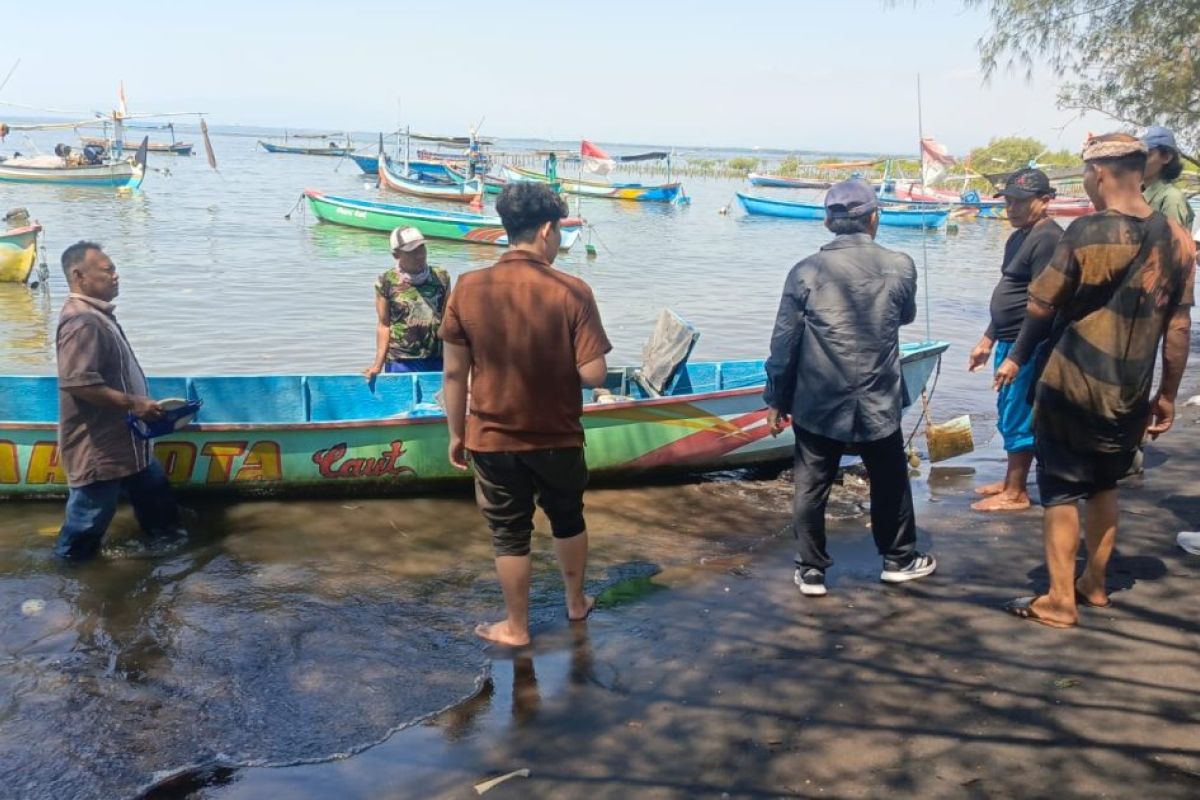
The Hydrodynamic Technology Research Centre of the National Research and Innovation Agency (BRIN), together with the Department of Naval Engineering at the Sepuluh Nopember Institute of Technology (ITS) Surabaya, is conducting research into propeller technology for fishing boats in Probolinggo Regency, East Java. The research, which took place at Bandaran Beach in Dringu Village on Wednesday, focuses on modifying the foil shape of propeller blades to generate more efficient thrust.
Hari Pur Sulistiono, Head of Capture Fisheries at the Probolinggo Regency Fisheries Service, stated that the involvement of fishermen is a crucial part of the technology development process, which is expected to be directly applied to fishing vessels. The activity involved the ITS Surabaya team, the BRIN team, the Probolinggo Regency Fisheries Service, the Dringu Village Government, fisheries extension officers, and representatives of fishermen from Dringu Village.
“This research is excellent because it involves fishermen as direct users. Input from fishermen is needed so that the propeller technology developed truly matches the characteristics of the boats and the operational conditions they face,” he said. He noted that the needs of fishermen must be a key consideration in developing fisheries technology, which should not only be technically superior but also provide tangible benefits for fishing businesses.
“The hope is that the research results will not stop at the design or prototype stage, but can later be applied to fishing boats and have an impact on the operational efficiency of fishermen,” he added. During the activity, the research team gathered operational information and data from the fishermen. This data is necessary to understand the vessel conditions, thrust requirements, and the characteristics of propeller usage in fishing activities.
He explained that the propeller development uses an approach of modifying the foil shape on the propeller blades. This design change is expected to increase thrust efficiency, thereby optimising vessel performance. Improved propeller efficiency has the potential to provide economic benefits for fishermen, as a more efficient propeller can reduce engine power requirements under certain operating conditions, potentially lowering fuel consumption.
“If thrust efficiency can be improved, it will certainly greatly help the fishermen. One of the main hopes is that fuel consumption becomes more efficient, so that vessel operational costs can be reduced,” he said. Besides fuel efficiency, the development is expected to support the productivity of fishing activities, as a boat with a more optimal propulsion system will perform better according to its operational characteristics and needs.
He welcomed the collaboration between universities, research institutions, local government, and fishermen. This synergy is considered important to bridge technology development with real needs in the field. “Universities and BRIN have research and technological capabilities, while fishermen have field experience. When these are combined with government support, the results are expected to be more effective,” he said. He hopes the fishing boat propeller research can produce a viable design and prototype that provides long-term benefits for the fishermen of Probolinggo Regency.