
BRIN and Buleleng’s Regional Research Agency Explore Eco-Friendly Roofing Tiles
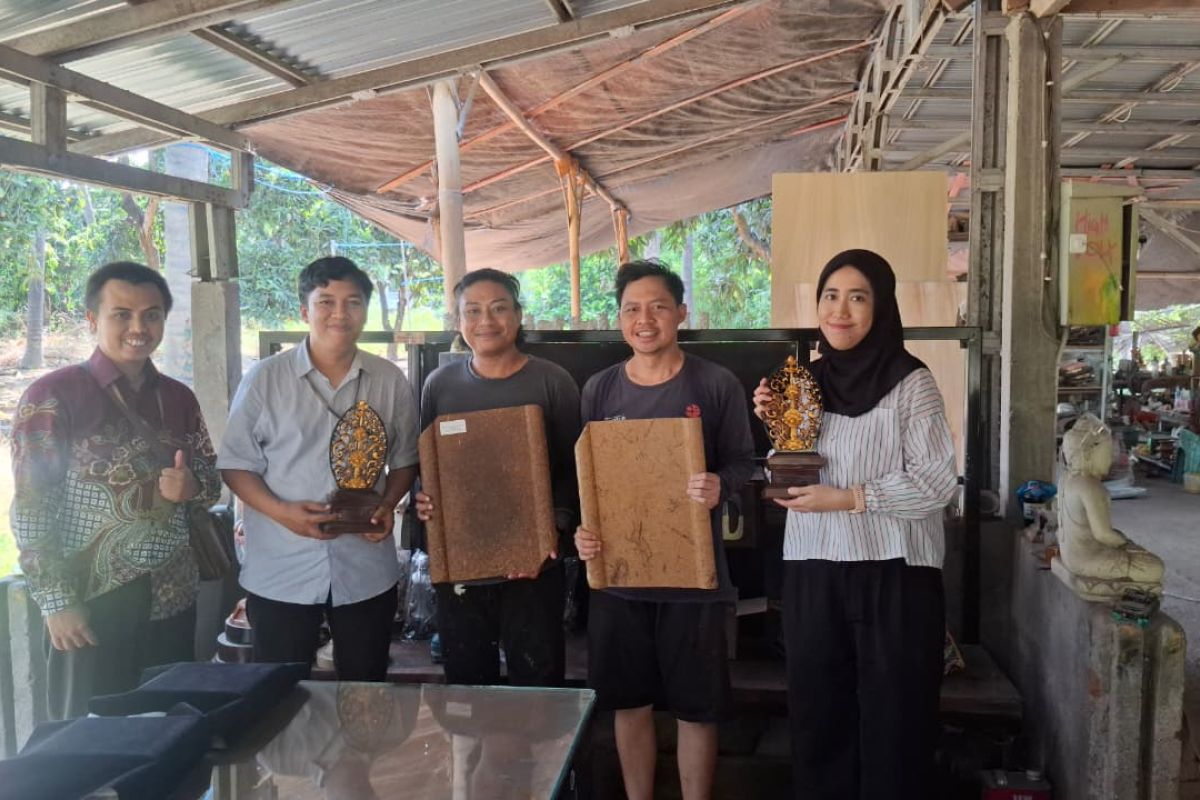
Buleleng, Bali (ANTARA) — Indonesia’s National Research and Innovation Agency (BRIN) and the Buleleng Regency Regional Research and Innovation Agency (BRIDA) are exploring the development of eco-friendly biomass roofing tiles made from natural fibres, involving local businesses.
“Research findings need to be put to use to increase the added value of regional resources, including coconut coir, bamboo, and agricultural and plantation waste,” Buleleng BRIDA head Ketut Suwarmawan said on Friday.
He said the agency was encouraging collaboration among local government, research institutions, universities and businesses so that local materials could be developed into products with economic value, while also reducing waste and creating business opportunities.
As part of the exploratory process, the delegation visited Rumah Plastik Mandiri, founded by Putu Eka Darmawan, to observe its waste management, recycling education and development of plastic-waste processing technology.
Suwarmawan added that he had also invited BRIN to visit PT Balisynwood, which develops synthetic wood from agricultural waste, particularly straw and rice husks. The delegation reviewed the development of alternative materials with the company’s operational director, Gede Wikrama Putra Setya Adiyana.
“The meeting and field visits opened initial discussions on opportunities for research collaboration, raw-material characterisation, prototype development, use of testing facilities, and joint downstream development with prospective business partners,” he said.
The parties hope to follow up by identifying sources of raw materials, developing formulations and testing product feasibility, so Buleleng’s biomass potential can be turned into environmentally friendly materials that benefit the local economy.
Meanwhile, the BRIN team, comprising Jajang Sutiawan, Yeyen Nurhamiyah and Mulya Supianto, introduced HERBAL-ROOF, or Indonesian Biomass Roofing Tiles, a technology that uses natural fibres to make composite roofing material.
The team said the technology had reached the full-scale prototype stage, met Indonesian National Standards (SNI), and was ready to enter pilot production. Potential raw materials include coconut coir, bamboo, empty oil-palm fruit bunches and other biomass sources.
The stated advantages include lower weight, heat insulation and more efficient material use. The lighter weight could reduce the load on roof structures, supporting building safety in earthquake-prone areas.
The discussion also covered the availability and characteristics of coconut coir in Buleleng, processing methods and material formulations, as well as the need to test mechanical strength, water absorption, weather and fire resistance, dimensional stability, economic viability and environmental impact.
Source: jawawa.id (https://jawawa.id/newsitem/brin-and-bulelengs-regional-research-agency-explore-eco-friendly-roofing-tiles-1793980344)
Originally published by Antara (Indonesian) (https://www.antaranews.com/berita/5837495/brin-brida-buleleng-jajaki-pengembangan-genteng-ramah-lingkungan), translated from Indonesian