
Bridging Two Giants: Integrating Islamic Finance and the Halal Industry
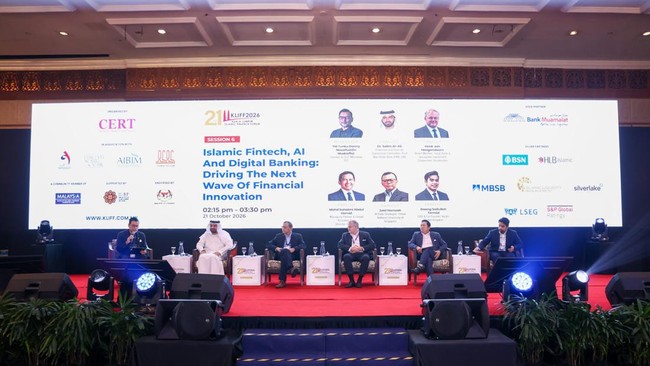
It was an honour to be invited to accompany Dr Nurhastuty Kesumo Wardhani, a Board Member of the Institute of Halal Investing Indonesia, as a speaker at the Kuala Lumpur International Islamic Finance Forum (KLIFF) 2026, held in Kuala Lumpur, Malaysia, from 20 to 22 October 2026.
The event prompted deep reflection on the future of the global Islamic economy, particularly in Indonesia. Amid extensive discussion of the vast potential of the halal industry and Islamic finance, the forum highlighted a major irony: these two giant ecosystems continue to operate on parallel tracks, without strong structural integration.
For Indonesia, often described as the country with the world’s largest Muslim population, the developments discussed at the international forum were not merely a foreign concern. They were both a wake-up call and a valuable strategic lesson for strengthening the foundations of the people’s economy at grassroots level.
The adoption gap and supply-chain challenges
One striking figure presented at KLIFF 2026 was the low uptake of Islamic finance among Malaysia’s halal industry, at just 12 per cent. This shows that halal product certification does not automatically lead businesses to use Islamic banking facilities or takaful (Islamic insurance) products.
The gap exists because current regulations still treat Sharia compliance as a matter of products and services (product-level compliance), rather than applying it across institutions as a whole (entity-level compliance).
The global picture is not much different. Non-Muslim countries such as China, Brazil, India and the United States currently control around 70 to 80 per cent of international halal trade.
This heavy dependence poses significant risks to the resilience of Muslim communities’ halal products. Experts at the forum therefore stressed the need for an assertive effort to eliminate riba (interest or usury) throughout the global halal industry’s supply chain by making greater use of Islamic financial institutions.
Indonesia’s critical position and barriers facing SMEs
As one of the speakers representing Indonesia, Dr Nurhastuty gave a comprehensive account of the realities facing the country. She highlighted Indonesia’s considerable competitive advantages in halal food, modest fashion, Muslim-friendly tourism, pharmaceuticals and cosmetics.
Indonesia’s modest-fashion industry shows how digitalisation and social media can help local products reach markets across South-east Asia, and even begin taking the risk of appearing at prestigious international fashion events in the United States. Behind this impressive record, however, Dr Nurhastuty identified a long-standing vicious circle trapping SMEs, the main drivers of Indonesia’s halal industry.
The principal barriers are limited access to finance and weak business management. Islamic banks are often reluctant to provide commercial financing to micro-entrepreneurs.
The problem is not a lack of liquidity. Rather, most halal SMEs in Indonesia do not yet have well-organised financial statements or bankable business governance. This mismatch often leaves the economic potential of local Muslim entrepreneurs unrealised.
A strategic roadmap towards global synergy
To break through these structural barriers, KLIFF 2026 formulated several practical steps relevant to Indonesian policymakers and financial industry players.
First, adopt a transformative banking model. She recommended that Islamic banks in Indonesia draw on banking practices in China. When providing financing, banks should not simply hand over capital; they should also require entrepreneurs to learn new financial-management practices. Ongoing supervision and guidance over a set period would help businesses strengthen their administrative capacity as they grow.
Second, optimise risk-sharing finance through equity financing. Islamic banks should begin shifting their focus from debt-based finance towards genuinely Sharia-compliant profit-sharing arrangements, such as Musharakah and Mudarabah contracts. This should be supported by a regional halal investment ecosystem platform connecting local SMEs with institutional investors and family businesses across ASEAN.
Third, integrate the financial supply chain from end to end. Islamic financial institutions should put aside sectoral rivalries and establish dedicated departments to support entrepreneurs from halal certification audits through to marketing and financing.
Alongside commercial financing, Islamic social-finance instruments such as zakat and waqf should be promoted as catalysts. Productive zakat should not be treated merely as a one-off grant; it can instead help build credit histories for underbanked communities. Meanwhile, underutilised waqf land could be put to better use in agriculture supplying raw materials to the halal industry.
Fourth, align the industry with sustainability indicators, including the Sustainable Development Goals (SDGs). The mindset of halal-industry practitioners must broaden. Sharia compliance should not stop at the normative religious requirement of being halalan (permissible), but should also encompass universal good, or toyyiban.
Halal-industry business processes should be aligned with the SDGs, including guarantees of safe workplaces, environmental protection and fair wages for workers. This would strengthen the competitiveness of Indonesian halal products and help them gain wider acceptance in international markets.
Conclusion
The closing message of KLIFF 2026 offered a pointed reflection for everyone: the halal industry is waiting for Islamic banks to reach out, while Islamic banks tend to remain passive and wait for the halal industry to apply for funds.
Source: jawawa.id (https://jawawa.id/newsitem/bridging-two-giants-integrating-islamic-finance-and-the-halal-industry-1793875849)
Originally published by CNBC Indonesia (https://www.cnbcindonesia.com/opini/20261105170530-14-782715/menghubungkan-dua-raksasa-integrasi-keuangan-syariah-industri-halal), translated from Indonesian