
Bridging the Communication Gap: How AI is Boosting Indonesian Talent and Business Performance
The acceleration of artificial intelligence (AI) adoption has fundamentally altered the landscape of the working world. The challenge now is no longer simply about adopting the technology, but ensuring organisations have talent ready to utilise it optimally. Based on the 2024 Work Trend Index from Microsoft and LinkedIn, 92 percent of knowledge-based workers in Indonesia have used generative AI in their daily work. However, the Cisco AI Readiness Index 2025 shows that only 23 percent of organisations in Indonesia fall into the ‘Pacesetters’ category, meaning they are fully ready to harness AI’s potential. This gap indicates that the success of AI transformation is determined not only by technology, but also by human resource readiness.
As AI adoption increases, the need for human skills is also rising. The World Economic Forum projects analytical thinking, resilience, creative thinking, technology literacy, and AI and big data as core competencies through to 2030. To develop these skills in an increasingly global work environment, communication skills and English proficiency are becoming more critical. However, English language ability remains a challenge for many Indonesian workers, who are still in the low proficiency category according to the EF English Proficiency Index 2025. The impact is felt not only by individuals but also by organisations. A global IDC study (2025) shows that 78 percent of companies experience obstacles in client interactions, business partnerships, and market expansion due to language barriers, while 74 percent stated that communication barriers affect internal collaboration and decision-making.
On the other hand, this challenge is not always caused by a lack of English comprehension. Many professionals actually understand English but lack the confidence to use it in real work situations. This gap between understanding and being able to communicate effectively can limit productivity, collaboration, and the optimal use of technology. Therefore, developing communication and English language skills needs to be part of a corporate talent development strategy to improve Global Workforce Readiness, enabling employees to become leaders, face global business dynamics, and maximise the business value generated from digital transformation.
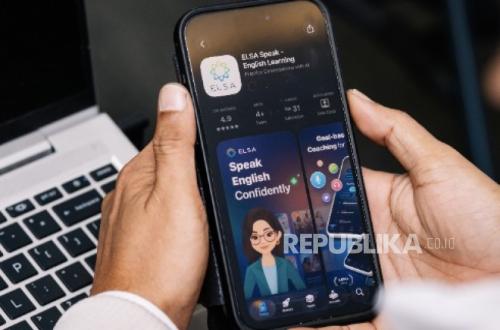
Yasser Muhammad Syaiful, Country Director of ELSA Business Indonesia, stated that in the AI era, an organisation’s readiness is determined not only by the technology it uses, but also by the ability of its talent to adapt, communicate, and utilise it effectively. ‘Therefore, investment in skills development is key to building readiness for change and enhancing Global Workforce Readiness,’ he said. ELSA Business, through its ELSA Enterprise AI Learning Agent, offers a platform that provides personalised English learning tailored to each employee’s role, needs, and work context. By utilising an AI coach and simulations based on real-world business scenarios, participants can practise professional communication in situations relevant to their daily work. In addition to providing a more practical and flexible learning experience, the platform is also equipped with an analytics dashboard that allows companies to monitor progress in real time.
Globally, ELSA Business has been trusted by more than 1,300 organisations to support employee communication skills development. In Indonesia, one implementation was carried out with PLN, which needed to improve the English communication skills of more than 1,500 employees to support cooperation and collaboration in the international energy sector. Through the AI-based learning programme, ELSA Business enabled measurable training that can be applied on a large scale, something difficult to achieve through conventional training methods. As a result, the programme recorded a 145 percent increase in productivity, 84 percent of participants experienced an increase in their English Proficiency Score (EPS) of more than 10 percent, and 98 percent showed progress within the first six months of learning. Yasser concluded that investing in communication skills not only improves individual abilities but also strengthens collaboration, productivity, and organisational adaptability.