
BRIDA Tulungagung Promotes Coffee Development as a Leading Commodity
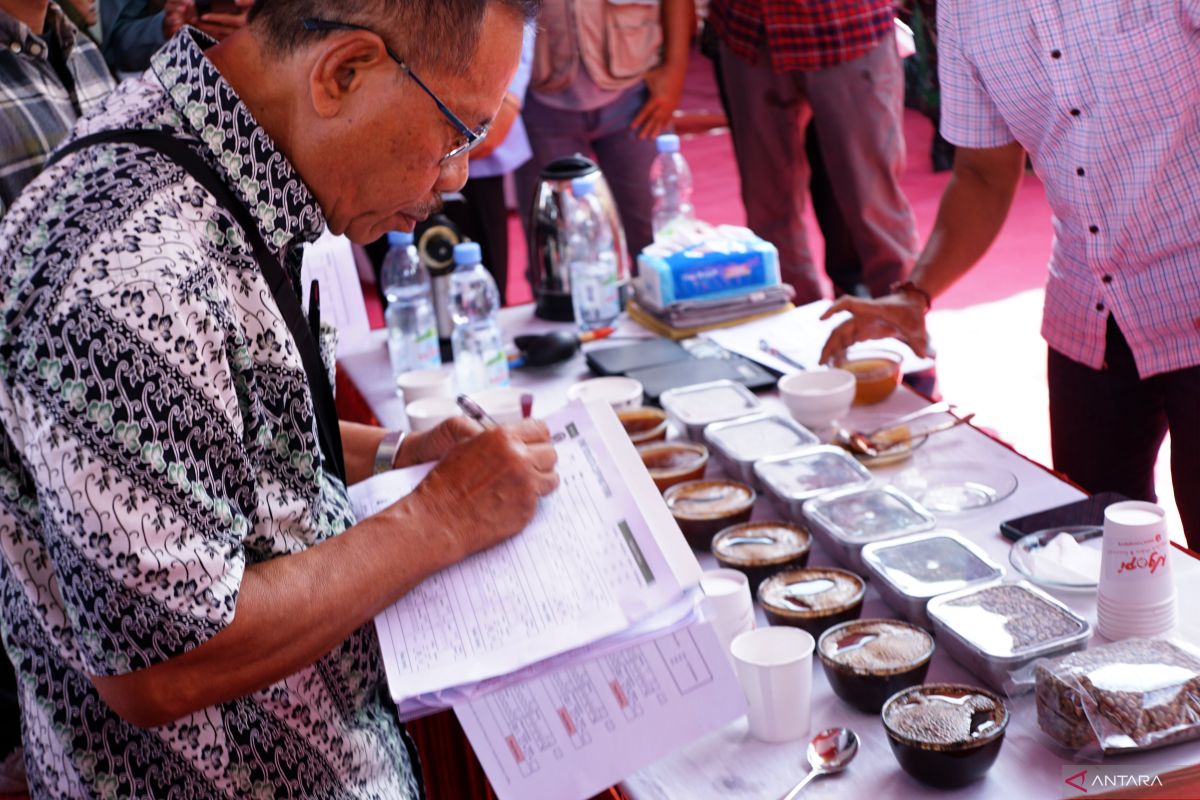
Tulungaglagung, East Java — The Regional Research and Innovation Agency (BRIDA) of Tulungagung Regency, East Java, is encouraging the development of coffee as a leading economic commodity based on research. This is being promoted through the ‘Ngolah Pikir dan Inspirasi’ (Ngopi) forum, which brings together farmers, entrepreneurs, academics, and the government.
The event was held at the Mulyosari Village field, Pagerwojo District, on Saturday, and was attended by several local coffee business owners and industry players from the region.
The Head of BRIDA Tulungagung, Wahiyd Masrur, who attended the activity, stated that coffee development has the potential not only to increase farmers’ incomes but also to support forest conservation, as coffee plants can be cultivated without altering existing vegetation cover.
“Coffee serves as a solution capable of maintaining the balance between economic, social, and environmental sustainability aspects. Therefore, its development needs to be supported through research and collaboration between various parties,” said Wahiyd Masrur in his speech.
According to him, several areas in Tulungagung possess significant potential for coffee development, including the Pagerwojo, Sendang, Gondang, Campurdarat, Besuki, Tanggunggunung, and Pucanglaban districts.
BRIDA, he continued, will strengthen the development of this commodity by providing data and research findings to serve as a basis for policy formulation and the development of signature Tulungagung coffee products.
During the forum, BRIDA also featured coffee farmers as speakers to share experiences regarding cultivation and the marketing of harvests.
Badi (58), a local coffee farmer and industry player from the slopes of Mount Wilis, noted that coffee cultivation provides economic benefits without damaging the environment, as the plants grow under the shade of existing trees. He mentioned that this agricultural activity is capable of maintaining water conservation functions and forest sustainability.
Badi, who resides in Nglurup Village, Sendang District, has been developing Arabica coffee since 201lar after attending a socialisation session by Bank Indonesia Kediri regarding the potential of coffee cultivation in mountainous areas. Leveraging an altitude of approximately 1,100 metres above sea level, Badi plants around 4,000 Arabica coffee trees, which have now become his family’s primary source of income.
He stated that most of the harvest is processed into roasted coffee under the ‘Kopi Mbah Badi’ brand to increase value-add compared to selling raw coffee beans. “Currently, our family economy is supported by coffee. My wife and children also help manage this business,” he said.
Through this initiative, BRIDA hopes that collaboration between the government, academics, and business players can accelerate the emergence of a competitive signature Tulungagung coffee while strengthening the welfare of farmers in mountainous regions.