
BRICS Trade Reaches US$1.2 Trillion, but CORE: Difficult to Leverage Against US Pressure
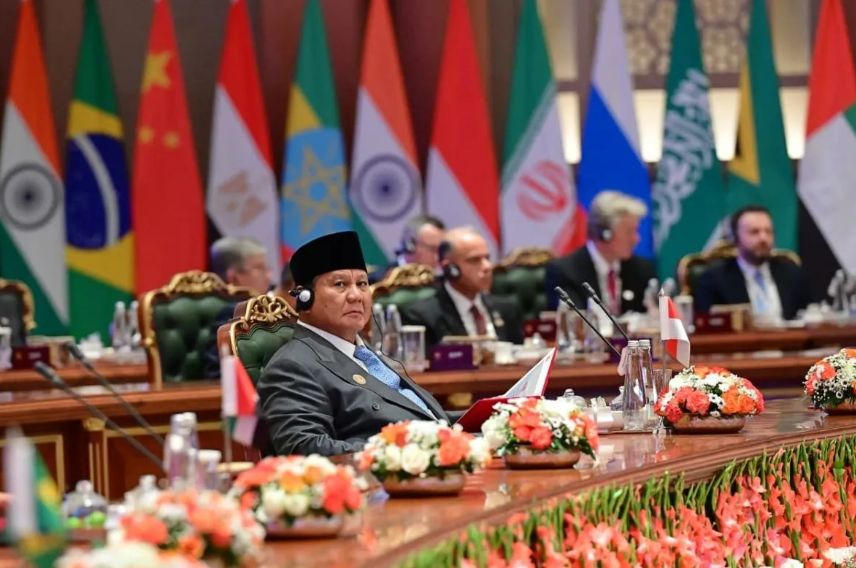
The Executive Director of the Centre of Reform on Economics (CORE), Mohammad Faisal, assesses that the massive value of trade between BRICS members will remain difficult to use as leverage for Indonesia to face United States tariff pressures. Faisal noted that the US has historically shown indifference toward the concerns of its partner nations.
“In terms of bargaining power for negotiating with America, especially the Trump administration, I believe it will remain difficult. This is because they are essentially indifferent and somewhat ignorant of the concerns of their partner countries and the dynamics of global shifts and their impacts on other nations,” Faisal stated on Monday (14/9).
This means, he added, that more than just the sheer volume of trade is required to strengthen Indonesia’s bargaining position against American tariffs. However, for Indonesia itself, Faisal continued, beyond negotiations with the US, the trading strength within BRICS could serve as an alternative for Indonesia to respond to global economic and trade dynamics.
“This means we actually have an alternative to strengthen cooperation with BRICS amidst disruptions centred in America, specifically disruptions to global trade governance and global governance,” he explained.
With a collective voice from BRICS—which includes major powers such as China, India, and Russia—it should ideally serve as a bargaining chip. This leverage is primarily aimed at exerting pressure for improvements in global trade and economic governance.
“That is more important in my view, so that it can be more equitable and voice the interests not only of developed nations but also developing nations and the Global South. BRICS essentially consists of developing nations that play a significant role in the global economy,” Faisal clarified.
Previously, Russian President Vladimir Putin stated that the trade value among BRICS cooperation forum members has reached US$1.2 trillion (approximately Rp21.1 quadrillion). He noted that the 11 BRICS member states are capable of building strong and effective economic relationships without being influenced by external pressures.
“Internal trade within our current cooperation framework has reached US$1.2 trillion. The countries involved in our association have their own mechanisms regarding the movement of goods, services, and capital that are entirely independent of external market conditions,” Putin said during the BRICS+ session, the final session of the BRICS Summit in New Delhi, India, which concluded recently.
Eleven BRICS member states—namely Brazil, Russia, India, China, South Africa, Egypt, Ethiopia, Iran, the United Arab Emirates, and Saudi Arabia—alongside Indonesia (which officially joins in early 2025), held the 18th Summit since Saturday (12/9) amidst the seventh month of the US-Iran conflict and the fifth year of the Russia-Ukraine war.
Source: jawawa.id (https://jawawa.id/newsitem/brics-trade-reaches-us-1-2-trillion-but-core-difficult-to-leverage-against-us-pressure-1789368967)
Originally published by Media Indonesia (https://mediaindonesia.com/ekonomi/933165/perdagangan-brics-us12-triliun-core-sulit-jadi-daya-tawar-tekanan-as), translated from Indonesian