
BRICS One Step Closer to 'Ditching the Dollar' by Creating New Currency
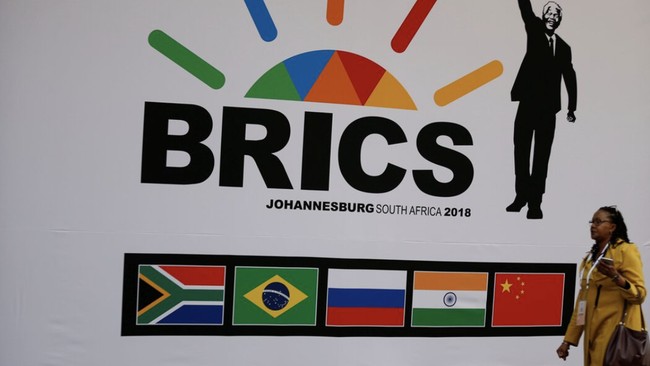
BRICS is currently examining more affordable and faster cross-border payment mechanisms to facilitate trade between members while simultaneously reducing dependence on the US dollar. Several options under discussion include the use of local currencies, the connection of fast payment systems, and central bank digital currencies (CBDCs).
Ahead of the BRICS Summit in New Delhi this week, Indian government sources stated that these discussions are aimed at cutting bilateral transaction costs and encouraging investment among member states. The new mechanism is also designed to complement existing global payment systems rather than replace them.
“This mechanism is not intended to oppose any specific country or group of countries,” an Indian government source quoted by TASS stated on Wednesday (9/9/2026).
“The primary focus of the initiative is trade and investment efficiency,” the source added.
One prominent option involves settling transactions directly using national currencies and linking each country’s payment networks. This scheme is considered capable of reducing the need for the US dollar and correspondent banks in cross-border transactions.
India’s Minister of Commerce, Piyush Goyal, stated that New Delhi favours the use of national currencies in trade over the creation of a single BRICS currency. This stance aligns with India’s efforts to expand the use of the rupee in international transactions.
Reserve Bank of India (RBI) Governor Sanjay Malhotra also revealed that BRICS nations are considering the connection of fast payment systems and CBDCs. Cross-border payments, he noted, are an area of concern for everyone, including BRICS.
“Because we feel there are many opportunities to reduce costs,” said Malhotra.
India possesses the Unified Payments Interface (UPI), RuPay, and the Structured Financial Messaging System. Meanwhile, China operates the Cross-Border Interbank Payment System (CIPS).
Russia utilises the System for Transfer of Financial Messages (SPFS) and the Mir network, while Brazil operates the instant payment system, Pix. Additionally, BRICS Pay, supported by the BRICS Business Council, has also been exploring the interconnection of payment channels among members.