
BRICS Leaders Gather in New Delhi as Indonesia Champions Five Strategic Mandates
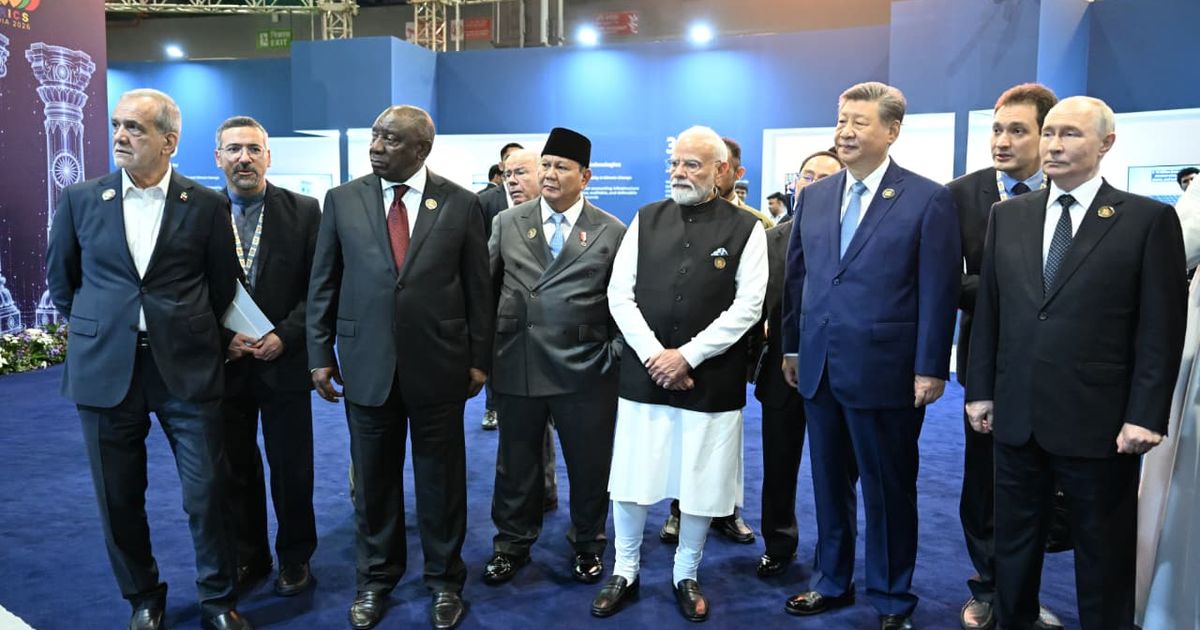
BRICS Leaders Gather in New Delhi as Indonesia Champions Five Strategic Mandates
Key Takeaways
NEW DELHI, Investortrust.id — New Delhi transformed into the premier staging ground for the consolidation of Global South economic and diplomatic power as leaders of the expanded BRICS bloc gathered in the Indian capital on Sept. 11–13, 2026.
The high-level diplomatic summit brought together heads of state and top envoys to hammer out common ground on sweeping global governance reforms, equitable trading frameworks, local currency settlements, food and energy security, and technology transfers among developing economies.
The diplomatic engagements kicked off on Friday, Sept. 11, culminating in the 18th BRICS Summit held at the Bharat Mandapam convention complex across the weekend of Sept. 12–13. Chaired behind closed doors by Indian Prime Minister Narendra Modi under the official theme “Building for Resilience, Innovation, Cooperation and Sustainability,” the gathering highlights the expanding footprint of a bloc that now commands approximately 49.5% of the world’s population, 40% of global gross domestic product, and 26% of international commerce.
Indonesian President Prabowo Subianto took his seat among fellow heads of state as the leader of one of the bloc’s newest full members, arriving in New Delhi on Friday evening. His presence firmly established Southeast Asia’s largest economy at the center of an economic alliance reshaping multilateral policymaking.
With international institutions facing gridlock over persistent conflicts in Ukraine and the Middle East, escalating U.S.-China commercial friction, and volatile international shipping corridors, the Global South is demanding a decisive seat at the rulemaking table. BRICS offers emerging heavyweights a unified counterweight to Western-led financial architectures. For Indonesia, participation serves as an instrument of non-aligned (“bebas aktif”) diplomacy—refusing alignment with competing geopolitical blocs while securing diversified capital, technology, and market access for domestic industrialization.
A High-Stakes Geopolitical Gathering
The summit drew high-profile attendance across the expanded 11-member grouping. Prime Minister Modi welcomed Russian President Vladimir Putin, Chinese President Xi Jinping, South African President Cyril Ramaphosa, Iranian President Masoud Pezeshkian, Egyptian President Abdel Fattah el-Sisi, and Ethiopian Prime Minister Abiy Ahmed Ali.
President Xi’s arrival in New Delhi on Saturday, Sept. 12, carried notable diplomatic significance, marking his first trip to India in nearly seven years and signaling a thaw in bilateral ties following protracted border standoffs in the Himalayas. Xi was scheduled to hold bilateral discussions with Modi on the summit’s sidelines.
President Putin, arriving ahead of the formal opening, conducted direct bilateral talks with Modi focused on defense ties, political coordination, energy shipments, bilateral trade, and evolving conflicts in Ukraine and the Middle East.
Not all founding and new members were represented by their head of state. Brazilian President Luiz Inácio Lula da Silva dispatched Foreign Minister Mauro Vieira, while Saudi Arabia was represented by Foreign Minister Prince Faisal bin Farhan Al Saud. The United Arab Emirates was represented by Crown Prince of Abu Dhabi Sheikh Khaled bin Mohamed bin Zayed Al Nahyan, ensuring all 11 full member states participated.
The summit also drew key partner heads of government, including Malaysian Prime Minister Anwar Ibrahim, Philippine President Ferdinand Marcos Jr., Kazakh President Kassym-Jomart Tokayev, Vietnamese Prime Minister Le Minh Hung, and Burundian President Évariste Ndayishimiye, alongside United Nations Secretary-General António Guterres, New Development Bank President Dilma Rousseff, and World Trade Organization Director-General Ngozi Okonjo-Iweala.
Two Working Sessions and the New Delhi Declaration
The summit was organized into two principal working tracks.
The first session was an exclusive, closed-door conclave of full member leaders themed “Inclusive Global Governance and Strengthening Multilateralism.” Discussions centered on overhauling global governance structures to reflect developing nations’ demographic and economic weight, demanding broader Global South representation across the UN, the International Monetary Fund, the World Bank, and the WTO.
A focal economic deliverable was scaling Local Currency Transactions (LCT) in cross-border trade and direct investment. Rather than establishing a unified common currency, negotiations concentrated on expanding bilateral settlement frameworks, enhancing cross-border clearing connectivity, and deploying regional payment architectures to shield developing balance sheets from foreign-exchange volatility and high transaction costs.
The second session convened full members alongside invited partner states under the banner “Resilience, Innovation, Cooperation and Sustainability: Shaping the Future for Inclusive Global Growth.” Leaders tackled food and fuel security, maritime transit protection, supply chain stability, energy transition financing, and collaborative tech ecosystems. The summit is slated to close on Sunday, Sept. 13, with the adoption of the New Delhi Declaration, establishing consensus stances on geopolitical challenges and joint economic initiatives.
Indonesia Champions Five Strategic Priorities
Across the plenary sessions, President Prabowo tabled five core strategic agendas representing Indonesian interests. First, Jakarta called for an open, non-discriminatory global trading order with the WTO at its foundation, rejecting unilateral protectionist policies while demanding greater Global South leadership in international trade rule-making.
Second, Indonesia advocated expanding local currency settlements across BRICS partners to trim exchange-rate spreads, stabilize the rupiah, and curb dollar reliance. With Bank Indonesia Governor Destry Damayanti in
Source: jawawa.id (https://jawawa.id/newsitem/brics-leaders-gather-in-new-delhi-as-indonesia-champions-five-strategic-mandates-1789239032)
Originally published by investortrust.id (https://investortrust.id/market/116045/brics-leaders-gather-in-new-delhi-as-indonesia-champions-five-strategic-mandates)