
BRICS Declaration Calls for Restraint Amid Middle East Conflict
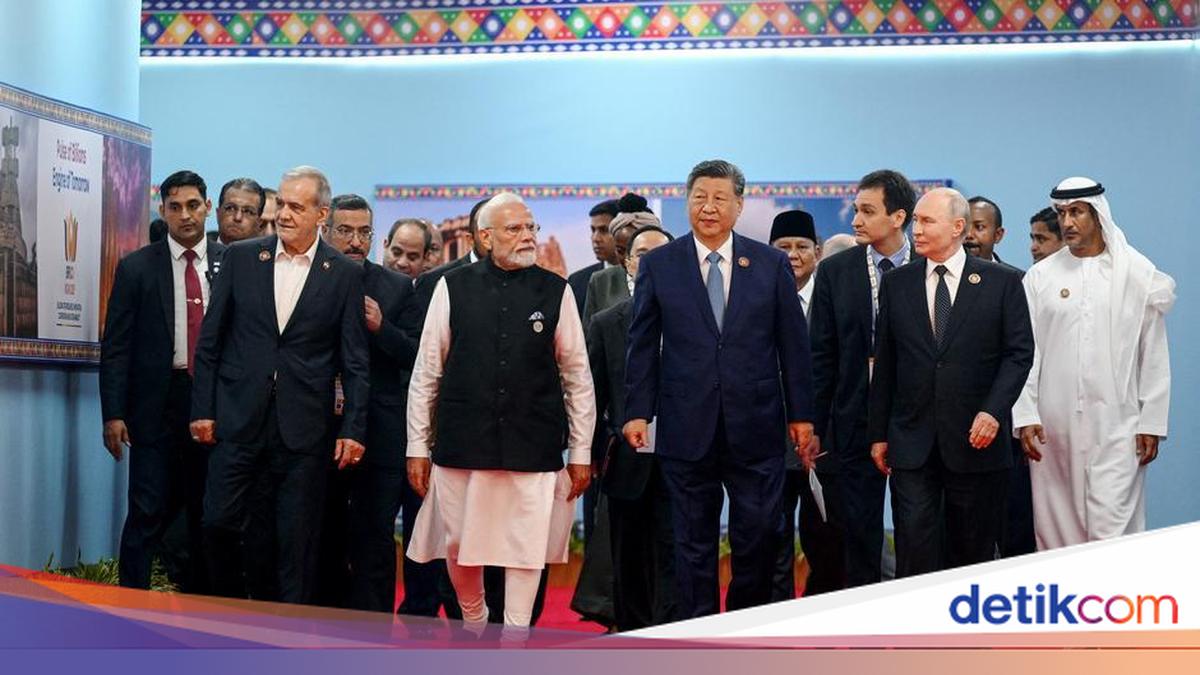
The BRICS Summit was recently held in New Delhi, India, on 12-13 September. Here are five key points from the conference.
- The New Delhi Declaration
The 45-page New Delhi Declaration includes a specific paragraph regarding the war in Iran. BRICS leaders expressed “deep concern” over rising tensions in the Middle East and called for “maximum restraint.”
No specific country was named or directly blamed. This formulation reflects a diplomatic compromise among BRICS members who hold differing interests. The conflict directly involves three BRICS members—Iran, the United Arab Emirates (UAE), and Saudi Arabia—which occupy opposing positions in the conflict.
In a joint statement, leaders also highlighted deliberate attacks on civilian infrastructure and peaceful nuclear facilities under the supervision of the International Atomic Energy Agency (IAEA). They emphasised that nuclear safety and security must be protected during armed conflicts. This statement is viewed as an indirect criticism of United States and Israeli attacks on Iranian nuclear facilities.
BRICS leaders also condemned unilateral sanctions that lack a mandate from the UN Security Council. They called for the removal of measures deemed to violate international law and the principles of the UN Charter. Although no specific country was mentioned, the statement is relevant to Russia, which has faced Western sanctions since its full-scale invasion of Ukraine in 2022, as well as Iran, which faces extensive sanctions and economic pressure from the US.
BRICS members emphasised the need for cooperation to maintain the smooth flow of global trade, supply chains, and energy. However, concrete steps from this declaration still require further evaluation.
- Ukraine not mentioned in the declaration
Ukraine was not mentioned at all in the New Delhi Declaration. This differs from the BRICS declaration in Rio de Janeiro last year, which at least referred to the “national positions” of member states regarding the conflict in Ukraine. However, the Rio declaration also did not mention Russia, did not condemn its invasion, and did not call for the withdrawal of Russian troops.
For Russian President Vladimir Putin, the absence of Ukraine in this year’s declaration holds particular political value, especially since he attended the summit in New Delhi in person, unlike the Rio summit. The wars in Ukraine and the Middle East now serve as major tests for BRICS’ ability to maintain unity amidst the differing geopolitical interests of its members. In May, BRICS foreign ministers even failed to agree on a joint statement regarding the war in Iran; as the chair, India subsequently only issued a summary.
- India and China attempting to thaw relations
Chinese President Xi Jinping has not visited India since 2019. Relations between the two nations froze following deadly clashes on the disputed Himalayan border in 2020. The meeting between Xi and Indian Prime Minister Narendra Modi on the sidelines of the BRICS Summit serves as another step in the effort to thaw relations between these two nuclear-armed nations. The meeting can also be read as a signal to the US.
Both Modi and Xi desire a more multipolar world order and reduced Western dominance in the global financial system. However, their positions differ. China, as the world’s second-largest economy with significant military power, focuses on efforts to rival Washington’s influence. India, meanwhile, pursues a policy of multi-alignment and strategic autonomy by building relationships with Russia, the US, and the EU without joining China’s camp.
Mistrust between India and China remains strong, particularly regarding border disputes and the struggle for influence in Asia. India’s large trade deficit with China also remains an issue. Xi stated that China views its relationship with India from a strategic and long-term perspective. Modi emphasised that peace along the disputed borders is an essential prerequisite for broader bilateral relations.
- The “Trump Factor”
Donald Trump remains a factor overshadowing the BRICS Summit, even though the US President and his country were not directly mentioned in the declaration. BRICS leaders criticised unilateral sanctions and expressed concern over the imposition of tariffs and non-tariff measures deemed to disrupt trade. In this context, there is a visible alignment of interests among BRICS members in opposing the Western-dominated global order and Trump’s trade policies.
- The growing number of BRICS members
China played a vital role in expanding BRICS from five to 11 members. Xi now seeks to deepen cooperation among the growing membership, including in future technologies, industry, and resilient supply chains. The goal is to build a more integrated BRIC as a network of Global South nations, both in technology and geopolitics.
India will now hand over the BRICS leadership to China and will monitor developments closely. Like China, India wants BRICS to provide a greater voice for the Global South. However, New Delhi does not want BRICS to evolve into an anti-Western alliance led by China. Meanwhile, Russia is in a similar position to China, viewing BRICS as a means to reduce Western dominance while strengthening cooperation among developing nations. This was evident in Putin’s call to expand the UN Security Council to provide greater representation for Asia, Africa, and Latin America. On the other hand, Iran is also pushing for mechanisms that can reduce BRICS’ dependence on the Western financial system. Iranian President Masoud Pezeshkian stated that one crucial step is increasing the use of national currencies in trade.