
BRI Strengthens Empowerment Ecosystem for Indonesian Diaspora in Taiwan
PT Bank Rakyat Indonesia (Persero) Tbk, or BRI, continues to expand its role in supporting the Indonesian diaspora living abroad. This time, BRI is present to accompany the journey of the Indonesian diaspora comprehensively, not only as a provider of financial services but also as part of the empowerment process.
Through its Social and Environmental Responsibility (TJSL) programme, financial literacy initiatives, and entrepreneurship skills development, BRI encourages the diaspora, particularly Indonesian Migrant Workers (PMI), to utilise their income and remittances more productively. This ranges from meeting family needs to building savings, investments, assets, and business capital in Indonesia.
This commitment is reflected in the launch of BRImo Taiwan at New Taipei City Hall on Sunday (23/8/2026). Through BRImo Taiwan, the Indonesian diaspora in Taiwan can access various financial needs in a single application, from daily transactions to sending funds to Indonesia.
The launch of BRImo Taiwan continues the strengthening of BRI’s ecosystem in Taiwan following the establishment of the BRI Taipei Branch. Exactly one year since BRI strengthened its presence through the branch, BRI Taipei’s total assets have reached more than US$408 million. As of the end of July 2026, Taiwan-Indonesia remittance transactions through BRI were recorded at approximately US$490 million, with more than 3,400 accounts served.
BRI Corporate Secretary Dhanny said that BRI’s presence in Taiwan is directed at building stronger financial connectivity between the diaspora and Indonesia.
“BRI’s presence in Taiwan is not merely about opening an office or providing digital services. It is about being closer to the Indonesian people who work, create, and build their future in Taiwan. We want BRI to be a bridge connecting the financial needs of the diaspora in Taiwan with their families and various financial needs in Indonesia,” Dhanny said in a written statement, quoted on Wednesday (26/8/2026).
Taiwan is one of the important regions for the Indonesian diaspora ecosystem. Based on KDEI data used by BRI, there are approximately 360,000 Indonesian migrant workers in Taiwan.
Furthermore, Bank Indonesia data records that remittances from Indonesian migrant workers in Taiwan reached approximately US$2.97 billion in 2025, equivalent to around Rp47-48 trillion when converted using an exchange rate of approximately Rp16,000 per US dollar. This figure has more than doubled compared to the previous US$1.37 billion in 2021.
The large remittance flow reflects the high level of financial activity among migrant workers as well as the role of their income in supporting family needs in Indonesia. BRI therefore encourages that income earned while working abroad is not only used for current needs but is also managed in a more planned manner to build savings, investments, assets, and business capital as a foundation for the future.
To support this journey, BRI provides a service ecosystem that covers the needs of migrant workers from the pre-departure stage, during their employment in the destination country, to staying connected with their families in Indonesia. This connectivity is supported through various BRI services, including BRImo, BritAma, and the BRILink Agent network, which makes it easier for families to receive and manage funds sent from abroad.
Furthermore, BRI encourages that income earned while working abroad not only meets current needs but can also become a foundation for the future.
One example is reflected in the journey of Sri Purwanti, a BRI customer from Cilacap, Central Java, who came to Taiwan as a migrant worker more than a decade ago and disciplined herself in setting aside her income little by little until she managed to accumulate capital to start a halal culinary business.
“When I first became a migrant worker, finding halal food was incredibly difficult. From that experience, I thought that other workers must feel the same difficulty. I was determined to set aside part of my income, save little by little, and learn to manage finances,” Sri recalled.
Her business later developed into Kedai Sri Rahayu in Zhongzheng District, Taipei. Sri’s journey is one illustration of how working abroad can open new economic opportunities when income is managed productively and skills are continuously honed.
In line with the spirit of empowering migrant workers, BRI Peduli, as the umbrella for BRI’s Social and Environmental Responsibility activities, continues to provide tangible support for migrant workers in Taiwan through the “BRI Peduli Go Global PMI Entrepreneur Academy: Building Skills, Creating Opportunities” programme. This activity opened opportunities for 120 migrant workers in Taiwan to gain practical experience and skills that have the potential to be further developed.
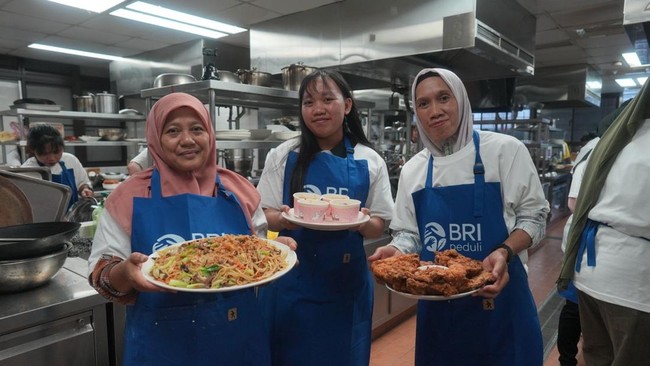
Through the PMI Entrepreneur Connect held on Saturday (22/8/2026), participants took part in workshops and hands-on practice cooking Taiwanese dishes with instructors to improve their culinary skills, which could be developed into business opportunities, both while in Taiwan and after returning to Indonesia.
Meanwhile, on Sunday (23/8/2026), through the Beautypreneur Empowerment Workshop with the concept of Beauty & Inclusivity, participants attended demonstrations and hands-on makeup practice with professional beauty trainers to acquire makeup skills that can be developed as business opportunities in the beauty industry.
Through these initiatives, BRI encourages migrant workers to build an entrepreneurial mindset with economic value and to seize business opportunities that can be developed. Thus, the experience of working abroad is expected not only to provide benefits in the form of income but also to become a capacity-building process to prepare for a more productive future.
Sifa, a migrant worker from Surabaya who participated in the activities, said that the experience she gained provided a new perspective on opportunities that can be developed after returning to Indonesia.
“This activity encourages us as migrant workers to become more independent, creative, and able to see opportunities that can be developed in Indonesia. I hope the skills acquired through this training can become capital to build a sustainable business and improve the economy after returning home,” Sifa explained.
Ultimately, BRI wants to ensure that when migrant workers return to Indonesia, they return with a more prosperous life. Migrant workers are expected to return with stronger skills, assets, and entrepreneurial abilities so that they can strengthen the economy and create jobs.