
BRI Peduli's Halal Certification Training Helps MSMEs Boost Revenue
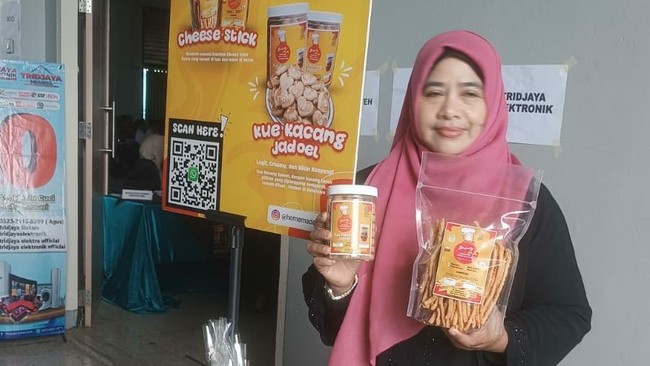
Many businesses are born out of difficult times. The same is true for BUNCY, a home-based business owned by Lucy Emilda, which was started in 2020 when the pandemic forced many people to find ways to survive. From a simple kitchen in Cimahi, West Java, Lucy began making cheese sticks with a simple hope: to offer a snack enjoyed by many whilst also supporting her family’s economy.
What began as a home enterprise continued to grow, with BUNCY prioritising taste and quality in every product. Behind each packet of cheese sticks lies a determination to create a snack that can be enjoyed by everyone whilst bringing benefits to the family and surrounding community.
However, building a business is never an easy journey. Amid increasingly fierce competition in the snack food industry, building consumer trust became one of the biggest challenges Lucy faced in developing her business.
For her, trust is essential capital for a product to be accepted by the public. That is why halal certification was seen as a step capable of strengthening that trust whilst also enhancing the business’s competitiveness.
“Culinary businesses, particularly those that already have halal certificates, find it easier to gain consumer trust,” she said in an official statement on Monday (20 July 2026).
Beyond providing reassurance to consumers, halal certification also brought changes for Lucy as a business owner. She admitted to feeling more confident when introducing her products to prospective buyers and business partners.
Through the facilitation of BRI’s Halal Certification Programme, BUNCY was given the opportunity to complete its business legality. The halal certificate became a stepping stone for Lucy to go further in developing her business.
After obtaining halal certification, Lucy did not stop there. She proceeded to apply for a PIRT permit so that her products would have more complete legality and she could reach a wider market.
“After obtaining the Halal Certificate, I continued with the Household Industry Food Permit (PIRT). With these credentials in place, I can reach a wider market and it has boosted my business revenue,” Lucy recounted.
For Lucy, the benefits of the programme lie not only in the certificate received, but also in the assistance process that made every stage of the application feel easier. From requirements to administration, each step was navigated with clear guidance, allowing business owners to focus more on developing their businesses.
“Thank you to BRI for facilitating my halal certificate. With all the simplified requirements and administration, and the guidance from the officers, I feel greatly helped. My business has benefited enormously from this programme,” she added.
Today, BUNCY continues to move forward with greater confidence. From a simple kitchen in Cimahi, this business born during the pandemic proves that the right opportunities and support can help MSME owners grow with confidence, expand their markets, and continue developing sustainably.
In a separate statement, BRI Corporate Secretary Dhanny said that BRI, through its Social and Environmental Responsibility (TJSL) programme BRI Peduli, continues to play a role in assisting MSMEs through training activities and the provision of halal certification, which is expected to create MSMEs capable of competing in the market.
Through this training, BRI hopes MSMEs will be able to maintain product quality, expand market access, and become better prepared to move up a level.
“The story of Lucy and BUNCY’s products is a concrete example of an MSME benefiting from the halal certification training organised by BRI Peduli. We will continue to help MSMEs in various regions expand their market access and drive them up a level,” Dhanny affirmed.