
BRI Peduli Programme Helps Former Migrant Worker Build Seafood Business in Indramayu
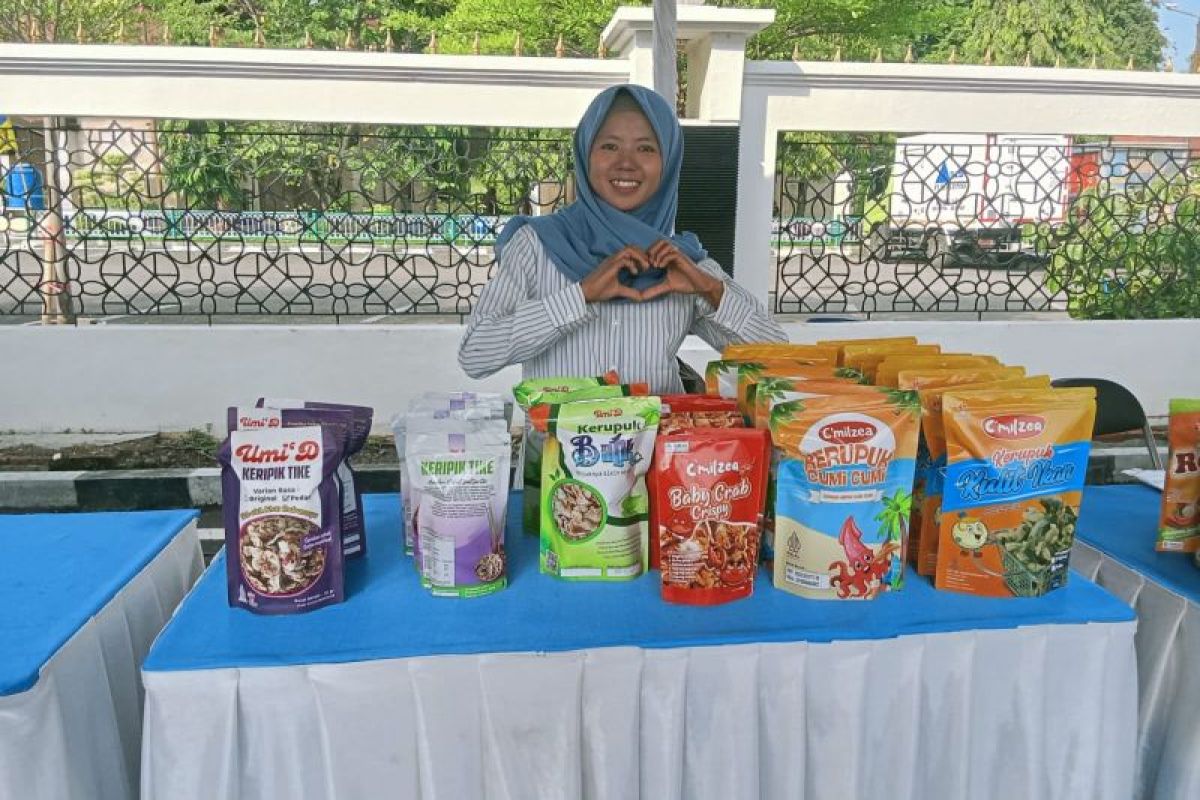
Jakarta (ANTARA) – When her time as a migrant worker in Malaysia came to an end, Rosyidah chose to return to her home village of Eretan Kulon in Kandanghaur District, Indramayu Regency, carrying new hope for her community.
Upon returning to Indonesia, Rosyidah saw the potential that had always been close to the lives of coastal communities. Marine produce was available in abundance, yet much of it had not been processed into products with higher economic value. Behind that condition, she saw an opportunity worth fighting for.
Rosyidah began building a processed seafood business under the C’milzea brand. The venture also became her way of opening opportunities for fishermen’s wives in her neighbourhood to take part and earn extra income.
“I saw that the natural resources around us were very abundant, but they had no sale value. From there, I plucked up the courage to process them into products while creating job opportunities for the fishermen’s wives nearby,” she said.
The journey of building a business was not always smooth. The biggest challenge Rosyidah faced came from the process of building self-confidence as an entrepreneur. She had to learn to change her mindset, rise above various doubts, and understand how to market her products so they became better known to the public.
Her desire to keep growing led her to join the Post-Migrant Worker Training organised by BRI. The programme became a new learning space for Rosyidah to strengthen her entrepreneurial skills and broaden her knowledge of business development.
For Rosyidah, the training opened opportunities to meet and exchange experiences with fellow entrepreneurs. From there, she gained new perspectives that helped her see her business in a different light.
“This training really helped me improve my mindset as an entrepreneur. In addition, I gained new networks that are very useful for developing my business,” she said.
The knowledge she gained during the training was then applied gradually in her business. One example was developing fish-based processed products with added value, expanding the range of products offered to consumers.
“Alhamdulillah, after joining the training I gained a lot of knowledge, especially in processing fish, such as making fish crackers. That knowledge has been very helpful in developing the business I run,” Rosyidah said.
Besides receiving guidance through the training, Rosyidah also utilised BRI’s People’s Business Credit (KUR) facility as additional capital to grow her business. The funds were used to buy raw materials, increase product stock, and meet operational needs, allowing her to fulfil customer demand more effectively.
“Alhamdulillah, the KUR funds I received have genuinely been used to develop my business, from buying raw materials to increasing product stock. With KUR, I no longer struggle when I need capital to meet customer demand. I am very grateful that my business is growing and sales have increased,” she revealed.
These changes have had an impact on her business’s growth. Previously, C’milzea’s sales averaged only around 50 packs; they have now risen to between 70 and 100 packs.
For Rosyidah, the journey from working overseas to building a business in her hometown is proof that opportunities to grow are always open to anyone willing to learn. The support she received through the Post-Migrant Worker Training and BRI’s KUR facility has strengthened her conviction to keep developing her business.
In a separate statement, BRI Corporate Secretary Dhanny explained that BRI Peduli, as the umbrella for the bank’s Social and Environmental Responsibility (TJSL) programme, runs an empowerment programme for returning Indonesian migrant workers (PMI). The programme is designed to equip former migrant workers with the skills and knowledge needed to build economic resilience.
The programme aims to enhance returning migrant workers’ entrepreneurial knowledge and skills in developing businesses, while equipping them with planning capabilities and sustainable business management.
Through the programme, participants are encouraged to start or develop productive businesses that match the potential and opportunities in their regions. Participants also receive intensive business mentoring to support more optimal, competitive and sustainable business growth.
“Rosyidah’s story is proof that the training provided by BRI Peduli delivers real benefits for former migrant workers in building and developing businesses. With the support of experienced mentors, the training can help improve the independence and welfare of returning migrant workers, while actively contributing to driving economic development in communities,” Dhanny explained.