
BRI KUR Empowers Balinese Pottery Artisan to Preserve Tradition
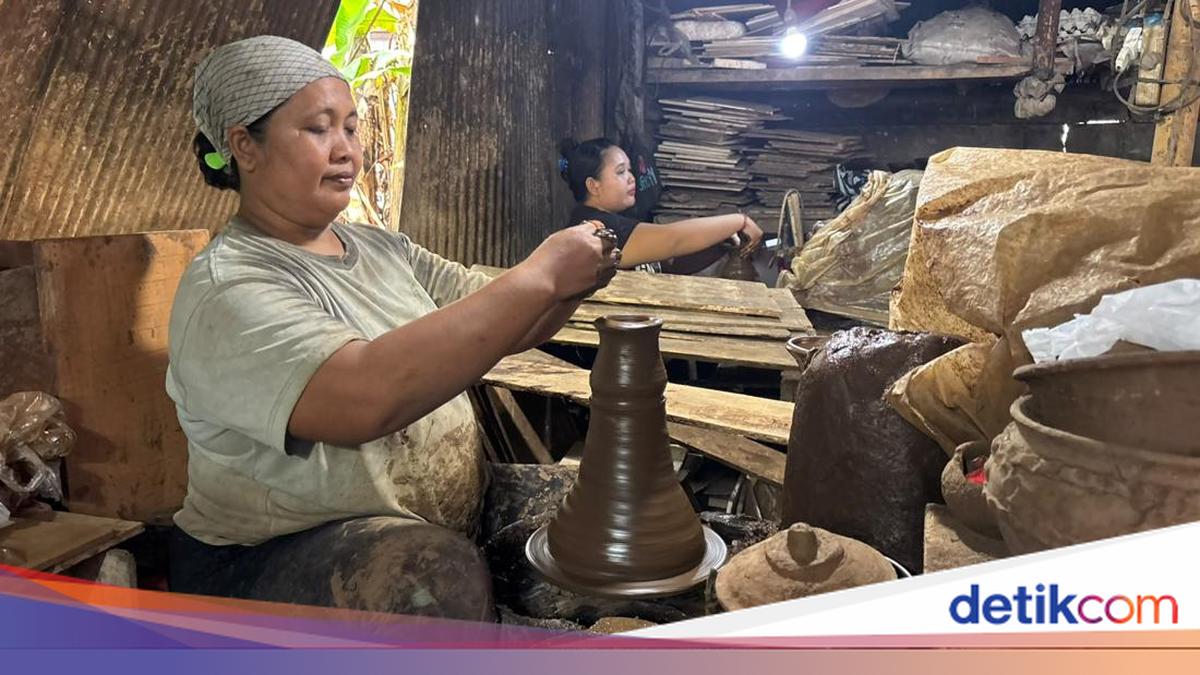
Nyoman Subarna is one of the pottery artisans in Banjar Basang Tamiang, Kapal Village, Badung Regency, Bali. He makes pottery such as payuk pere, coblong, dulang, carat, and various equipment for Hindu ceremonies in Bali.
Subarna has been familiar with pottery since childhood. He learned the craft from his parents, who have run the business for decades. Over time, the initially small enterprise continued to grow and became the main pillar of the family economy, meeting daily living needs and financing his children’s education.
“It is from this business that we raised our family,” he said in a written statement on Thursday (13/8/2026).
According to Subarna, his loyal customers can order up to 4,000 pottery products. These orders come in periodically, on average every two to three weeks.
“When there is a major ceremony, orders can reach thousands. Buyers usually come directly to our place or order in advance because they are already regular customers,” he said.
Subarna markets his pottery to various regions in Bali. Collectors and customers usually come directly to the production site to pick up orders.
Subarna said the raw material for the pottery is clay from several areas on the Island of the Gods. He spends around Rp1 million in capital for a single purchase of raw materials.
Making pottery also requires precision and patience. After being shaped manually, the pottery is dried under the sun until completely dry before being fired.
Subarna has also utilised a People’s Business Credit (KUR) facility from BRI amounting to Rp100 million to strengthen his business capital. The five-year loan is used for additional working capital, especially to purchase raw materials, meet production needs when orders increase, and support the continuity of the family business.
“KUR is very helpful, especially when orders are high. The capital can be used to buy raw materials earlier so that production is not hampered,” Subarna said.
Subarna now employs eight people, all of whom are family members. This family business has become one of the strengths in maintaining the quality of the pottery.
BRI Regional CEO for Region 17 Denpasar, Hery Noercahya, said the state-owned bank is committed to supporting MSME players who not only have economic value but also play a role in preserving regional cultural heritage. Traditional pottery businesses such as the one run by Subarna show that MSMEs have a dual function, namely driving the community economy while maintaining the continuity of local culture that is part of Bali’s identity.
“Through KUR financing, we want to ensure they have adequate access to capital so they can increase business capacity without abandoning the cultural values that are their main strength,” Hery said.
According to Hery, the sustainability of culture-based businesses has a multiplier effect on the regional economy. Besides creating jobs, these businesses also help maintain the local economic supply chain, from raw material suppliers and labour to meeting community needs in carrying out various traditional ceremonies.
“BRI believes that MSMEs based on local wisdom have strong resilience because they grow alongside community needs, and we will continue to expand access to productive financing so that traditional business actors can develop further,” he added.
BRI has disbursed KUR loans totalling Rp103.81 trillion as of the end of June 2026. The loans were distributed to 2 million debtors across various regions of Indonesia.
The KUR distribution is dominated by productive sectors that play a strategic role in the national economy. The agricultural sector is the largest recipient at 42.68 percent, followed by trade at 32.34 percent.
BRI Micro Director Akhmad Purwakajaya said that directing KUR distribution to productive sectors, especially agriculture, is expected to increase community business productivity, strengthen the regional economic base, and support the national food security agenda.
In addition, Akhmad continued, MSMEs can grow stronger and create jobs because of increasingly inclusive and well-targeted financing access. “KUR is not merely a financing instrument, but part of a collective effort to strengthen the foundation of the national economy from the grassroots level,” he said.