
BRI Funding Boosts BHK Farm into Premium Cattle Farming
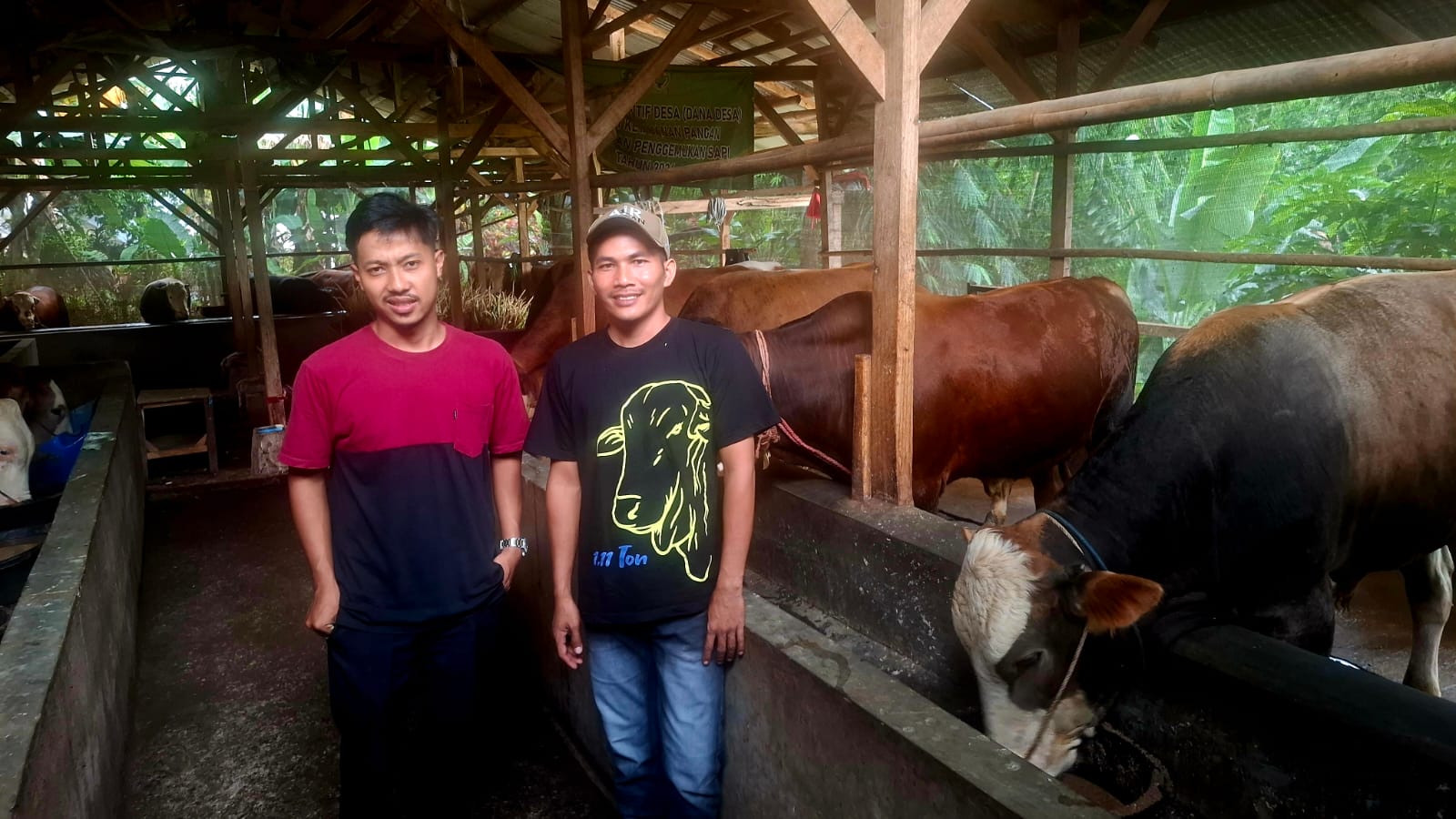
Amid the cool air after a light drizzle, activity at BHK Farm, Sukatani Village, Sukaraja District, Bogor Regency, was getting busier ahead of Eid al-Adha. Muhammad Nasrullah, 32, was moving about, serving prospective buyers looking for premium sacrificial cattle. Little did many know that the cattle farming business, now supplying cattle such as Limousin, Simmental, and Pegon, began from a simple pen with only seven cows. Thanks to perseverance and financing as a customer of PT Bank Rakyat Indonesia (BRI), the venture started in 2018 has grown into one of Bogor’s suppliers of premium sacrificial cattle. The fattening operation originated from his father’s habit of seeking cows to meet customer demand ahead of Eid al-Adha. From that experience, Nasrullah saw a big opportunity in the cattle-fatting business and began pursuing it seriously. “From that, I saw the need for sacrificial cows was large. Eventually I tried to start fattening cattle little by little,” Nasrullah said when interviewed by Media Indonesia at BHK Farm last week.
As demand rose, Nasrullah’s business began to grow. In 2020, sales reached 23 cows. But at the same time, he faced capital constraints, especially for feed and expanding the pens. It was from there that he learned about the Kredit Usaha Rakyat (KUR) programme from Bank Rakyat Indonesia (Persero) Tbk.
“Someone suggested taking KUR BRI. Then I summoned the courage and at that time I borrowed Rp30 million in 2020,” he said.
He first applied for KUR in 2020 through the BRI Cimahpar branch. According to him, the application process was fairly easy as long as the business was run consistently and repayments were smooth. “If we look at the ease of it, it depends on us. If the business is consistent and payments are smooth, in my view it is more than easy,” he said.
The first loan of Rp30 million with a two-year tenor was repaid even sooner. Nasrullah says he already planned to add capital to his business, hence choosing to accelerate repayment. “Before the two-year tenor finished, I had already paid it off, because in my mind I want to apply again,” he said with a smile. After observing the development of his business, the BRI offered a larger credit ceiling. From an application for Rp50 million, Nasrullah was deemed eligible for financing up to Rp200 million due to the capacity of the pens and the healthy flow of the business. “Because they have already seen the capacity of the cattle pens and our payments are smooth,” he said. According to Nasrullah, the interest on KUR BRI is relatively light and helps small operators grow. “Actually it is nice to borrow KUR at BRI because it is indeed easy. The interest is also low; I think it does not reach 3%,” he said. He believes that such financing had a significant impact on the viability of his business. “So it can sustain us,” he said.
In the midst of rising demand for sacrificial cattle ahead of Eid al-Adha, the fattening business gradually expanded into a cattle farm with a much larger capacity. The journey was inseparable from access to KUR BRI financing which he says became a key milestone in the business’s development. Nasrullah noted that additional capital from KUR was used to buy more cattle, expand the pens, and improve the quality of cattle care. Before obtaining financing, his capacity was limited and the number of cattle kept was not large. “Earlier, the number of cattle we had was limited. After obtaining additional capital from KUR BRI, we could increase pen capacity and buy more cattle with better quality,” Nasrullah said.
That additional capital then truly transformed the scale of his business. In 2024, Nasrullah reapplied for a loan to build a new pen. The pen’s capacity, which previously could accommodate around 20 cows, increased to 50 cows. “After building the pen in 2024, sales in 2025 reached 47 cows. Our system is fattening, so the cows are bought and cared for until approaching Eid al-Adha,” he explained. He said turnover rose drastically after starting to receive financing and management of the business became more orderly. “After knowing BRI, the business began to take shape and become more orderly. Turnover also rose more drastically,” he said. He noted that capital has a major influence on the ability of farmers to buy breeding stock or meet operational needs. With a Rp30 million loan, for example, he could buy two cows to fatten and sell again with a sizable profit margin. “If Rp30 million is invested in cattle, net profit in a year could be around Rp20 million. Return of capital, profit also comes,” he said.
Currently, Nasrullah focuses on three cattle types, namely Limousin, Simmental, and Pegon cattle. The price of cattle marketed ranges from Rp24 million to Rp45 million per head, depending on size and quality. “So we derive quite substantial profits,” he said. However, these profits still have to cover feed and daily operating costs. “But it is still rough, deducting for feed,” he said.
Nevertheless, the cattle farming venture has not always run smoothly. He admitted to losses from sick cattle, broken legs, and even death after purchase from the market. “If a cow’s leg breaks, the one that could have been sold for Rp30 million might become Rp15 million. There are also those that die; bought for Rp20 million and buried,” he said.
Yet Nasrullah regards these losses as part of the learning curve in running a cattle business. “If there is a death or illness leading to losses, perhaps that is college for me,” he said. For daily operations, cattle feed costs around Rp26 thousand per head per day. With