
BRI Empowers 43,789 Business Clusters through "Klasterku Hidupku" Programme
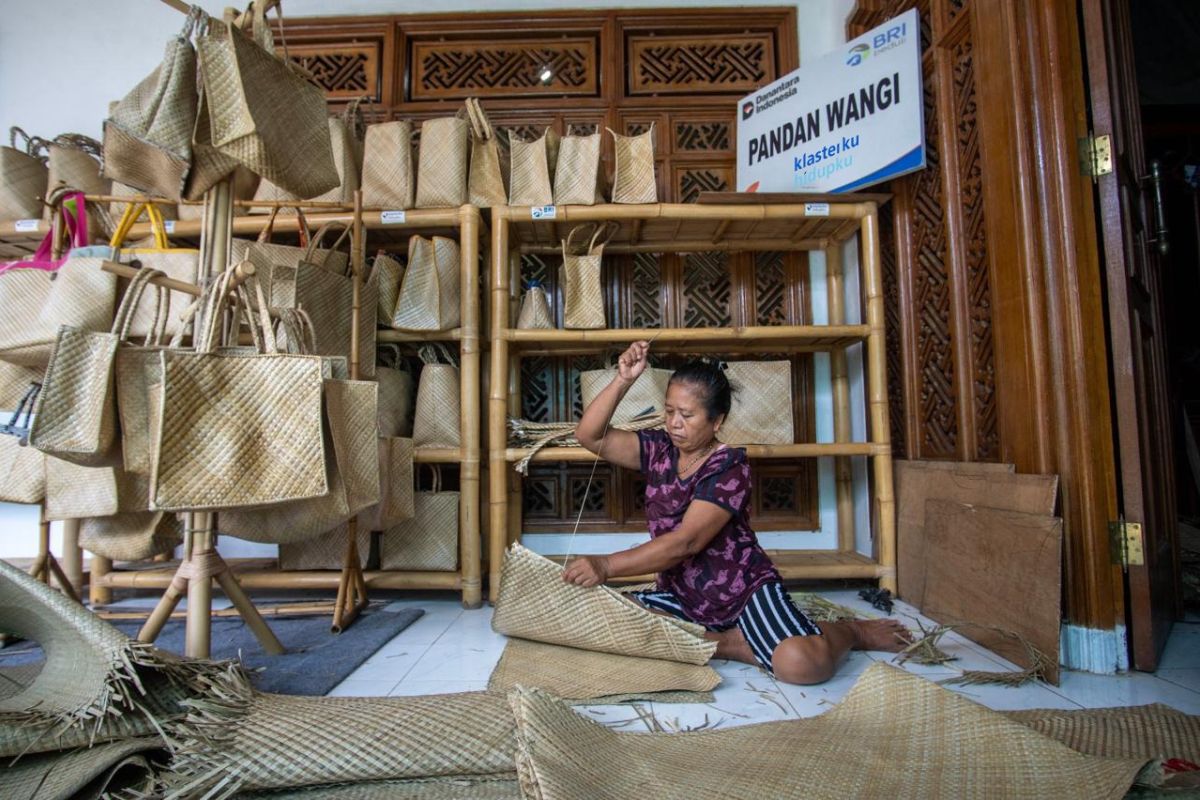
Jakarta (ANTARA) - PT Bank Rakyat Indonesia (Persero) Tbk, through its Klasterku Hidupku programme, is nurturing 43,789 business clusters up to March 2026, supported by approximately 3,000 empowerment activities ranging from training to the provision of production facilities and infrastructure.
The company stated that these efforts are directed towards real sectors that directly contribute to creating added value and stimulating regional economies.
BRI Micro Director Akhmad Purwakajaya, in his statement in Jakarta on Friday, explained that BRI continues to develop the Klasterku Hidupku programme as an empowerment approach to assist business actors, including farmers, so they can grow sustainably and advance to higher levels.
“Community-based empowerment tends to be more effective for SMEs because it targets not only financial aspects but also behaviour, capacity, and collective business networks,” Akhmad said.
As many as 82.39% of the clusters nurtured by BRI are in the production sector, with agriculture as the largest contributor at 48.26%. The remaining 17.61% come from the non-production sector.
The company views both sectors as engines for creating added value and the main drivers of economic activity in the regions.
Through the Klasterku Hidupku programme, the company encourages food self-sufficiency, economic equity, and improved community welfare.
Cluster-based empowerment is seen as an approach to strengthen the economic structure from the grassroots level.
By grouping based on similar sectors and regions, business actors not only grow individually but also interconnect within an ecosystem that strengthens collective capacity and builds more integrated value chains at the local level.
Akhmad added that the cluster-based approach also opens opportunities for the emergence of high added-value flagship commodities.
“Through the cluster scheme, BRI not only provides access to financing but also strengthens connections among business actors within a supportive ecosystem, thereby increasing collective production capacity,” he said.
In line with strengthening business clusters, BRI is expanding financial access at the community level. From more than 508,000 cluster members, around 87.7% already have BRI accounts and are connected to financing facilities to support the sustainability of their businesses.
To ensure the continuity of empowerment, the company stated that this initiative complements various other BRI programmes.
Up to March 2026, the Desa BRILiaN programme has reached 5,245 villages. On the other hand, BRI has also developed 54 Rumah BUMN, which have empowered 559,897 SME actors through 18,218 training activities. In addition, the LinkUMKM platform has been used by 15.57 million users.
The company emphasised that all these initiatives are carried out in an integrated manner to strengthen BRI’s role as an agent of development in supporting SMEs and driving national grassroots economic growth.