
BRI CEO Hery Gunardi Unveils Comprehensive Transformation Strategy
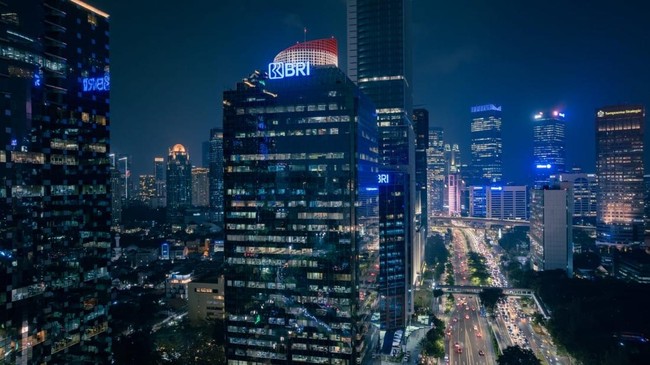
PT Bank Rakyat Indonesia (Persero) Tbk (BBRI) has affirmed that transformation is the company’s main agenda to sustain growth amid increasingly fierce competition in the banking industry. Under the leadership of President Director Hery Gunardi, BRI is executing a comprehensive transformation spanning its business model, digitalisation, credit quality, and corporate culture. Hery stressed that transformation is no longer a choice but a necessity for banks that wish to continue growing. “For a bank that is a going concern and will continue to grow in the future, transformation is a must, a necessity. We cannot just, in my words, ‘melt away’,” he said during CNBC Indonesia’s Economic Update programme.
According to Hery, changes in the business environment and regulations mean banks must be able to adapt to remain competitive. “Competition will continue to occur. The environment changes, government rules change. So, it means we must be ready to adopt conditions which, in our view, would have a negative impact on the bank if we do not transform,” he stated. Hery explained that when he and the new management team were appointed by shareholders at the end of March 2025, two main areas immediately became the focus. “We saw that there were two big things we had to transform. At BRI, the first is the cost of funds. The cost of funds at that time was quite high, above 3%. Then, the cost of credit compared to our peers was the highest. So, what does that mean? This is room for improvement for BRI.”
To lower the cost of funds, BRI is optimising its existing infrastructure, from its office network, BRImo, and AgenBRILink, to the QRIS ecosystem. One main focus is increasing the number of active BRImo users. “BRImo has around nearly 50 million registered users. But the active ones may not reach that figure. So, how do we encourage more of them to become active?” Hery explained. This step has led to a surge in transaction activity on BRI’s super app. “Once more users became active, BRImo’s daily transactions, which were only IDR 21 trillion a day, can now reach IDR 33 trillion a day,” he noted. Besides refining features, BRI is also improving the application’s interface to make it easier for customers to use.
On another front, BRI has started developing its merchant business, which was not previously a primary focus. Expanding the merchant network is one strategy to increase low-cost funding. As a result, the current account saving account (CASA) ratio has increased significantly. “So, our CASA ratio increased from 64% in December 2024 to nearly 71% in December 2025. And this continues to stay above 70%. Consequently, the impact is that our cost of funds fell from 3-point-something percent to 2.3%. What is the benefit? If the cost of funds falls, the cost of money becomes cheaper, and we can maintain more stable profitability,” Hery explained.
In addition to the cost of funds, BRI is also improving credit quality, particularly in the micro segment, which accounts for around 45% of the company’s financing portfolio. According to Hery, various business processes are being improved, from the implementation of on-the-spot (OTS) visits to the use of technology in the credit process. These improvements are expected to gradually reduce credit costs. “With smaller provisioning or CKPN, this will result in us being able to manage the cost of credit, lowering it from 3.7% to closer to 3%, and even someday below 3% to be equal with our peers,” he asserted.
Looking ahead, Hery confirmed that the transformation is not only being carried out on the business side but also touches on corporate culture through a programme called BRI Reignite. He believes that cultural change is the foundation for optimal business transformation. “We are not only transforming from the business side, but also from the cultural side. We want a new BRI culture, in terms of its values, to support this business transformation,” Hery said. He added that strengthening corporate culture is a crucial factor in ensuring the entire organisation shares the same commitment. Beyond culture, the transformation also includes strengthening technology, digital operations, branding, and developing new businesses. The rebranding carried out at the end of 2025 is part of an effort to change public perception of BRI. “We want to give the image that BRI is not only a strong bank in rural areas, but also capable of providing equally good services in urban areas.” For this reason, BRI is building a second growth engine by strengthening its consumer banking business, including consumer credit, wealth management, private banking, and investment services. “We also want to enter the urban segment. So, we are building our second engine, not only focusing on micro and SMEs, but also entering the consumer segment,” Hery continued. He said BRI will also optimise synergies with all its subsidiaries to drive more sustainable growth. “We must be able to orchestrate all existing resources to drive BRI’s performance to be much better in the future.”