
BRI and KPK Prepare Agents of Change through Anti-Corruption Educator Training (PELOPOR) 2026
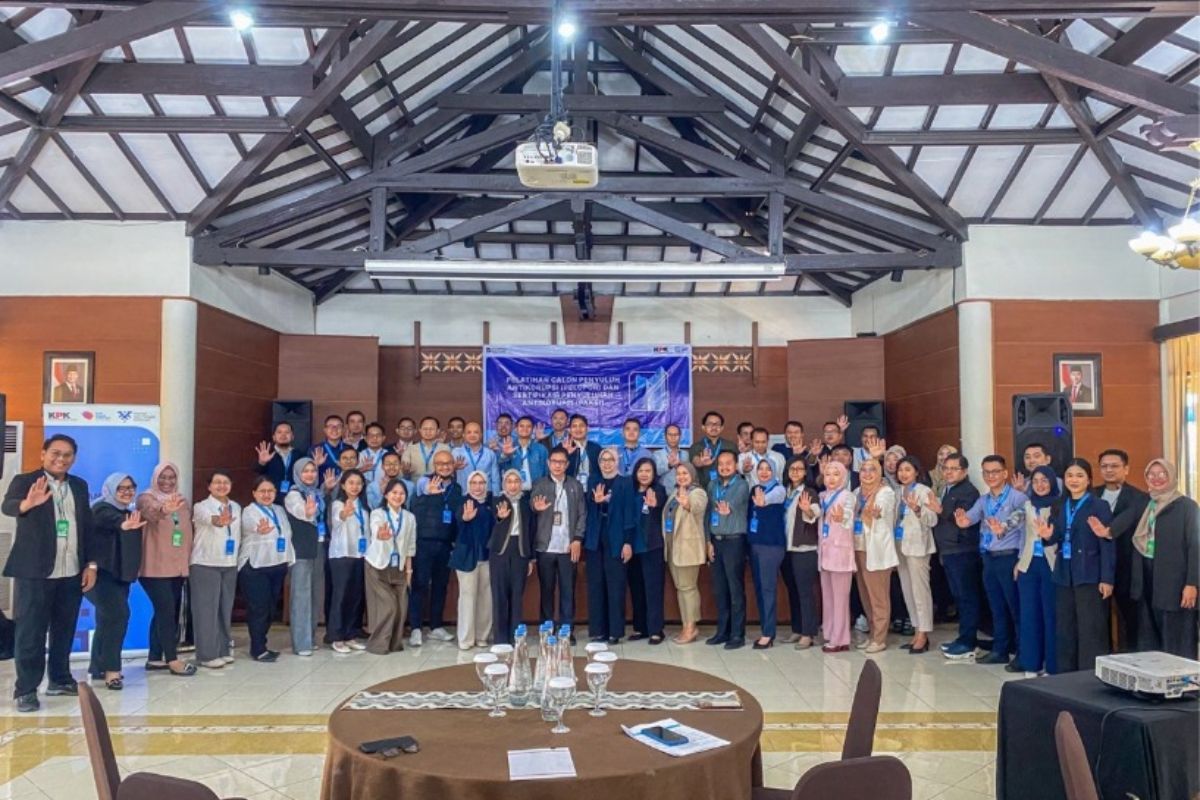
Jakarta (ANTARA) – PT Bank Rakyat Indonesia (Persero) Tbk, or BRI, continues to strengthen the implementation of good corporate governance by reinforcing the culture of integrity and anti-corruption across all lines of the organisation. This commitment is manifested through the implementation of the 2026 BRI Anti-Corruption Educator Candidate Training (PELOPOR), held in collaboration with the Corruption Eradification Commission (KPK) via the Directorate of Anti-Corruption Education and Training.
BRI’s Director of Legal & Compliance, Mahdi Yusuf, revealed that this programme is part of BRI’s ongoing efforts to build a working ecosystem that upholds integrity, transparency, and accountability.
“Not only to build an understanding of corruption prevention, but PELOPOR BRI 2026 is also directed towards producing BRI individuals who can serve as agents of change and role models of integrity within their respective work environments as Anti-Corruption Educators (PAKSI). BRI’s PAKSI are selected from various lines within the BRI environment, including audit, legal & compliance, risk management, as well as representatives from business and operational functions from various regions across Indonesia,” said Mahdi.
The PELOPOR BRI 2026 series began with online learning on 11 September 2026, followed by face-to-face learning from 14–19 September 2026 at the BRI Corporate University, Regional Campus Bandung, Lembang, West Bandung Regency, West Java.
A total of 41 participants from various strategic BRI functions participated in the programme. Participants were provided with various materials regarding corruption prevention, conflicts of interest, gratification, and the internalisation of integrity values relevant to the company’s activities and business processes.
Mahdi stated that for BRI, strengthening governance is not enough through the mere existence of systems, policies, and supervisory mechanisms. Its effectiveness is also heavily determined by the culture and behaviour of the company’s employees who implement them.
“Integrity is a vital foundation in maintaining trust as well as the company’s sustainability. Therefore, BRI continues to strengthen the anti-corruption culture so that it does not merely stop at systems and policies, but is truly internalised in the behaviour and decision-making of every BRI individual. Through PELOPOR, we want to expand the presence of agents of change (PAKSI) who can serve as role models and drive the culture of integrity within their respective work environments,” he said.
The collaboration between BRI and the KPK in anti-corruption education is not the first of its kind. A similar programme was implemented in 2024 through training for anti-corruption educator candidates as part of the effort to build and strengthen the ranks of Anti-Corruption Educators within the BRI environment.
KPK’s Director of Anti-Corruption Education and Training, Yonathan Demme Tangdilintin, emphasised that the effectiveness of corruption prevention systems is greatly influenced by the integrity of the human resources operating those systems. Therefore, integrity needs to be continuously maintained and strengthened through personal commitment as well as a work environment that supports anti-corruption behaviour.
As an institution with a vast network and a complex business ecosystem, strengthening the culture of integrity is a crucial part of maintaining the quality of BRI’s governance. Consequently, anti-corruption education is directed not only to increase participants’ knowledge but also to build their ability to identify risks and disseminate anti-corruption values within the work environment.
PELOPOR BRI 2026 does not end after the training series is complete. Subsequently, participants will undergo certification assessment for Anti-Corruption Educators in accordance with applicable regulations and implement action plans developed during the programme.
Anti-Corruption Educator certification is a competency testing process that refers to applicable competency standards and is distinct from a certificate of participation in training. Thus, education serves as one stage in preparing candidates to possess the necessary competence to carry out their roles.
Beyond merely obtaining certification, the Anti-Corruption Educator candidates are expected to be able to bring the values acquired during the education into their work environments and act as drivers in building awareness, providing education, and demonstrating exemplary behaviour in the application of integrity values.
“We hope that the participants will not only possess competence as Anti-Corruption Educators but will also be able to bring the spirit of integrity to their respective work units. With more BRI individuals taking on the role of PAKSI, the anti-corruption culture can become stronger and become an inherent part of every BRI business process,” Mahdi concluded.