
Breast Cancer Treatment Is Becoming More Advanced and Precise: Here Is the Evidence
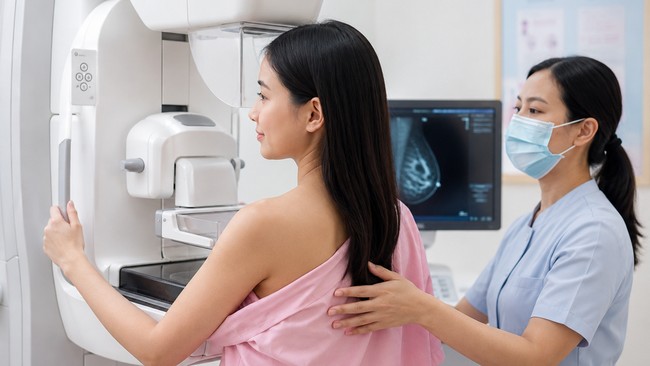
Jakarta, CNBC Indonesia — A breast cancer diagnosis can bring many concerns for patients and their families, from the treatment process to the chances of recovery. However, advances in medical technology and treatment options are offering greater hope through earlier detection, more accurate diagnosis and care tailored more precisely to the characteristics of the cancer and each patient’s condition.
One advance in early detection is 3D mammography, which produces images of breast tissue from multiple angles, allowing abnormalities to be seen in greater detail than with conventional mammography.
If a suspicious lump is found, doctors can perform a biopsy, taking a tissue sample using minimally invasive techniques such as Vacuum-Assisted Breast Biopsy (VABB). The procedure uses a specialised vacuum-assisted needle inserted through a small incision.
Dr Bayu Brahma, a surgical oncologist at Mayapada Hospital South Jakarta, said VABB is one of the advances in biopsy techniques that can make the procedure more comfortable for patients.
“Not every breast lump requires open surgery. With VABB, doctors can take a tissue sample to confirm a diagnosis and, in certain cases, remove an entire small benign lump,” Dr Bayu said in an official statement on Tuesday (24 November 2026).
With Breast-Conserving Surgery (BCS), eligible patients can have the cancer removed while retaining most of the breast tissue; the procedure is generally followed by radiotherapy. Oncoplastic Breast Surgery combines cancer removal with reconstructive techniques to help preserve the shape of the breast.
“Breast cancer surgery no longer necessarily means that the whole breast must be removed. Using BCS and oncoplastic techniques, we aim to treat the cancer while preserving the breast’s shape, while continuing to prioritise treatment safety and patients’ quality of life,” added Dr Bayu, who specialises in both techniques.
Alongside surgical techniques, diagnostic accuracy is also crucial to planning successful treatment. Biopsy samples are examined in an anatomical pathology laboratory to confirm the diagnosis and identify the cancer’s characteristics. Doctors also need to assess whether it may have spread, including through PET-CT scans, advanced imaging technology that helps provide a more comprehensive evaluation of the cancer. PET-CT is widely used in modern cancer care in many countries, although access to it remains limited in Indonesia.
Breast cancer treatment cannot be approached in the same way for everyone. Options depend on the stage and characteristics of the cancer and the patient’s condition. Dr Trinugroho Heri Fadjari, an internal medicine specialist in haematology and medical oncology at Mayapada Hospital Bandung, said that a more accurate understanding of the cancer’s characteristics and spread allows treatment to be better targeted.
“For certain patients, PET-CT helps doctors assess the spread of cancer as a basis for determining the most appropriate treatment options and sequence, both before and after surgery. Breast cancer treatment is also becoming more personalised and precise, ranging from chemotherapy and radiotherapy to targeted therapy and immunotherapy,” Dr Heri Fadjari said.
Being prepared for oncology emergencies is also an important part of a patient’s treatment journey. Conditions such as a high fever after chemotherapy, shortness of breath or bleeding can signal serious complications requiring immediate medical attention. Patients and their families should therefore know which healthcare facilities can manage cancer-related emergencies.
“Cancer care is not only about treating the disease, but also about ensuring patients’ safety throughout treatment. It is important for patients and their families to know where to seek help in an emergency, so care can be provided quickly and appropriately before the condition develops into a more serious complication,” Dr Heri Fadjari said.
Mayapada Hospital’s Oncology Center offers comprehensive cancer services combining advanced medical technology, modern treatment techniques and the expertise of a multidisciplinary team. Facilities including 3D mammography, VABB and PET-CT scans are available at Mayapada Hospital South Jakarta (MHJS), while Mayapada Hospital Bandung (MHBD) provides oncology emergency services for cancer-related emergencies and treatment complications.
These services are supported by integration across the Mayapada Hospital network to provide continuity of care. Through its Comprehensive Cancer Care approach, Oncology Centers across the hospital’s facilities emphasise collaboration among doctors from different specialties and subspecialties.
Through its Tumor Board, the medical team discusses examination results and develops a precise, personalised treatment strategy for each patient. A Patient Navigator also supports patients and their families to help make the care process more coordinated and straightforward.
Source: jawawa.id (https://jawawa.id/newsitem/breast-cancer-treatment-is-becoming-more-advanced-and-precise-here-is-the-evidence-1795506720)
Originally published by CNBC Indonesia (https://www.cnbcindonesia.com/lifestyle/20261124134454-33-787963/penanganan-kanker-payudara-makin-maju-presisi-ini-buktinya), translated from Indonesian