
Breaking Through the Five Percent Limit
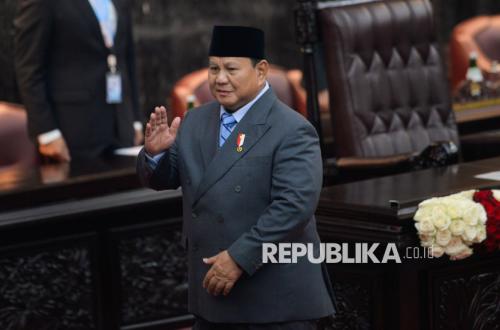
President Prabowo Subianto’s speech on 14 August 2026 radiated fresh optimism by targeting Indonesian economic growth of 6.0 percent in 2027. The question is: can that target be achieved? This question is reasonable given that over the past decade, national economic growth has seemed to hit a glass ceiling at around 5 percent. Amidst the hard effort to escape the middle-income trap, the national economic policy architecture requires a new growth engine that is not merely linear, but transformative and structural. This is where a substantive Islamic economy and finance comes in—no longer merely a moral alternative, but a calculative necessity capable of accelerating macroeconomic transformation.
Based on simulations using linear and structural econometric models—through both Vector Autoregressive (VAR) and Computable General Equilibrium (CGE) approaches—the dominance of a substantive, inclusive, and professionally managed Islamic economy has the potential to provide an additional boost (delta) to national Gross Domestic Product (GDP) growth of 1.1 to 2.0 percentage points per year. This means that if baseline growth is at 5 percent, optimising this sector could propel national growth towards 6.1 to 7.0 percent.
This quantitative leap is not a statistical fantasy. Econometrically, this acceleration is bridged by three main structural transformations.
- Additionality Criteria: Mobilising ‘Sleeping’ Capital
The GDP leap of 1.1 to 2.0 percent will never occur if the expansion of Islamic banking merely carries out nominal conversion—in other words, changing the signboard of a conventional bank to sharia with the same customer portfolio. The first key in this econometric model is additionality (new added value) that moves the wheels of the lower economy.
Through microfinance networks such as Sharia People’s Economy Banks (BPRS) and Baitul Maal wat Tamwil (BMT), the expansion of Islamic banking succeeds in capturing public funds and business actors who have so far been unbanked or avoided the formal system for religious reasons. Funds that previously lay dormant under the mattress (informal system) are now drawn into the formal intermediation pipeline, thereby increasing the financial-to-GDP ratio (financial deepening).
In supply-side economics modelling, these fresh funds are allocated directly to finance productive supply sectors, particularly the agribusiness and primary agriculture ecosystem. The food sector absorbs more than 60 million workers in Indonesia, yet chronically suffers from capital starvation. When liquidity enters a sector with high forward and backward linkages, the multiplier effect on national output will be massively escalated.
- Interoperability Ladder: Weaving Social and Commercial Finance
The structural econometric model proves that Islamic finance has a unique instrument: the inherent integration between Islamic social finance (Zakat, Infaq, Sadaqah, and Waqf or Ziswaf) and commercial finance. This synergistic integration forms a sustainable financing ladder through a gradual and systematic flow.
At the initial stage or rescue phase, informal micro business actors in rural areas or smallholder farmers who do not yet meet banking requirements (unbankable) are assisted using Islamic social funds. They obtain initial working capital through productive zakat or benevolent loans without returns (qardhul hasan). This step strengthens business resilience and provides a stable operational foundation before they come into contact with greater business risks.
When the business unit begins to be organised, has orderly financial records, and its production capacity increases, it is ready to graduate. At this independence phase, the business actor enters into a commercial Islamic banking scheme based on risk-sharing, such as mudharabah or musyarakah contracts. They no longer stand as aid recipients, but as equal business partners.
Systemically, this continuity changes the socio-economic structure in aggregate. The transformation from mustahik to muzaki automatically expands the tax base and increases the real purchasing power of the lower class (marginal propensity to consume). The shift in the aggregate consumption and investment curves resulting from this class upgrade will substantially enlarge the size of the national economic pie.
- National Capital Efficiency: Correcting ICOR Through Genuine Partnership
For a long time, Indonesian economic growth has been held back by the high Incremental Capital Output Ratio (ICOR), which hovers in the range of 6.0 to 6.5. A high ICOR figure indicates an inefficient and capital-wasteful economy; very large investment is needed just to produce one unit of economic growth. Substantive Islamic banking is present as a structural solution to improve the quality of capital productivity (total factor productivity).
In the risk-sharing contract framework, the income of an Islamic bank is organically tied directly to the actual profit of the customer. This pattern changes the bank’s position: the bank is no longer a passive spectator that merely collects monthly instalments and pursues collateral when a crisis arises, as is common in interest-based (risk-transferring) schemes.
To secure the optimal profit-sharing rate, Islamic banking must carry out capacity building and close mentoring. The bank acts as an orchestrator that facilitates the adoption of agricultural technology, provides financial governance training, and connects MSMEs directly with off-takers to ensure certainty of market access.
This intensive cooperation boosts the operational efficiency of customers in the field. When millions of MSMEs and the primary agriculture ecosystem move from low productivity to high productivity, the capital needed to produce each additional unit of national output will fall significantly. In macroeconomic language, this partnership successfully corrects the ICOR figure towards a more efficient level of around 4.0 to 4.5.